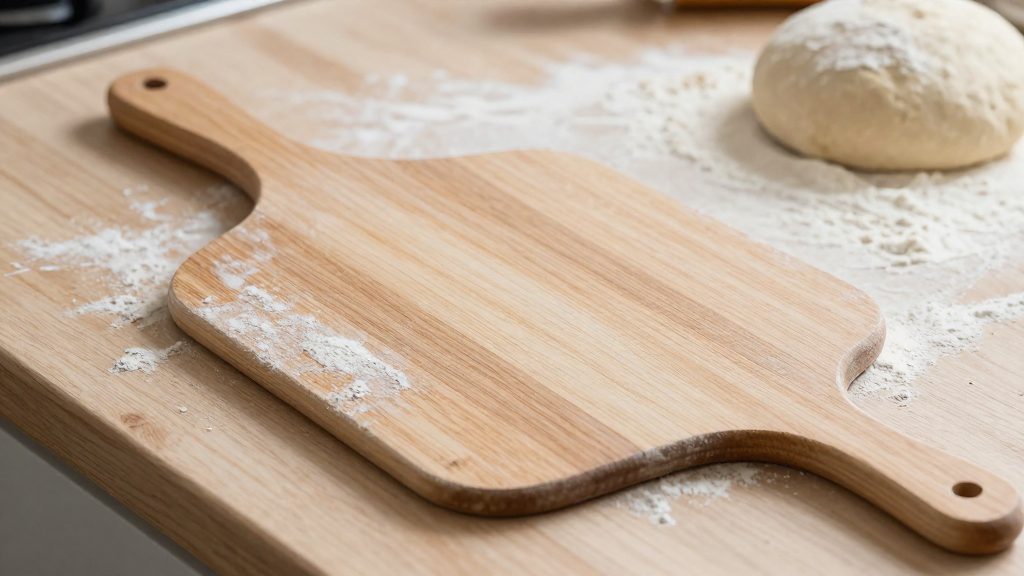
Wooden vs metal pizza peel: the short answer
The verdict is simple: wood for release and transfer, metal for lightness and cleaning. Each material has its own strengths and trade-offs.
A wooden peel is the classic choice, according to Tasting Table (2023-02-04).
A metal peel, typically aluminum, is nonabsorbent, so odours and stains do not stick to it.
| Factor | Wooden peel | Metal (aluminum) peel |
|---|---|---|
| Dough release | Grain helps keep dough from sticking | Dough tends to stick to the smooth surface |
| Weight | Traditional models are heavy; bamboo is lighter | Lighter, thinner and easier to lift |
| Cleaning | Harder to clean | Soap and water |
| Care | Needs regular oiling to avoid warping | No oiling needed |
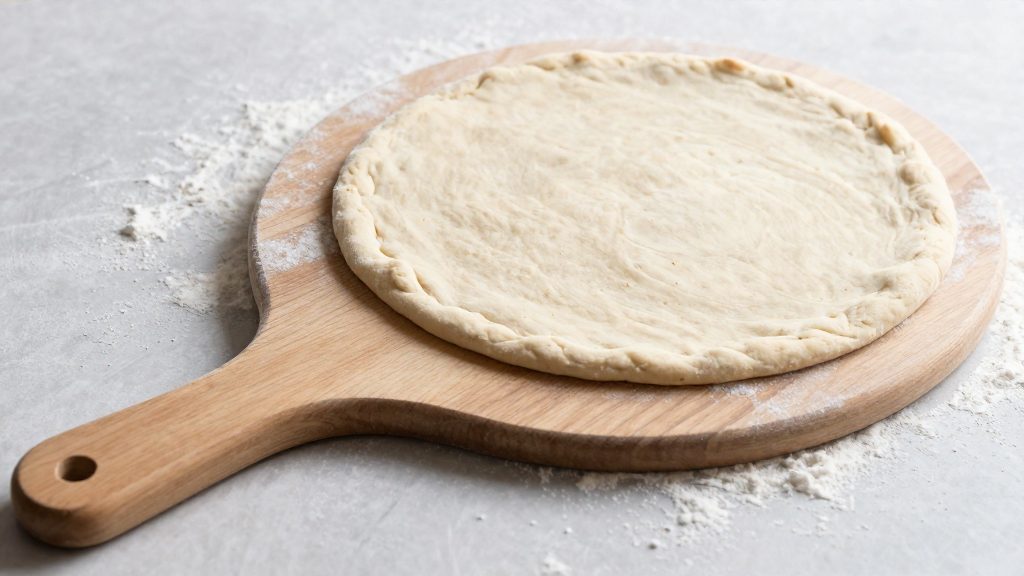
Why does dough stick less to a wooden peel?
According to Tasting Table (2023-02-04), the wood grain helps keep dough from sticking and allows a smooth transfer to a baking tray or stone. The likely explanation, which the source does not spell out, is that the slightly uneven surface reduces contact with the dough.
A metal peel behaves differently. Its aluminum surface is smooth, and dough tends to stick to it. Nothing in the surface helps the dough let go, so release depends on what you place between the dough and the metal. That is why the source focuses on preparation for metal peels rather than on the peel’s material alone.
| Factor | Wooden peel | Aluminum peel |
|---|---|---|
| Surface | Wood grain, which helps dough slide | Smooth, so dough tends to stick |
| Release method | Relies on the grain | Requires flour dusting and, sparingly, cornmeal |
| Practical rule | Launch with a smooth motion | Work quickly so raw dough spends little time on the peel |
For a metal peel, the source recommends dusting the surface with flour before placing the dough. The flour separates the wet dough from the metal, which reduces direct contact. Cornmeal is a common alternative, but the source advises using it sparingly, because too much can burn. The aim is a light layer that reduces sticking without adding burnt residue to the oven.
Speed also matters. The source advises working quickly so the raw dough spends little time on a metal peel. Less time on the surface means less opportunity for the dough to bond to the metal before it is launched.
Are metal peels better for retrieving baked pizza?
The sources do not establish that metal peels are better for retrieving a baked pizza. Tasting Table (2023) recommends metal for easy cleaning and a light tool, but it does not claim that metal is better for getting a finished pizza off the stone. Retrieval performance therefore has to be judged from the handling characteristics the source does describe.
| Peel type | Trait relevant to lifting |
|---|---|
| Traditional wooden | Heavy; wood grain reduces sticking and tearing |
| Bamboo wooden | Lighter than traditional wood |
| Aluminum (metal) | Lighter, thinner and easier to lift; dough tends to stick to the smooth surface |
Lifting a finished pizza off the stone
The lifting effort depends on the peel’s weight, which is the one handling difference the source describes. Work with the pizza still on the stone: slide the peel under it at a low angle, lift one edge to confirm the base is free, then draw the peel out in one smooth motion. Avoid lifting from the top, which concentrates the load on the crust.
What the sources do not establish about retrieval
Its sticking observations concern dough placed on the peel before baking, so they should not be read as evidence about a cooked base.
Keeping a hot pizza stable while lifting it
Stability depends on the cook’s control as much as the tool. Keep the peel level, move at a steady pace and avoid sudden tilts, since a shifting pizza is more likely to slide off the peel. The peel should match the cook’s ability to hold a level, controlled movement for the full lift.
Weight, thickness and handling
A peel’s weight and blade profile determine how much effort each pizza demands, from the first slide under the dough to every turn in the oven. The main difference is between a heavy wooden peel and a lighter metal peel. Tasting Table (2023-02-04) describes traditional wooden peels as heavy, while bamboo versions are lighter. Aluminum peels, the most common metal option, are lighter, thinner and easier to lift.
| Peel type | Weight | Handling effort |
|---|---|---|
| Traditional wooden peel | Heavy | Suits cooks with strong arms |
| Bamboo peel | Lighter than traditional wood | Lower load than a traditional wooden peel |
| Aluminum (metal) peel | Lighter | Easier to lift, thinner edge |
The thickness difference matters as much as the total weight. A thinner metal blade slides more easily under the dough and needs less lifting force to position the pizza, which helps during fast, repeated work.
The source ties the choice to the cook’s physical situation. Metal suits people with limited upper-body strength and those who rotate pizzas frequently, because the lighter tool reduces effort over a long session. Wood is recommended for cooks with strong arms, who can handle the extra weight without strain.
How do you clean and maintain each type?
Wooden and aluminum peels follow different care routines. According to Tasting Table (2023-02-04), wooden peels need regular oiling to avoid warping, and they are harder to clean than metal peels. Aluminum peels need no oiling at all.
Wooden peels: oiling and cleaning
Oiling is the main maintenance task for wood. Without it, the peel is more likely to warp over time. Check the manufacturer’s guidance for the oil type and oiling interval. Because wood is harder to clean than metal, plan for a slower wipe-down after each use.
Aluminum peels: soap and water
Aluminum peels clean with soap and water, which makes routine care simpler. The surface is nonabsorbent, so odours and stains do not stick to it. Washing removes residue from the surface without any extra treatment, and the peel never needs oiling.
Side-by-side care
| Task | Wooden peel | Aluminum peel |
|---|---|---|
| Oiling | Needed regularly to avoid warping | Not needed |
| Cleaning | Harder to clean | Soap and water |
Which peel suits your home oven or pizza oven?
The best peel depends on the surface you launch the pizza onto and how much room you have inside the oven. Wood and metal behave differently at the moment of transfer, so matching the tool to your setup matters more than picking the most popular option. Measure your oven’s interior before choosing a peel size.
Matching the peel to your launch surface
The launch surface is the stone or tray that receives the raw dough.
| Setup | Peel that suits it |
|---|---|
| Either surface, you want the least sticking and tearing and have strong arms | Wooden peel |
| Either surface, you want a light, thin, easy-to-clean tool | Metal peel |
Pizza stone versus tray
A stone and a tray both accept dough, but the transfer method is the same: slide the pizza off the peel with a quick, confident motion.
Peel length and fit inside your oven
The source does not specify peel dimensions, so measure before you buy. Check the width of your oven opening and the depth of the cooking area. The peel’s thin edge should slide under the dough easily, and the handle should let you reach the back of the surface without the blade hitting the oven walls or door frame. A thinner metal blade generally fits into tight openings more easily than a thicker wooden one, because it takes up less room when you slide it in and out.
Should you own both a wooden and a metal peel?
Owning both can make sense if you bake often and value both the grain’s low sticking and the light weight of metal. The source does not discuss this directly. The main factors are weight, sticking and physical comfort.
| Factor | Wooden peel | Metal (aluminum) peel |
|---|---|---|
| Weight | Traditional versions are heavy; bamboo versions are lighter | Lighter, thinner and easier to lift |
| Dough sticking | Grain helps reduce sticking | Dough tends to stick to the smooth surface |
Splitting tasks between two peels
The source compares the two materials but does not describe a two-peel workflow, so the split below is a practical reading of those traits, not a documented method. A wooden peel suits the step where the dough is slid onto the stone, because its grain reduces sticking and tearing. A metal peel suits tasks that need a light tool in hand, such as frequent rotating. The source recommends metal for frequent rotating, but it does not say metal is better for retrieving a baked pizza, so that task should not be assigned to metal on the source’s authority.
Cost and storage of two peels
The consulted source does not address price or storage space. It therefore cannot tell you whether a second peel is worth the expense or the room it takes up in a kitchen. Weigh those points against your own budget and space.
A single peel for occasional baking
If you bake only now and then, one peel is usually enough. Choose by your physical comfort and cleaning preference:
- Pick a wooden peel if you have strong arms and want the least sticking and tearing.
- Pick a metal peel if you want an easy-to-clean, lightweight tool, or if lifting a heavier wooden peel is tiring for you.