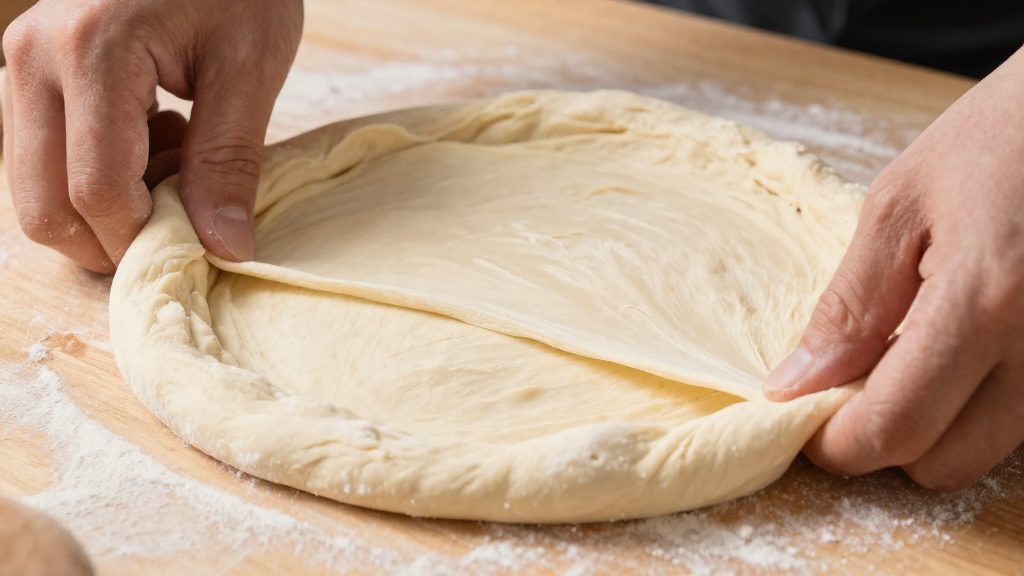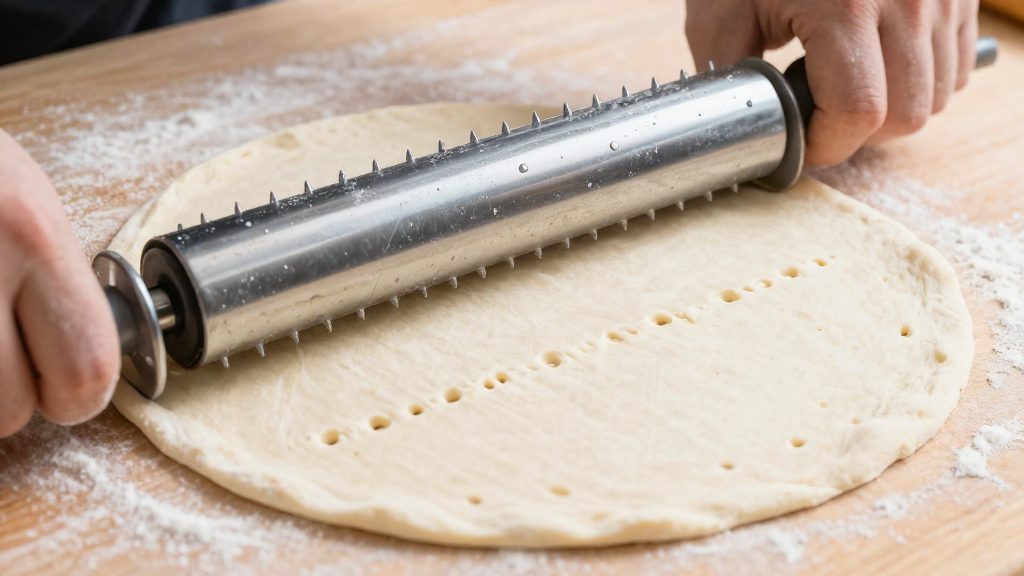
A dough docker is a rolling tool with small spikes that pierces uncooked dough. The holes let steam escape during baking, which keeps the crust flat instead of bubbling. Docking is essential for single-crust pies and when pre-baking a crust, but it isn’t needed for double-crusted pies. Dockers are sold to prevent air bubbles and pockets from forming in pizza crust.
What is a dough docker?
A docker works by making pin-sized holes across the surface of the dough before it goes into the oven. As the dough heats, trapped air and steam can leave through these holes rather than pushing the surface upward into blisters. The tool is therefore most useful when the dough is baked as a single layer, such as a pizza base or a pre-baked crust.
Dockers are sold in two main forms: roller dockers and pointed-wheel dockers. Their parts vary by material, as shown below.
| Component | Common materials |
|---|---|
| Pins | Plastic or stainless steel |
| Handles | Aluminum, plastic, stainless steel or wood |
| Form | Roller docker or pointed-wheel docker |
To use one, roll it across the flattened dough with enough pressure for the spikes to pass fully through the dough. Work over the whole surface so that no area is left unpierced.
What Is Docking Pizza Dough For?
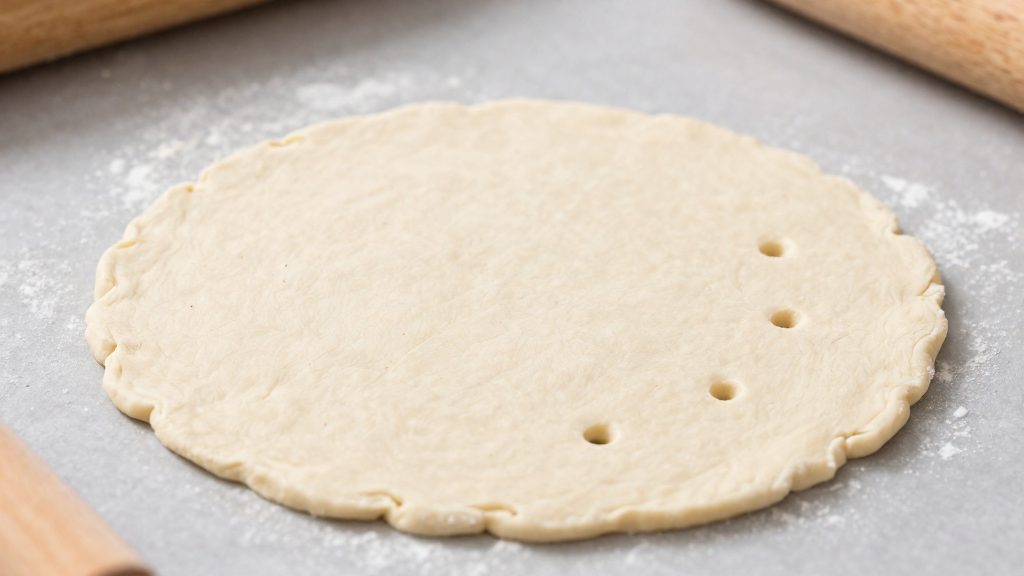
A dough docker is a rolling tool with small spikes that makes pin-sized holes in uncooked dough. According to Tasting Table (2023), the holes let steam escape during baking, which keeps the crust flat and stops it bubbling. Docking is a preparation step done before the dough goes into the oven, and it addresses a problem that appears only during baking.
Preventing Air Bubbles
WebstaurantStore (2026), a US restaurant supplier, notes that dockers are sold to prevent air pockets from forming in pizza crust. Trapped gas expands under heat and lifts the surface of the dough unevenly. Small, evenly spaced holes give that gas a path out, so the base bakes more evenly.
When Docking Matters Most
Tasting Table (2023) states that docking is essential for single-crust pies and when pre-baking a crust. It is not needed for double-crusted pies, because the top layer of dough does not need to vent in the same way. Tasting Table’s guidance is written for pie crusts, so when applying it to a pizza base, the principle is the same: a single exposed sheet of dough benefits from venting, while a sealed or layered structure may not.
Tools for Docking
| Tool | Form | Materials |
|---|---|---|
| Dough docker | Roller or pointed-wheel | Pins: plastic or stainless steel. Handle: aluminum, plastic, stainless steel or wood |
| Fork | Standard kitchen utensil | Can perform the same job as a dough docker, according to a method attributed to King Arthur Baking Company (Tasting Table, 2023) |
Use a fork if you do not have a docker. Press the tines into the dough at regular intervals across the surface, and avoid leaving large untouched areas.
Do You Need to Dock Every Pizza Dough? What the Pie Guidance Suggests
Not every pizza dough needs docking. According to Tasting Table (2023), docking is essential for single-crust pies and when a crust is pre-baked, but it isn’t needed for double-crusted pies. The same principle applies to pizza: a base that goes into the oven as a closed, unbroken sheet can trap gas and bubble, while a docked base gives that gas a way out. Docking is therefore most useful for single-layer crusts and pre-baked crusts, the two cases the source names. Applying this to pizza is an inference.
What docking does
A dough docker is a rolling tool with small spikes that makes pin-sized holes in uncooked dough. According to Tasting Table (2023), the holes let steam escape during baking, which keeps the crust flat and stops it from puffing up in places.
Types of dockers
WebstaurantStore (2026) notes that dockers are sold to prevent air bubbles and pockets from forming in pizza crust. The main variations are listed below.
| Feature | Options listed by WebstaurantStore (2026) |
|---|---|
| Design | Roller docker, pointed-wheel docker |
| Pin material | Plastic, stainless steel |
| Handle material | Aluminum, plastic, stainless steel, wood |
How to dock a pizza base
- Shape the dough first, so the holes sit where the crust will spread.
- Roll the docker across the surface in several directions, pressing evenly so the pins pierce the dough without tearing it.
- Cover the whole base, but avoid pressing hard on the thin centre if the dough is already very thin.
- Dock just before the dough goes into the oven.
How to use a dough docker step by step
A dough docker is a rolling tool with small spikes that makes pin-sized holes in uncooked dough. According to Tasting Table (2023-02-03), the holes let steam escape during baking, which keeps the crust flat and stops it from bubbling. The method is simple: you roll the tool over the shaped dough before it goes into the oven.
Know the tool before you start
WebstaurantStore (2026), a US restaurant supplier, lists two main designs and several common materials:
| Component | Options listed |
|---|---|
| Design | Roller docker, pointed-wheel docker |
| Pin material | Plastic, stainless steel |
| Handle material | Aluminum, plastic, stainless steel, wood |
The same source states that dockers are sold to prevent air bubbles and pockets from forming in pizza crust, so the tool serves two purposes: venting steam and reducing trapped air.
Step-by-step method
- Shape the dough first. Stretch or press the dough into its final flat shape on the surface you will bake it on. Docking an unshaped ball does not give an even pattern.
- Roll the docker in several directions. Pass it across the flat area in one direction, then again at a right angle, so the holes spread across the whole surface rather than forming lines.
- Keep the pressure even. Uneven pressure leaves some areas dense and others pierced, so press with the same force from start to finish.
- Check the coverage. Look for areas with no holes. Those spots are the most likely to puff during baking, so add a few more passes there.
- Bake after docking. Move the crust to the oven once it is docked.
When docking matters most
Tasting Table (2023-02-03) notes that docking is essential for single-crust pies and when pre-baking a crust. A pizza base is a single crust, so the same principle applies. The source also says docking is not needed for double-crusted pies, which have a top layer that changes how steam escapes.
Dough docker or fork: what’s the difference?
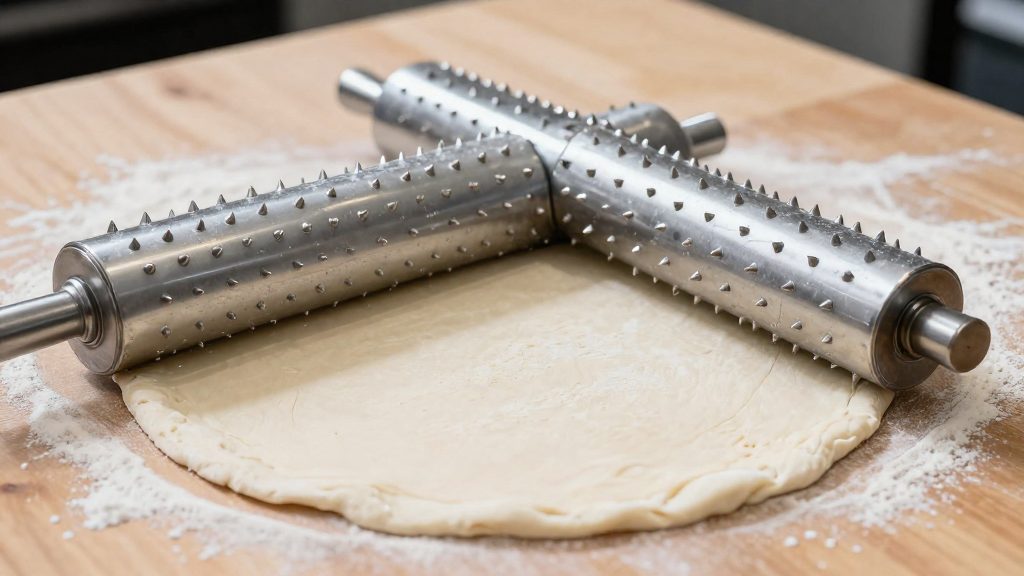
A dough docker is a rolling tool with small spikes that pierce uncooked dough, leaving pin-sized holes. According to Tasting Table (2023), those holes let steam escape during baking, which keeps the crust flat and stops it from bubbling. A fork can do the same job. Tasting Table attributes this to King Arthur Baking Company (2023). The difference lies in the tool itself: a fork pricks the dough one puncture at a time, while a dough docker covers the surface with a pattern of holes as you roll it.
Types of dough dockers
Dough dockers are sold to prevent air bubbles and pockets from forming in pizza crust. According to WebstaurantStore (2026), a US restaurant supplier, they come in two main forms:
- Roller dockers, which have a spiked cylinder that rolls across the dough.
- Pointed-wheel dockers, which have a wheel of points that is pushed or rolled over the dough.
The pins are made of plastic or stainless steel, and the handles are made of aluminum, plastic, stainless steel or wood, per WebstaurantStore (2026). Choose based on comfort and cleaning needs.
When docking matters
Tasting Table (2023) states that docking is essential for single-crust pies and when pre-baking a crust. Tasting Table’s guidance is written for pie crusts. A pizza base is also a single exposed sheet of dough, so the same principle is likely to apply, but this is an extrapolation rather than something the source states.
How to Choose a Dough Docker
A dough docker is a rolling tool with small spikes that pierces uncooked dough. According to Tasting Table (2023), the holes let steam escape during baking, which keeps the crust flat and stops it from bubbling. WebstaurantStore (2026) notes that dockers are also sold to prevent air bubbles and pockets from forming in pizza crust. Your choice depends on what you bake and how much dough you need to pierce.
Decide whether you need one
Docking matters most for single-crust pies and for pre-baked crusts. Tasting Table (2023) states that it isn’t needed for double-crusted pies, so a docker is unnecessary for layered or filled bakes.
Compare the two designs
Dockers come in two main forms:
| Type | Description |
|---|---|
| Roller docker | A rolling tool fitted with pins |
| Pointed-wheel docker | A wheel with pointed tips |
Both forms serve the same purpose. Choose the one that fits how you already roll your dough.
Check the materials
Compare the parts that touch the dough and the parts you hold:
| Component | Available materials |
|---|---|
| Pins | Plastic or stainless steel |
| Handle | Aluminum, plastic, stainless steel or wood |
Pick the pin and handle materials according to comfort and how easy the tool is to clean. Pick the handle that feels comfortable in your hand during rolling.
Cleaning a dough docker and using a fork instead
A dough docker is simple to care for, but its pins need attention because dough residue can dry on them between uses. After each session, scrape off any flour and dough, then wash the tool by hand in warm water and dry it fully before storing it. Avoid leaving it in a damp drawer, since moisture can cause a metal docker to corrode and a wooden handle to swell or crack.
Dockers are sold in two main designs, and the choice affects both cleaning and results:
| Type | How it works | Best suited to |
|---|---|---|
| Roller docker | A rolling drum with pins across its surface | Not specified by the sources |
| Pointed-wheel docker | A wheel with individual pointed teeth | Not specified by the sources |
The materials also vary. Pins are made of plastic or stainless steel, and handles come in aluminum, plastic, stainless steel or wood. Wooden handles generally need careful drying after washing.
If you do not own a docker, a fork can do the same job. King Arthur Baking Company is credited with this suggestion. Press the tines evenly across the dough, working from the centre outwards, so the holes are spaced close together. Use the same approach for pizza that you would use for a pie crust, pressing gently enough not to tear the dough.
Docking is needed for a single-crust pie or a pre-baked crust, but it is not needed for a double-crust pie. For a pizza base, the goal is the same: preventing air pockets and bubbles from forming, so the crust bakes flat.
Frequently asked questions
Do I need a dough docker for pizza dough?
Tasting Table (2023) states that docking is essential for single-crust pies and pre-baked crusts, but not for double-crusted pies. That guidance is written for pie crusts, so applying it to a pizza base is an inference, although a pizza base is also a single exposed layer. Docking is most relevant when the base is baked on its own, before toppings are added.
Can I use a fork instead of a dough docker?
Yes, according to Tasting Table (2023), which attributes the idea to King Arthur Baking Company. A fork’s tines make the same kind of small holes that let steam escape during baking. The holes are smaller and fewer than a roller produces, so a fork is best reserved for a small base.
Which type of dough docker should I buy?
WebstaurantStore (2026) describes two main designs: the roller docker, with pins across a drum, and the pointed-wheel docker, with individual teeth on a wheel. Pins are made of plastic or stainless steel, and handles of aluminum, plastic, stainless steel or wood.