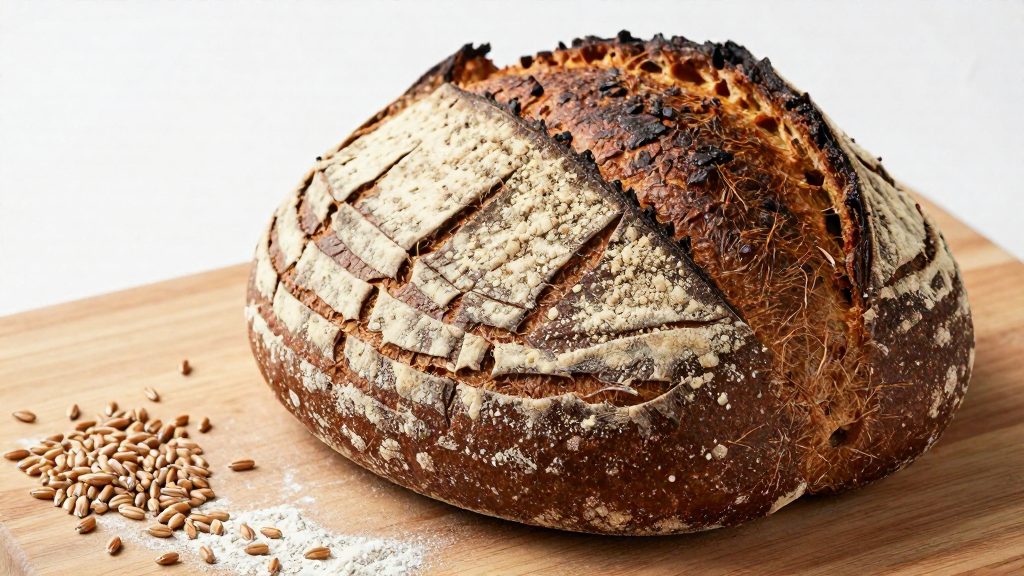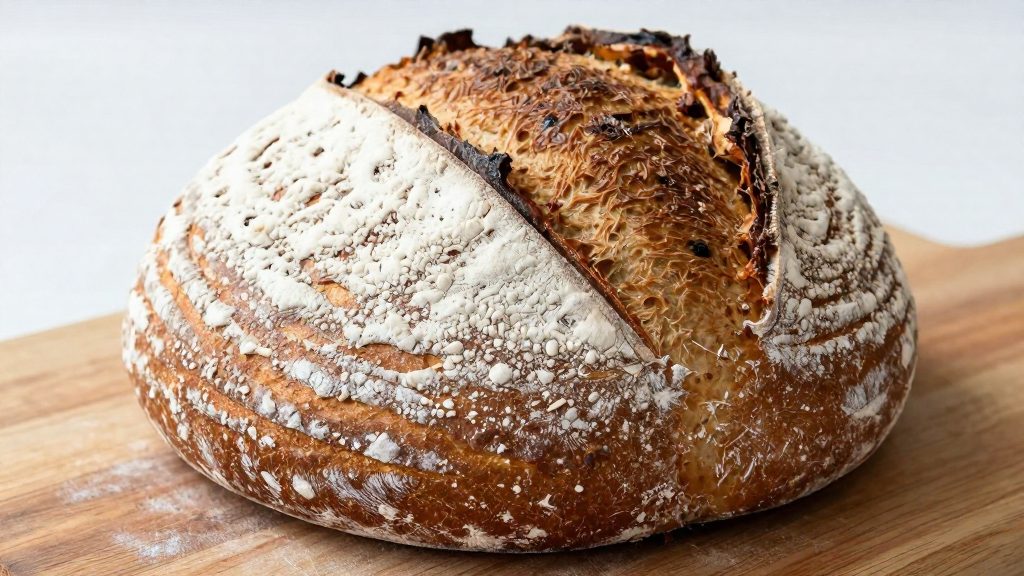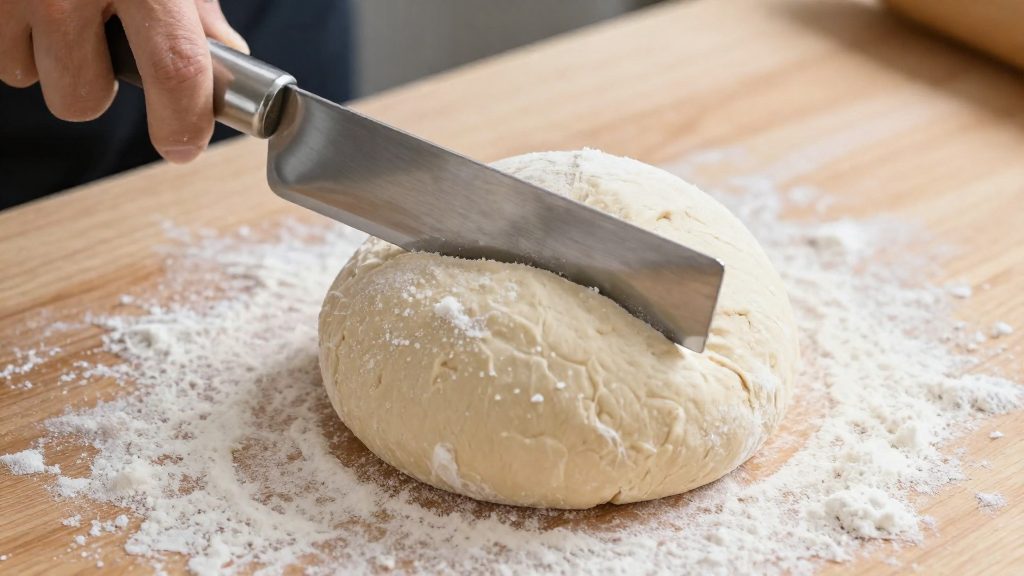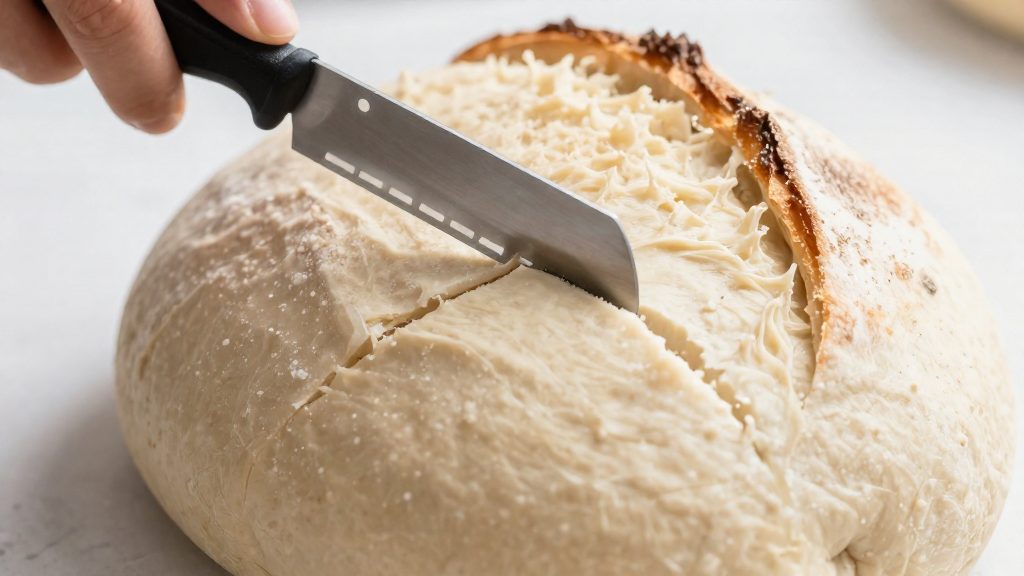
Scoring is the practice of making controlled cuts on the surface of a loaf just before it goes into the oven. The cuts give the dough a predictable place to expand instead of splitting at random. According to The Fresh Loaf, a home baker can build a simple scoring tool from a coffee stick and a double-edged razor blade, and the scores open during baking, an effect known as blossom.
Why Score Bread Dough?
Scoring has two jobs: it controls where the loaf expands, and it shapes the look of the crust. Gas produced during baking and the steam inside the dough will find the weakest point of an unscored surface and split it unevenly. A deliberate cut sets that weak point in advance, so the loaf opens where you choose.
The Fresh Loaf gives three practical parameters for a clean, open score:
| Parameter | Guideline | Source |
|---|---|---|
| Cut angle | Slanted, between 30 and 60 degrees from vertical | The Fresh Loaf |
| Minimum depth | At least 0.5 inch (about 1.3 cm) | The Fresh Loaf |
| Depth on large loaves | Deeper than the minimum | The Fresh Loaf |
The cut angle matters because a slanted blade lifts a flap of crust rather than leaving a straight slit. That flap is what forms the raised, lighter “ear” on many artisan loaves.
Depth matters more than many beginners expect. A cut that only pierces the skin gives the dough little room to open, and the result looks less attractive than a deeper score. Make each cut in one smooth stroke rather than sawing back and forth, which tears the surface instead of opening it cleanly.
Bread lame or razor blade: which to choose?
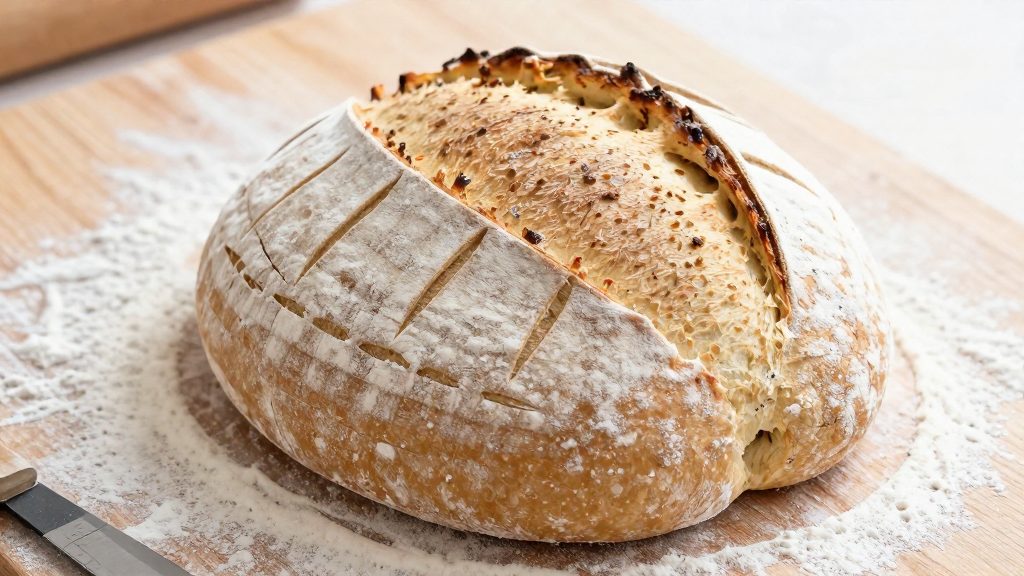
A bread lame is a handheld tool that holds a blade for scoring dough before it goes into the oven. A single-edged or double-edged razor blade is an improvised alternative. The angle and depth of each cut decide how the scores open during baking. According to The Fresh Loaf, the amateur baker Floydm made a homemade lame from a coffee stick and a double-edged razor blade, and his scores opened in the oven, an effect he calls “blossom.”
How the homemade setup works
The blade sits in a handle, so you guide it with your hand instead of pressing the bare blade into the dough. A handle may make it easier to hold a steady angle.
Scoring parameters
| Parameter | Guideline (The Fresh Loaf) |
|---|---|
| Blade angle | 30 to 60 degrees from vertical, cutting on a slant |
| Minimum depth | At least half an inch (about 1.3 cm) |
| Large loaves | Cut deeper than the minimum |
Hold the blade at the same angle for the whole cut, and cut to the required depth in one pass. Angle and depth work together: a slanted cut that stays too shallow will not produce the same opening as a deeper one at the same angle.
Which to choose
A razor blade in a simple holder is an option to try before buying a dedicated lame, using the same angle and depth targets. Judge the results on your own loaves.
What depth and angle for a well-opened ear?
The angle and depth of each cut decide how the score opens in the oven. On The Fresh Loaf, the amateur baker Floydm makes a homemade lame from a coffee stick and a double-edged razor blade. The cuts open during baking, a effect called “blossom.” To get the ear, the source advises cutting at a slant, between 30 and 60 degrees from vertical, rather than straight down. The angled blade lifts a flap of crust, and that flap expands as steam escapes from the dough.
Depth matters as much as angle. The same source describes cutting at least half an inch (about 1.3 cm) deep, and deeper on large loaves. A cut that only pierces the skin gives a less attractive result, because the dough has little room to open.
| Parameter | Guideline | Source |
|---|---|---|
| Angle from vertical | 30 to 60 degrees | The Fresh Loaf |
| Minimum depth | At least 0.5 inch (about 1.3 cm) | The Fresh Loaf |
| Large loaves | Deeper than the minimum | The Fresh Loaf |
To apply these figures, hold the razor blade lame at a steady slant between 30 and 60 degrees from vertical and make each cut in one smooth pass rather than sawing back and forth. Keep the cuts far enough apart that the flaps do not merge while they expand. Test the angle and depth on one or two cuts first, then adjust the rest of the loaf to match.
When to score the dough
Scoring is the last cut you make before the loaf goes into the oven. Its timing and depth decide how the bread opens. According to The Fresh Loaf, the scores open during baking, an effect bakers call “blossom.” The cut acts as a controlled weak point, so the expanding crumb splits along the line you chose instead of tearing at random. Score the shaped loaf just before it goes into the oven.
Two measurements matter most. The first is the angle. The Fresh Loaf advises cutting on a bias, between 30 and 60 degrees from vertical, to produce the raised “ear” effect. A single, confident stroke at that angle gives a cleaner opening than a sawing motion.
The second is depth. The author cuts at least half an inch (about 1.3 cm) deep, and deeper on large loaves. A cut that only breaks the skin usually gives a less attractive result, because the surface tears unevenly instead of opening along the line.
| Parameter | Guideline from The Fresh Loaf |
|---|---|
| Angle | 30 to 60 degrees from vertical |
| Minimum depth | About 1.3 cm (half an inch) |
| Depth on large loaves | Deeper than the minimum |
How do you stop the blade from catching the dough?
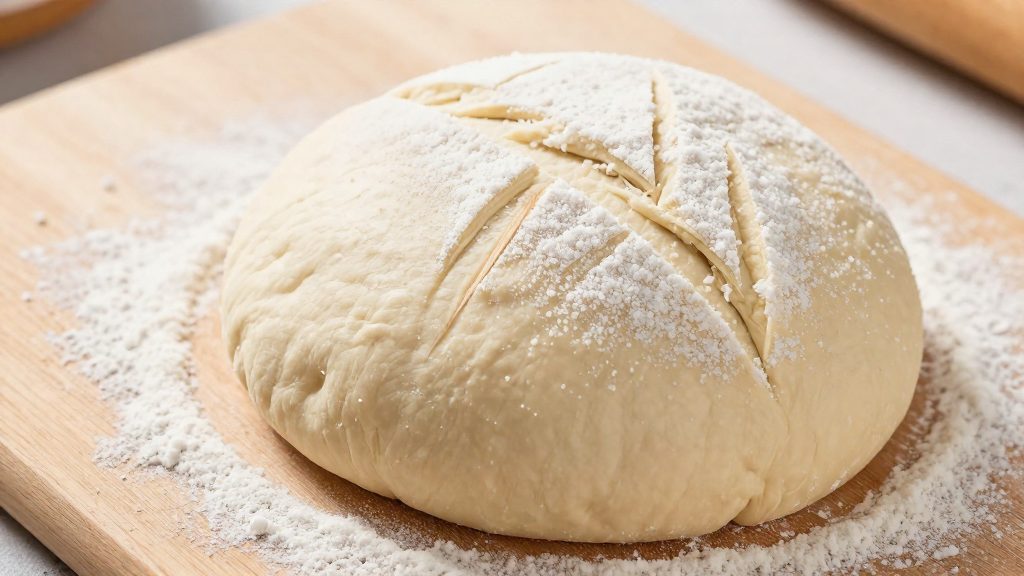
A blade that catches the dough tears the skin instead of cutting it cleanly. According to The Fresh Loaf, the cut is made on a slant, between 30 and 60 degrees from vertical. The amateur baker Floydm makes his homemade lame from a coffee stick and a double-edged razor blade. When the cut is done well, the scores open during baking, an effect called blossom. That swelling is what gives the desired ear.
Three settings help the blade glide:
| Parameter | Value or effect according to the source |
|---|---|
| Blade angle | Between 30 and 60 degrees from vertical, to get the ear (The Fresh Loaf) |
| Cut depth | At least half an inch (about 1.3 cm), deeper on large loaves (The Fresh Loaf) |
| Cut that is too shallow | Only pierces the skin, with a less attractive result (The Fresh Loaf) |
A blade tilted between 30 and 60 degrees from vertical, as the source advises, helps produce the ear. The depth must be enough for the skin to give way in one go. A cut that stays on the surface catches more often, because the blade drags against the crumb.
To keep the blade from catching as you cut:
- Hold the blade firmly without pressing hard, and draw the cut in one single motion.
- Do not go back over a line that is already open: a second pass tears the edges.
- Wipe the blade between cuts if dough builds up on it.
- Score dough that is taut on the surface, and do not let it relax or stick to the work surface.
What other tools can replace the blade?
A bread lame is a tool for making controlled cuts in the skin of the dough. Any substitute has to meet the same requirements. The Fresh Loaf (undated source) describes a homemade lame built from a coffee stick and a double-edged razor blade, and it notes that the cuts open during baking, a effect bakers call “blossom”. Because the blade itself is only one part of the job, the useful question is whether a different tool can produce the same geometry in the dough.
The same source sets three measurable targets for a scored loaf, which work as a checklist for judging any alternative:
| Scoring factor | Target from the source |
|---|---|
| Cutting angle | Diagonal, between 30 and 60 degrees from vertical |
| Cut depth | At least half an inch (about 1.3 cm), deeper on large loaves |
| Result | Cuts deep enough to open in the oven, not just pierce the skin |
Any other tool, such as a sharp knife, should be judged against the same angle and depth targets. Test any substitute on a practice loaf before scoring a finished one.
To judge a tool, check whether it can:
- hold a diagonal angle within the 30 to 60 degree range
- reach about 1.3 cm of depth without tearing the dough
- make a single clean pass, so the edges do not drag
How to handle and maintain the razor blade safely?
Safe use of a razor blade for scoring depends on three things: the angle of the cut, the depth of the cut, and how you hold the blade. According to The Fresh Loaf, the home baker Floydm makes a homemade lame from a coffee stick and a double-edged razor blade. The scores open during baking, which creates the “blossom” effect. Controlled, well-angled cuts also keep the blade’s movement predictable, which reduces the risk of slipping.
Scoring angle and depth
| Parameter | Guidance | Source |
|---|---|---|
| Blade angle | Cut at a bias, between 30 and 60 degrees from vertical | The Fresh Loaf |
| Minimum depth | At least about half an inch (roughly 1.3 cm) | The Fresh Loaf |
| Larger loaves | Cut deeper than the minimum | The Fresh Loaf |
Holding the blade
- Grip the handle firmly, with your fingers placed behind the cutting edge and away from the path of the blade.
- Make each score in one smooth, continuous pass. Stopping and restarting a cut can tear the dough.
- Keep your non-cutting hand clear of the blade’s path, and never score toward your body.
Storage and maintenance
- Dry the blade after each session. Moisture from dough can dull the edge and encourage corrosion.
- Store it separately in a protective sleeve or case, out of reach of children.
- Replace the blade when it no longer cuts cleanly, since a dull edge drags the dough and tears the scores.
- Dispose of used blades in a rigid, sealed container rather than loose in the bin.
Frequently asked questions
Can a razor blade be used instead of a bread lame?
Yes, as a documented homemade option. According to The Fresh Loaf (undated), one amateur baker mounted a double-edged razor blade on a coffee stick, and the cuts opened during baking. The consulted sources do not compare those results with a purpose-built lame.
What cut angle and depth should a beginner aim for?
Hold the blade at a slant of 30 to 60 degrees from vertical, and cut at least half an inch (about 1.3 cm) deep, going deeper on large loaves. These figures come from The Fresh Loaf (undated).
Can a kitchen knife replace a lame?
The consulted sources do not test knives or other household tools, so their performance is unverified. Judge any substitute against the same angle and depth targets, and check that it opens the skin cleanly without tearing it.