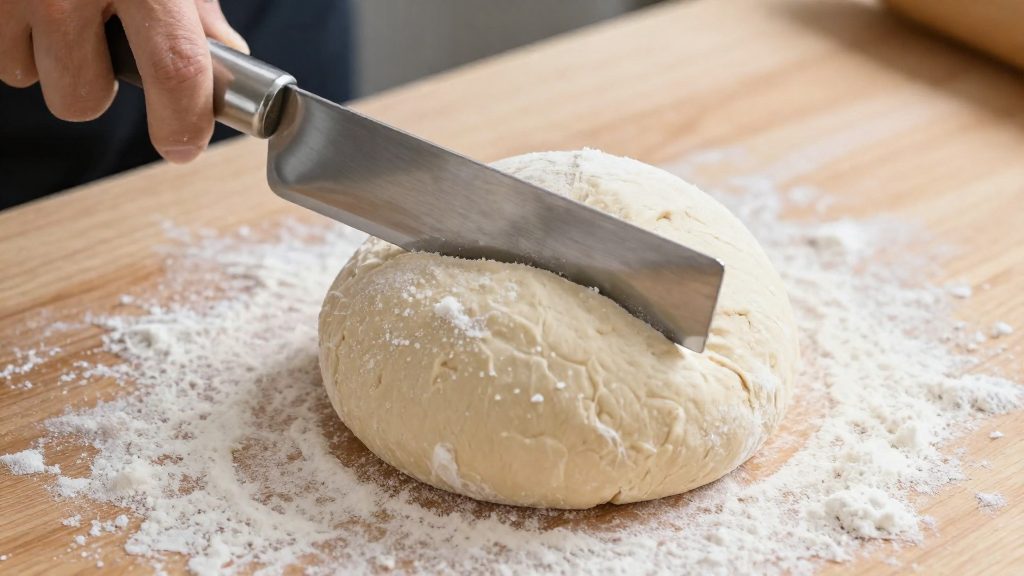
A bench scraper is a flat, straight-edged tool for cutting, portioning, lifting and clearing dough on the work surface. It is used in sourdough, bread and pizza making. Its main jobs are dividing dough into even pieces, scraping dough from bowls and benches, transferring fragile dough to a sheet pan, and gathering leftover dough and flour in one pass.
What a bench scraper does in sourdough work
Two versions are common. The classic bench scraper, often called a bench knife, has a narrow metal blade. The dough scraper is made of rigid plastic. Both have a straight edge that cuts bread dough and pizza (King Arthur Baking, 2021-08-24).
| Task | How the scraper helps | Source |
|---|---|---|
| Dividing dough | Cuts the dough into pieces | King Arthur Baking (2021-08-24) |
| Portioning | Makes even pieces of sourdough, biscuit or pizza dough | Field Company (2026) |
| Scraping bowls and benches | Removes dough from bowls and work surfaces | King Arthur Baking (2021-08-24) |
| Transferring fragile dough | Moves delicate dough to a sheet pan | King Arthur Baking (2021-08-24) |
| Clearing the bench | Gathers leftover dough and flour in one pass | Field Company (2026) |
Portioning and clearing the bench
For portioning, press the straight edge down through the dough to cut it, then keep the pieces as even as you can. For a single-pass cleanup, slide the edge under the leftover dough and flour and push them together into one pile. Doing this before the next step keeps the bench clear while you work.
Material and pan contact
The material affects what the tool can touch. The metal bench knife can mark nonstick pans, but the plastic scraper does not (King Arthur Baking, 2021-08-24).
Limits of the available information
Check that the tool suits your dough before relying on it for soft, sticky or high-hydration dough.
Metal or Plastic: Which Bench Scraper to Choose?
A bench scraper comes in two common forms: the metal bench knife and the plastic dough scraper. A classic bench knife has a narrow metal blade, while a dough scraper is made of rigid plastic. Both have a straight edge that cuts bread dough and pizza dough, so the choice depends less on what you cut and more on the surface you work on and the tasks you repeat most.
| Feature | Metal bench knife | Plastic dough scraper |
|---|---|---|
| Material | Narrow metal blade | Rigid plastic |
| Effect on nonstick pans | Can mark the coating | Does not mark the coating |
| Documented tasks | Cutting bread dough and pizza dough | Dividing dough, scraping dough out of bowls and off work surfaces, transferring fragile dough to a sheet pan |
Choosing by surface and task
The main practical difference is the pan. King Arthur Baking (2021) notes that the metal bench knife can mark nonstick pans, while the plastic scraper does not. If you move dough or cut it directly in a nonstick pan, the plastic version is the safer choice.
For dividing and clearing, the bench scraper’s role is broader. Field Company (2026) describes the bench scraper as a tool that portions sourdough, biscuit or pizza dough into even pieces, and that gathers leftover dough and flour to clear the bench in one pass. Use the scraper’s edge to cut even portions, then sweep up the remaining dough and flour in the same motion.
Limits of the available information
If your sourdough is especially wet, test each type on a small batch to see which one releases the dough more cleanly.
Dividing Dough Without Tearing It
A bench scraper suits this job because its straight edge cuts through dough in one pass instead of pressing and dragging it. The classic bench knife is a narrow metal blade, while a dough scraper is made of rigid plastic. Both have a straight edge that cuts bread dough and pizza dough (King Arthur Baking, 2021-08-24). The edge does the cutting, so you can keep pressure on the dough low, which limits the tearing that happens when a blade is pushed through it.
| Tool | Construction | Edge | Effect on nonstick pans |
|---|---|---|---|
| Classic bench knife | Narrow metal blade | Straight | Can mark the pan |
| Dough scraper | Rigid plastic | Straight | Does not mark the pan |
Source: King Arthur Baking (2021-08-24)
To divide dough, set the scraper’s edge at the mark you want, then press down in one steady motion without forcing it. Repeated sawing or back-and-forth movement tends to drag the gluten and deflate the piece. Once the cut is made, lift the portions with the scraper blade flat under each piece and move them to the bench.
For shaping, a bench scraper can portion sourdough, biscuit or pizza dough into even portions (Field Company, 2026). Even portions matter because pieces of different weight bake and proof at different rates. After dividing, use the scraper to gather leftover dough and flour from the bench, which clears the surface in one pass (Field Company, 2026). Keep the work surface lightly floured so the scraper slides rather than catches on the dough.
The consulted sources do not specify how a bench scraper handles soft, sticky or high-hydration dough, so for those doughs, test the technique on a small batch before dividing the full batch.
Handling Very High-Hydration Sticky Dough
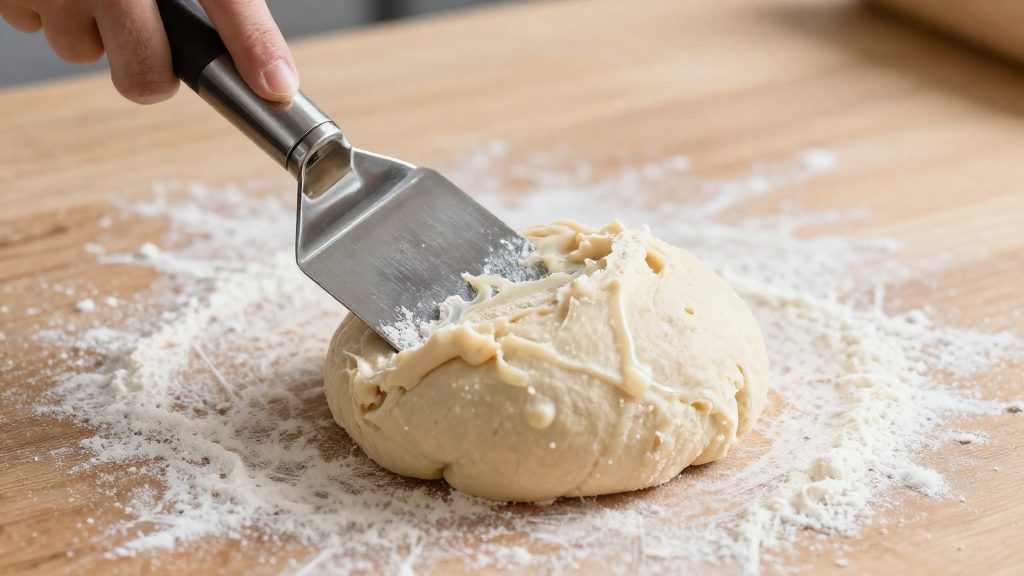
Very wet sourdough sticks to hands, benches and tools, so the work depends less on force and more on keeping a thin barrier between the high-hydration dough and each surface.
Each tool has a documented role, and matching the tool to the task makes sticky dough easier to move:
| Tool | Documented use |
|---|---|
| Bench knife (narrow metal blade) | Cuts bread dough and pizza dough; can mark nonstick pans |
| Dough scraper (rigid plastic) | Divides dough, scrapes bowls and work surfaces, transfers fragile dough to a sheet pan |
| Bench scraper | Portions sourdough, biscuit or pizza dough into even pieces; gathers leftover dough and flour in one pass |
For sticky dough, the practical sequence is:
- Slide, don’t drag. Work the blade flat under the dough to lift it, rather than pulling the dough across the bench, which stretches it and leaves it attached to the surface.
- Portion before shaping. Cut the dough into even pieces with the bench scraper while it is still in one mass, so each piece holds its shape with less handling.
- Clear as you go. Gather dough residue and loose flour between steps so it does not build up under the next piece.
- Transfer with the scraper. Slide the dough scraper under the shaped piece and move it onto the sheet pan or peel-ready surface, instead of lifting it by hand.
- Lightly oil or wet your hands. Adding flour each time changes the hydration of the dough, so a thin film of water or oil on hands and tools is the lower-impact option.
Clearing the Work Surface and Tools
A bench scraper clears a floury work surface in one pass. According to Field Company (2026), it can gather leftover dough and flour from the bench, so you don’t have to push the residue into a pile by hand. The same tool can portion sourdough, biscuit or pizza dough into even pieces, so cleaning can follow directly after dividing the dough.
Bench Knife and Dough Scraper Compared
King Arthur Baking (2021-08-24) describes two common tools that both have a straight edge for cutting bread dough and pizza. They differ in material and in how they behave on cookware.
| Tool | Blade material | Edge | Marks nonstick pans? |
|---|---|---|---|
| Classic bench knife | Narrow metal blade | Straight | Yes |
| Dough scraper | Rigid plastic | Straight | No |
Matching the Tool to the Task
The dough scraper has the wider range of jobs listed in the same source. King Arthur Baking (2021-08-24) says it can:
- divide dough;
- scrape dough out of bowls and off work surfaces;
- transfer fragile doughs to a sheet pan.
For cleaning, work from the edges of the bench toward the centre. Hold the scraper at a low angle, push residue into one spot, and lift it off in one motion. Do this before wiping the surface, so loose flour and dough scraps don’t spread across the bench.
Test either tool on a small batch before relying on it for soft, sticky or high-hydration dough.
Other uses: portioning, transferring and clearing
A bench scraper is useful beyond shaping loaves. Its straight edge also handles portioning, transferring and cleaning tasks that come up when making pizza, bread and biscuits.
Portioning dough into even pieces
Field Company (2026) states that a bench scraper can portion sourdough, biscuit or pizza dough into even pieces. Working on a floured surface, cut the dough in one clean pass rather than sawing back and forth, which keeps the pieces closer in size for a batch of pizza bases or rolls.
Transferring fragile dough
King Arthur Baking (2021-08-24) describes using a dough scraper to transfer fragile doughs to a sheet pan. Slide the blade under the piece, lift it and move it onto the tray, so your fingers do not stretch or tear it.
Clearing the bench
Field Company (2026) also notes that the tool can gather leftover dough and flour and clear the bench in one pass. Using it at the end of a session saves time before the surface is wiped down.
| Task | Described by |
|---|---|
| Portioning sourdough, biscuit or pizza dough into even pieces | Field Company (2026) |
| Gathering leftover dough and flour to clear the bench in one pass | Field Company (2026) |
| Scraping dough out of bowls and off work surfaces | King Arthur Baking (2021-08-24) |
| Transferring fragile dough to a sheet pan | King Arthur Baking (2021-08-24) |
Check the dough’s behaviour on a small batch before relying on these tasks for wetter recipes.
Blade Care and Safety
A bench scraper is simple to maintain, but the care depends on the blade material. The classic metal bench knife and the plastic dough scraper differ in one practical way: according to King Arthur Baking (2021), the metal blade can mark nonstick pans, while the plastic scraper does not. Check the tool before using it on nonstick surfaces.
| Feature | Metal bench knife | Plastic dough scraper |
|---|---|---|
| Blade material | Narrow metal blade | Rigid plastic |
| Edge | Straight edge that cuts dough | Straight edge that cuts dough |
| Nonstick pans | Can leave marks | Does not mark |
For safe handling, follow these general steps:
- Keep the edge clear of your hands. Place your fingers on the back or handle, never in the path of the edge, when cutting or scraping.
- Scrape in the direction away from your body. This keeps control of the blade if the dough sticks.
- Clean the blade after each use. Remove dough residue with a dry or lightly damp cloth before it hardens, then dry the tool fully.
- Store it separately from other tools. A loose blade can cut through a drawer liner or shift into utensils.
For cleaning temperatures, dishwasher suitability, and replacement intervals, check the manufacturer’s instructions.
Frequently asked questions
Which bench scraper should a beginner buy, metal or plastic?
A metal bench knife is the traditional choice, while a plastic dough scraper is more flexible for everyday use. Keep the pan surface in mind: King Arthur Baking (2021-08-24) notes that the metal version can mark nonstick pans, but the plastic one does not.
Will a bench scraper handle sticky, high-hydration dough?
Test it on a small batch before relying on it for high-hydration dough or other soft, sticky mixes.
Can one tool both portion dough and clean the work surface?
Yes. Field Company (2026) says a bench scraper can cut sourdough, biscuit or pizza dough into even pieces and also collect leftover dough and flour in a single sweep. This makes it useful for portioning and tidying in the same session.