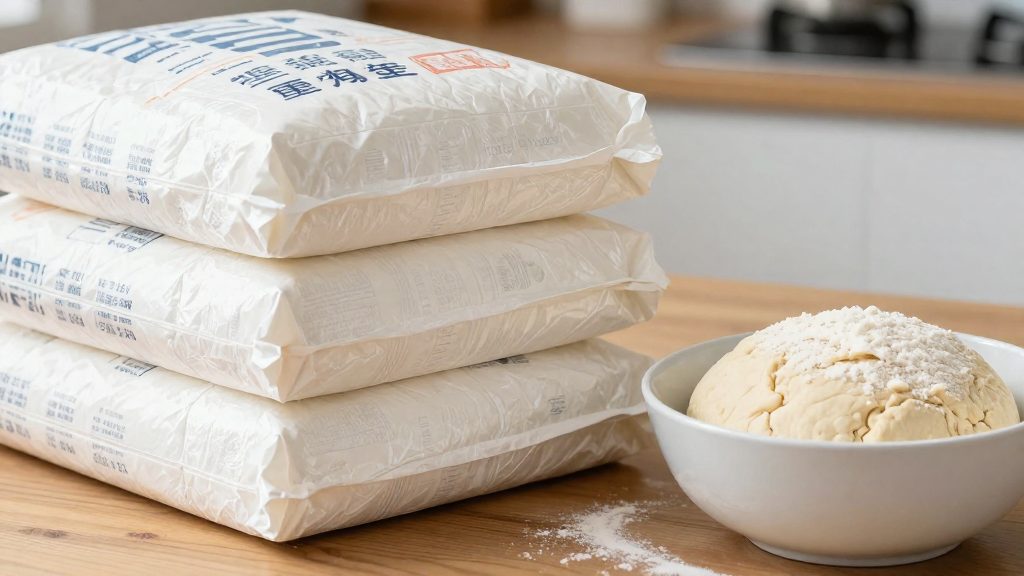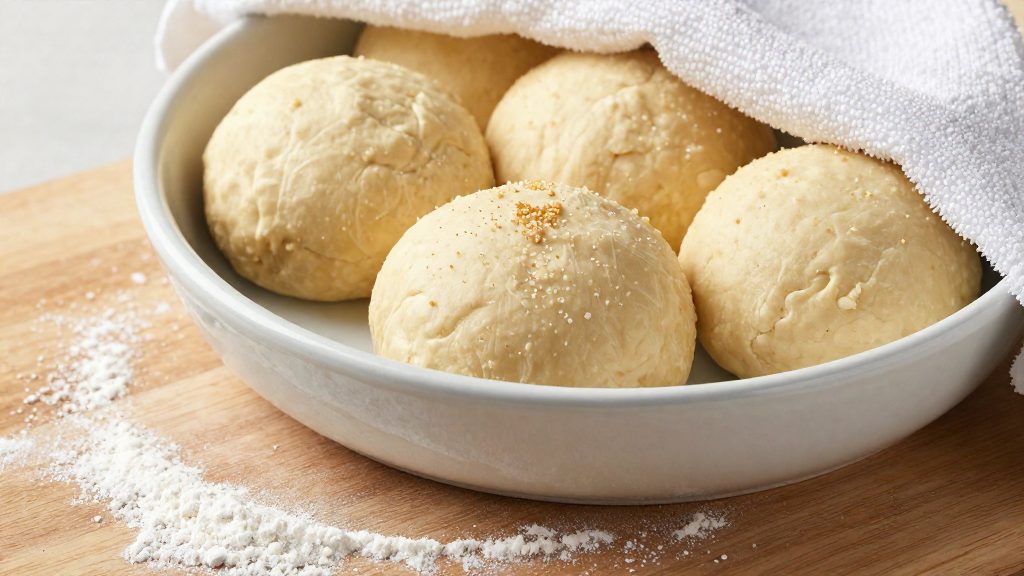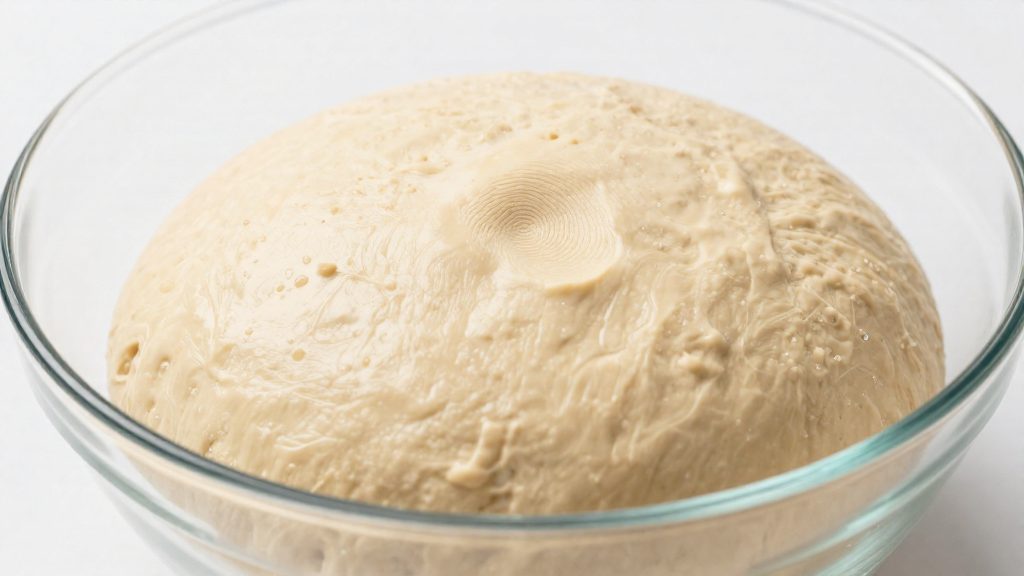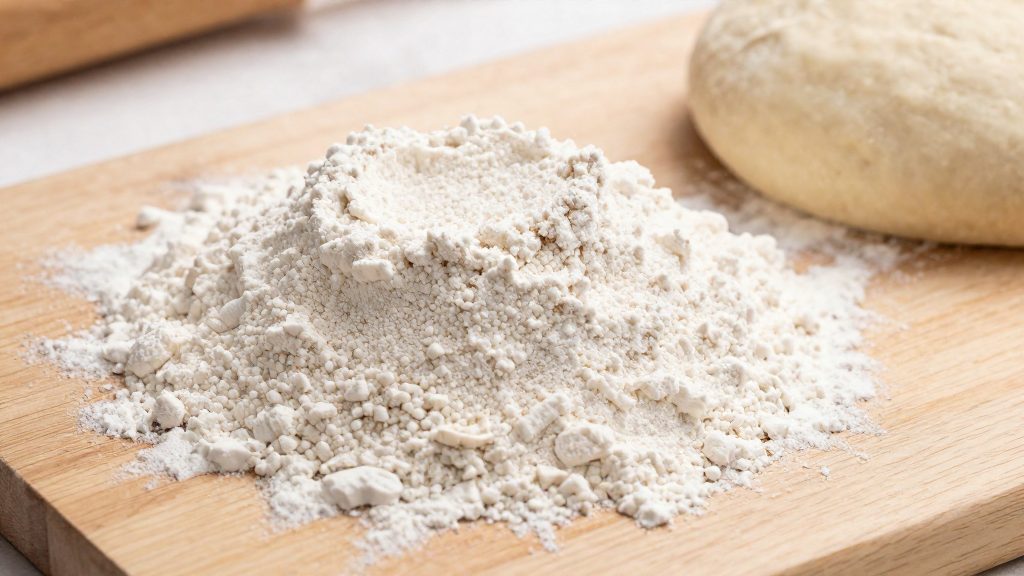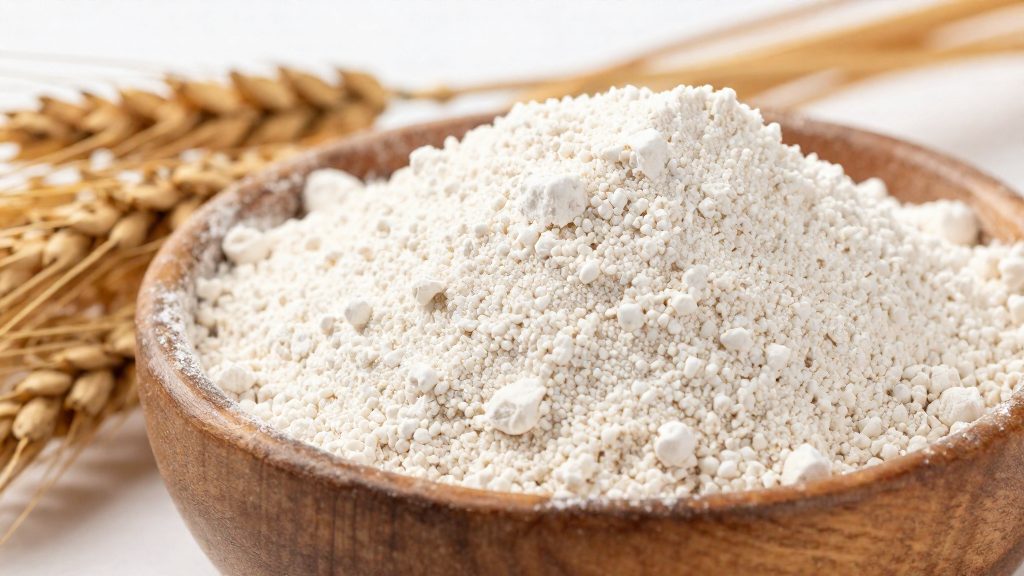
Stone ground whole wheat flour is wheat flour milled between two stones, with the entire kernel, including the bran and germ, kept in the powder rather than sifted out. Because these parts are not sifted out, the flour is labelled whole wheat. A Canadian whole wheat product is Run of the Mill from 1847 Stone Milling, based near Fergus, Ontario, although the source consulted does not confirm that it is stone ground.
What Stone Ground Whole Wheat Flour Is
Two terms describe this flour, and they refer to different things. Stone grinding is the milling method: grain is crushed between stones rather than passed through steel rollers. Whole wheat describes the contents: the flour includes all three parts of the wheat kernel, namely the endosperm, the bran and the germ. A flour can be stone ground without being whole wheat, and the reverse is also possible, so both words matter when you read a label.
Keeping the bran and germ in the flour is what gives whole wheat its darker colour and its more pronounced flavour in bread. Bakers usually adjust their recipes for this, since whole wheat flour absorbs water differently from white flour and often needs more hydration or a longer rest before shaping.
The table below summarises the facts reported for 1847 Stone Milling, according to Ontario Grain Farmer (2023):
| Item | Detail |
|---|---|
| Company | 1847 Stone Milling |
| Founded | 2014, by siblings Melissa and Trevor McKeown |
| Location | Fergus, Ontario area |
| Flour type | Organic |
| Whole wheat product | Run of the Mill |
| Main grain source | Southern Ontario, with some specialty grains from Western Canada |
| Distribution | Ships across Canada |
Stone-Ground or Roller-Milled: What’s the Difference?
Wheat becomes flour in one of two main ways: grinding between stones, or passing through steel rollers. Both produce flour, but they handle the grain differently, and that changes how the flour performs in bread and pizza dough. Stone grinding crushes the whole kernel between two abrasive surfaces, so the bran and germ stay mixed into the flour. Roller milling works in stages, cracking the grain and separating the bran, germ and starchy endosperm before recombining or sifting them. For home bakers, the choice mostly affects texture, colour and how much of the original kernel ends up in the bag.
| Feature | Stone grinding | Roller milling |
|---|---|---|
| Grinding action | Crushes the whole kernel between stones | Cracks the grain between steel rollers in stages |
| Bran and germ | Stay finely mixed into the flour | Separated, then sifted or added back in controlled amounts |
| Whole wheat result | Speckled, dense-looking flour that keeps the full kernel | Uniform, lighter-coloured flour when sifted |
| Typical use | Whole grain breads and rustic pizza doughs | Refined white flours and many commercial all-purpose flours |
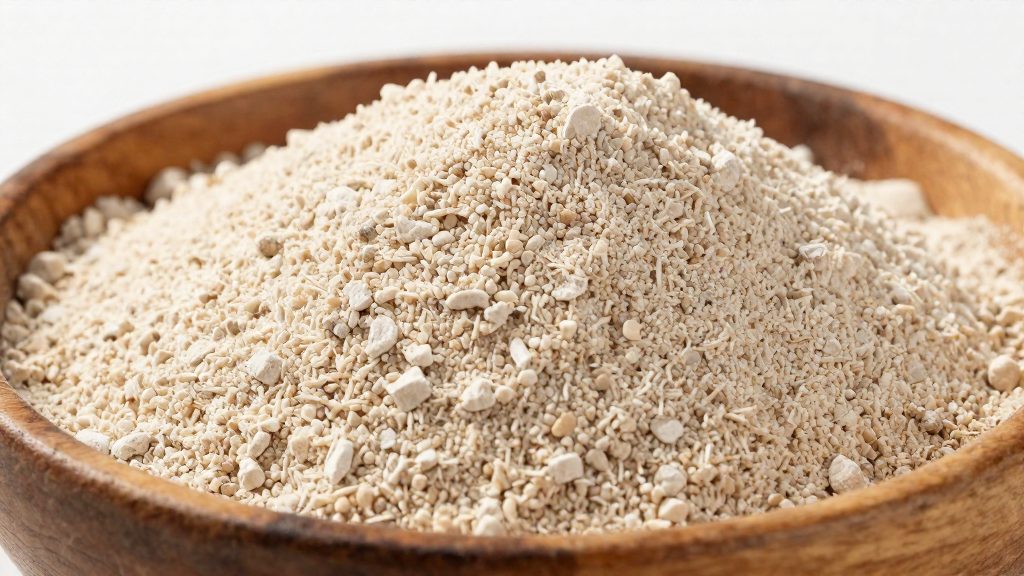
Stone grinding keeps the whole kernel together, which is why stone-ground whole wheat usually looks darker and more flecked than roller-milled whole wheat. Because the bran and germ are still present, the flour is more sensitive to storage conditions.
Roller milling is the method behind most supermarket white flour. Separating the components allows a miller to control the final flour, and whole wheat flour can also be roller-milled by recombining the bran, germ and endosperm.
1847 Stone Milling, described in the table above, is a Canadian example. The sources consulted do not specify whether its Run of the Mill flour is stone-ground or roller-milled.
Where to Buy Stone-Ground Whole Wheat Flour in Canada?
Buying stone-ground whole wheat flour in Canada usually means choosing between a local mill, a regional grain producer, or an online shop that ships. Mill-direct sellers are useful because they can usually tell you where the grain was grown and how it was milled, details that are often missing from a supermarket bag. One Canadian option is 1847 Stone Milling, an organic miller in Ontario.
1847 Stone Milling at a Glance
The mill’s details, including its Canada-wide shipping, are in the table earlier in this article.
How to Check a Stone-Ground Whole Wheat Label
Before you buy, read the packaging for three points:
- Whole wheat: the flour should be made from the whole kernel, so the bran and germ are included.
- Stone-ground: the milling method should be stated. If the label is silent, ask the seller.
- Grain origin: a named region or supplier makes it easier to compare products.
Storing Whole Wheat Flour After Delivery
Buy quantities you can use within a few weeks and note the purchase date on the bag. The storage section below explains how to keep the flour fresh.
1847 Stone Milling: A Canadian Mill to Consider
One Canadian mill with documented details is 1847 Stone Milling, a small organic flour producer, summarised in the table earlier in this article. Use it as a benchmark when you compare other mills, and verify each point on the producer’s current website before buying, since sourcing and shipping can change.
1847 Stone Milling at a Glance
See the table in the first section above for the founding date, location, products, grain sourcing and shipping.
How to Compare Canadian Whole Wheat Mills
When you assess any Canadian whole wheat flour, check these points on the product page or label:
- Milling process: Confirm how the flour is ground. The source consulted does not specify the milling method used by 1847 Stone Milling.
- Grain origin: A named growing region tells you more than a generic “Canadian grain” claim.
- Organic status: Check whether the bag is labelled organic and whether the producer explains its certification.
- Shipping reach: Confirm that the mill ships to your province, since some small producers serve only nearby areas.
How to Store Whole Wheat Flour?
Whole wheat flour keeps the bran and germ of the grain. The germ contains natural oils that turn rancid more readily than the starchy endosperm used in white flour. Good storage therefore means limiting the three factors that speed up oxidation of those oils: air, heat and humidity.
Seal It Against Air
Once opened, move the flour from its original bag into an airtight container, or reseal the bag tightly after each use. Press out excess air before closing. A container with a firm lid keeps out moisture and strong odours, because flour can absorb smells from nearby foods.
Keep It Cool and Dry
Store the container in a cool, dry cupboard, away from the oven, the stove and sunny windows. Heat and humidity both accelerate spoilage, so avoid placing flour near the dishwasher or the sink.
Freeze for Longer Storage
For flour you will not use within a few weeks, freezing in an airtight container is a common way to slow rancidity. Portion it into smaller containers so you only open one at a time.
Example From the Market
The storage principles above apply to any whole wheat flour, including Run of the Mill from 1847 Stone Milling, so check the packaging for the manufacturer’s own instructions.
Can You Replace White Flour with Whole Wheat in Bread?
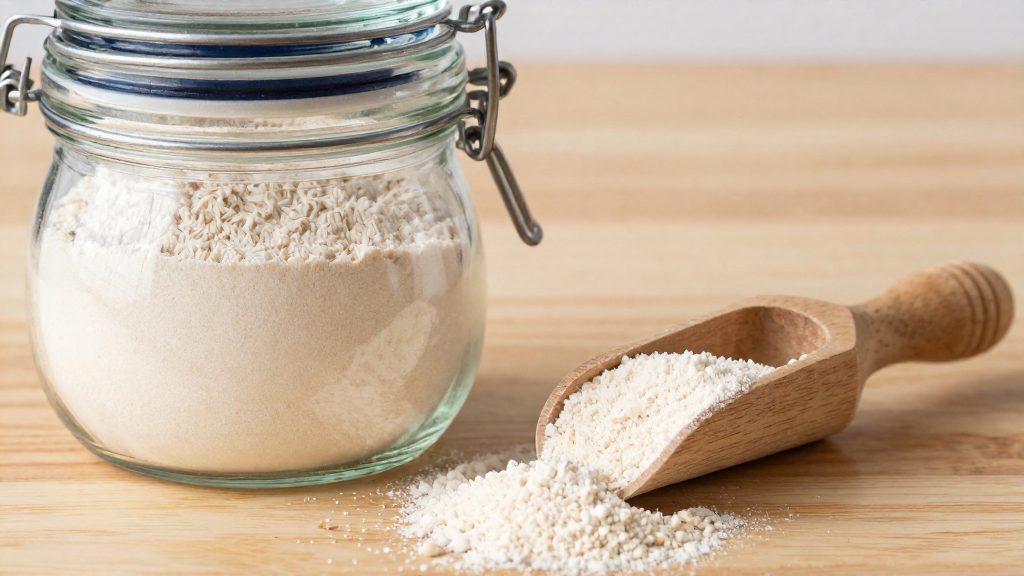
Yes, you can replace some or all of the white flour in most bread recipes with whole wheat flour, but the result changes. Whole wheat flour includes the bran and germ, which interfere with gluten development, so the dough is usually denser and less elastic than a white flour loaf. A partial swap is the safest starting point.
Replace part of the flour first. Swap about a quarter to a third of the white flour for whole wheat, then bake and compare the crumb and rise before increasing the proportion. The section below covers hydration and fermentation timing.
Whole wheat flour can also be used in pizza dough, though a higher proportion makes the base heavier and less stretchy, so start with a small share there too.
Adjusting Hydration and Starter for Whole Wheat
Stone ground whole wheat flour keeps the bran and germ in the mix. A dough built on a white flour formula usually feels stiffer than expected once whole wheat is added. Rather than chasing a fixed water target, change the process: hold back part of the water at mixing, then add it gradually while you judge the dough’s feel.
Autolyse is the most useful step here. Mix only the flour and water, then rest the mixture for a while so the bran can hydrate. Add the salt and starter afterward. This pause lets the dough absorb water before you decide whether it needs more.
For the starter, whole wheat flour is often described as producing a more active fermentation than white flour. Feed the starter with whole wheat for a few cycles and watch how it rises and falls. Use it at its peak, when it is domed and bubbly, rather than after it has started to collapse.
Bulk fermentation should be judged by the dough’s volume and texture rather than by the clock alone. Whole wheat dough tends to ferment faster than white dough, so check it earlier than the times in a white flour recipe suggest. Use gentle stretch-and-folds to keep the structure intact.
Check each bag’s packaging for milling-specific guidance, since the official sources consulted do not specify how individual products should be hydrated.
Homemade Pizza with Stone Ground Whole Wheat Flour
Stone ground whole wheat flour can make a sturdy, flavourful homemade pizza base, but it behaves differently from white flour. The bran and germ in whole wheat absorb more water, so the dough usually feels stiffer and needs more time to hydrate. Expect a denser, nuttier crust with a more open, rustic texture. Run of the Mill from 1847 Stone Milling, which ships across Canada, is one example to look for when shopping.
Practical steps for a whole wheat pizza dough:
- Knead gently: Whole wheat dough can tear if overworked. Stretch and fold instead of kneading for long periods.
- Allow a longer rest: A slower fermentation develops flavour and makes the dough easier to shape.
- Blend if needed: Mixing whole wheat with a share of white flour lightens the texture while keeping the wheat flavour.
- Shape with care: Stretch the dough by hand or lightly press it into the pan so it does not spring back.
The official sources consulted do not specify exact flour-to-water ratios for this flour.
Frequently asked questions
What is the difference between stone ground and whole wheat flour?
Stone grinding describes how the grain is milled, while whole wheat describes what the flour contains. A flour can be one without the other, so a label can say stone ground and still be refined, or say whole wheat and be roller milled.
Is 1847 Stone Milling’s Run of the Mill flour stone ground?
According to Ontario Grain Farmer (2023), 1847 Stone Milling is an organic miller near Fergus, Ontario, and Run of the Mill is its whole wheat product. That report does not confirm the milling method, so check the package or the producer before assuming it is stone ground.
Can I use stone ground whole wheat flour for pizza dough?
Yes, but expect the dough to absorb more water and feel denser than a white flour dough. Many bakers start by replacing only part of the white flour, then increase the replacement as they learn how the dough handles.