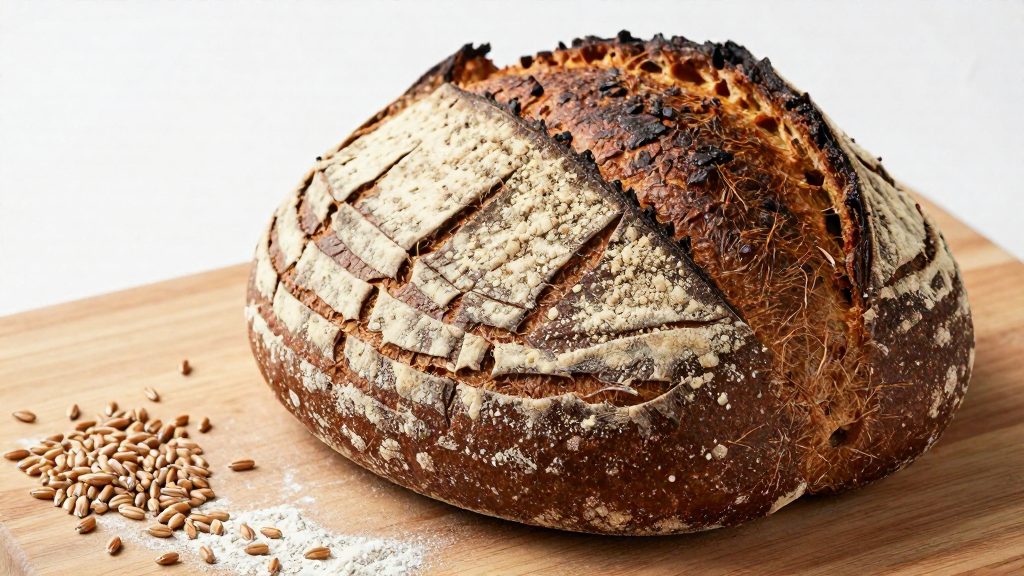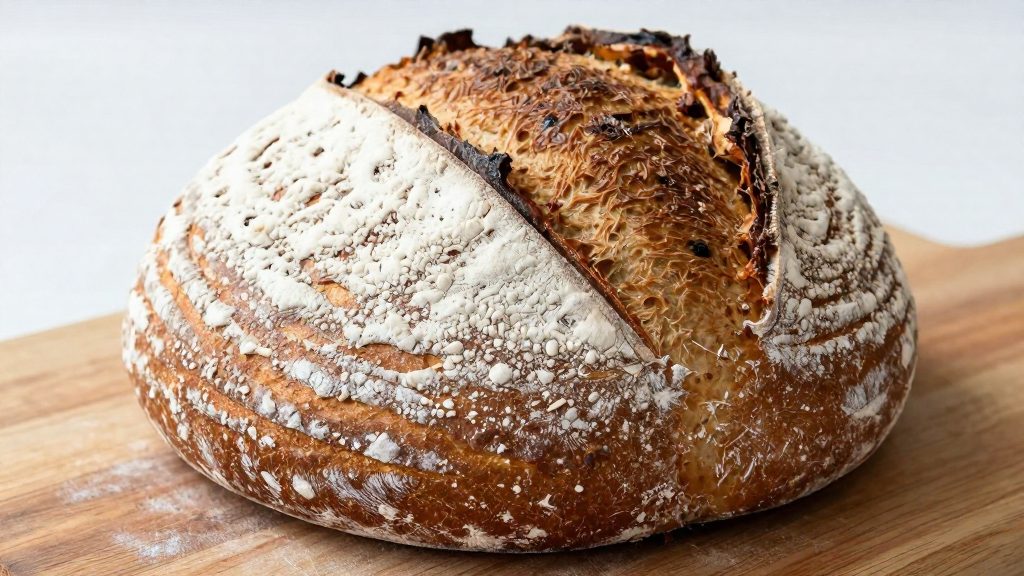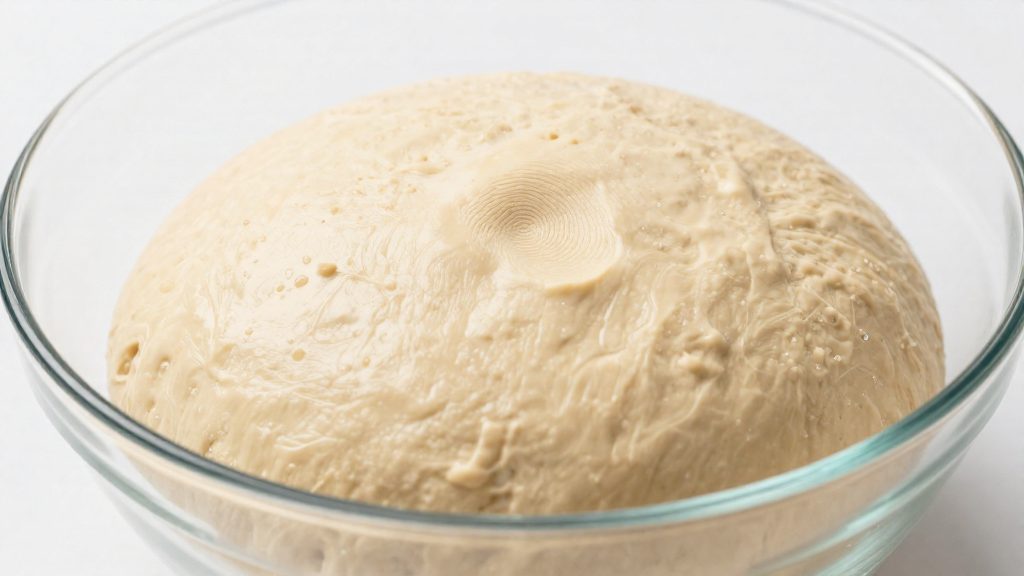
Two checks give the most reliable answer: the poke test and the feel of the dough. According to The Perfect Loaf (2026), a fully proofed dough feels relaxed, soft and airy, yet it stays elastic and cohesive and is not tight in the basket. For a standard yeasted dough at room temperature (68–72°F, or about 20–22°C), The Bread Guide (2025) gives a typical window of about 1 to 2 hours for roughly doubled volume, with up to about 3 hours in a cooler spot.
How to tell if the dough is properly proofed
The poke test
Wet or oil your finger, then press gently into the surface. Watch how the dent recovers:
| Spring-back when poked | What it indicates |
|---|---|
| Slow, dent not fully refilled | Properly proofed |
| Quick | Underproofed |
| None or little | Overproofed |
The poke test works best when you repeat it on a few spots, since the surface often rises unevenly.
Texture and structure
Beyond the poke, check the dough itself. A ready dough is elastic and holds together, without tightening against the basket walls. Signs that it has gone too far include very large bubbles with thin walls, weak structure, and dough that has relaxed so much it barely resists handling. The Perfect Loaf (2026) links this condition, known as overproofing, to little or no spring-back.
Why volume alone can mislead
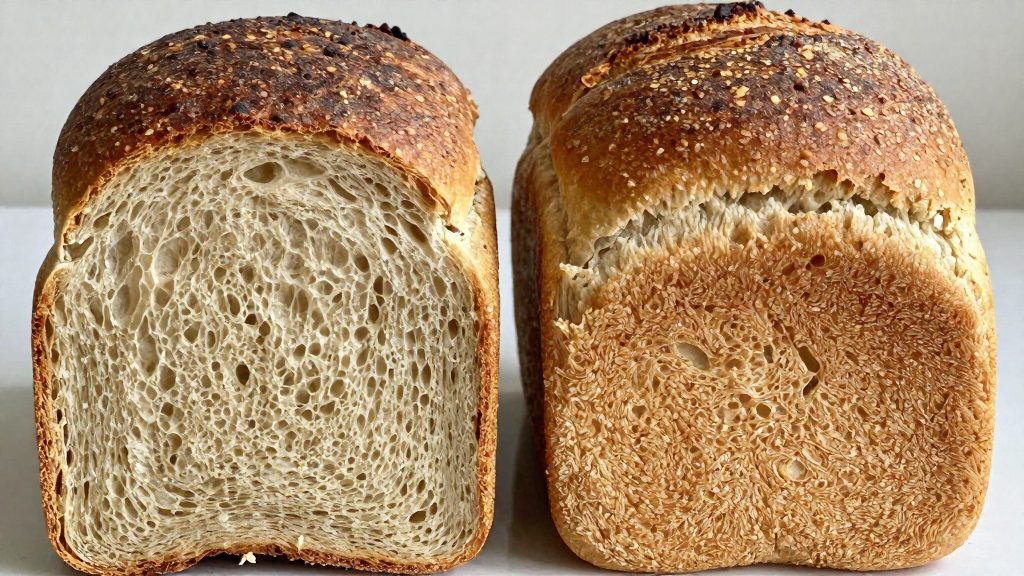
Doubling in size is a common guideline, but Chowhound (2025) notes it can mislead, especially with high-hydration or whole-grain doughs. Judge the dough by its texture (airy, pillowy, bubbly) and by the shaped loaf. In a banneton or pan, a properly proofed loaf looks puffed, holds its shape and fills the basket. Overproofed loaves can collapse before or during baking, then bake flat with a gummy crumb and large, irregular holes.
The finger test, step by step
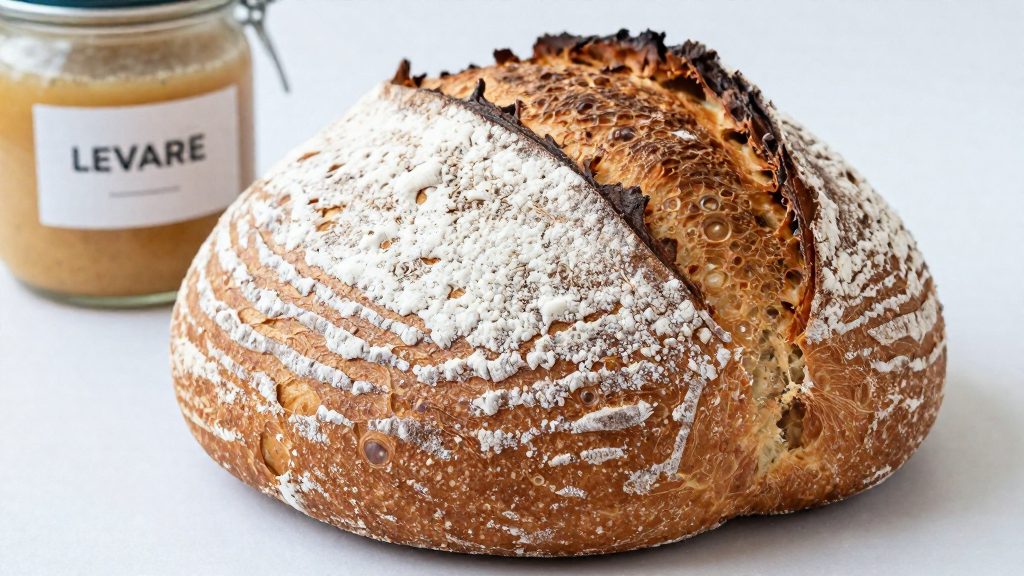
The finger test checks whether bread dough has finished proofing, meaning the yeast has built enough gas and the gluten has relaxed enough for baking. According to The Bread Guide (2025), a standard yeasted dough usually roughly doubles in about 1 to 2 hours at room temperature (68–72°F), and may need up to about 3 hours in a cooler spot. Treat these times as a rough guide for when to start testing, not as the finish line.
Step 1: Prepare your finger. Wet or oil the tip of your finger before you touch the dough, as The Bread Guide (2025) recommends. A dry finger sticks to the surface and makes the dent harder to read.
Step 2: Poke gently. Press one fingertip into the dough and remove it.
Step 3: Watch the dent. The way the dough responds tells you its state:
| Response to the poke | What it means |
|---|---|
| Slow spring-back, dent not fully refilled | Properly proofed |
| Quick spring-back | Underproofed |
| No spring-back | Overproofed |
Step 4: Check the rest of the dough. Fully proofed dough feels relaxed, soft and airy, yet still elastic and cohesive. It should not feel tight in the basket. Weak structure and very large, thin-walled bubbles point toward overproofing.
Step 5: Cross-check the shaped loaf. In a banneton or pan, a ready loaf should look puffed, hold its shape and fill the basket. The Chowhound (2025) guidance also favors judging texture (airy, pillowy, bubbly) over volume alone.
Visual signs and texture
Checking whether a loaf is fully proofed depends mainly on how the dough looks, feels and springs back when touched. Volume helps, but it is not a reliable verdict on its own. According to Chowhound (2025), doubling in volume is a common guideline that can mislead, especially with high-hydration or whole-grain doughs, so texture and the shape of the loaf matter more.
Texture and appearance
Fully proofed dough feels relaxed, soft and airy. It stays elastic and cohesive, so it holds together when handled and does not feel tight in the basket. According to Chowhound (2025), a well-proofed dough looks airy, pillowy and bubbly. A loaf in a banneton or pan should look puffed, hold its shape and fill the basket.
The poke test and its states
The poke test is the most direct physical check. Wet or oil your finger before poking, then press gently and watch the dent. According to The Perfect Loaf (2026), the response shows the dough’s state:
| Dough state | Feel and appearance | Response to the poke |
|---|---|---|
| Underproofed | Firm, tight | Quick spring-back |
| Fully proofed | Relaxed, soft, airy, elastic | Slow spring-back, dent not fully refilled |
| Overproofed | Very large, thin-walled bubbles, over-relaxed, weak structure | Little or no spring-back |
When the signs can mislead
Some dough types do not follow the usual pattern. According to The Perfect Loaf (2026), cold dough taken from the fridge springs back fast and can look underproofed when it is actually fine. Very wet dough, high-whole-grain dough and low-protein dough can spring back sluggishly even when ready. In these cases, combine the poke test with the visual cues above rather than relying on a single reaction.
Timing as a reference point
For a standard yeasted dough at 68–72°F (The Bread Guide, 2025), expect roughly doubled volume in about 1 to 2 hours. In a cooler spot, allow up to about 3 hours. Use these durations only as a starting reference, then confirm readiness with texture and the poke test.
Underproofed or Overproofed Dough: The Differences
The poke test is the most direct way to tell whether dough is underproofed, properly proofed or overproofed. According to The Perfect Loaf (2026), the result depends on how the dent responds after a gentle press. The pattern is clear in principle, but it can mislead with certain doughs, so it works best alongside texture and shape checks.
Reading the poke test
| Spring-back after poking | What it indicates |
|---|---|
| Slow, dent not fully refilled | Properly proofed |
| Quick | Underproofed |
| None or little | Overproofed |
Fully proofed texture
Fully proofed dough feels relaxed, soft and airy, yet it stays elastic and cohesive. It should not feel tight in the basket. According to Chowhound (2025), a loaf in a banneton or pan should look puffed, hold its shape and fill the basket.
Signs of overproofing
- Very large bubbles with thin walls
- Weak structure
- Over-relaxed dough that barely springs back
Chowhound (2025) adds that overproofed loaves can collapse before or during baking. They bake up flat, with a gummy crumb and large irregular holes.
When the poke test misleads
Several dough types can give a misleading reading:
- Cold dough from the fridge springs back fast and can look underproofed.
- Very wet dough, high-whole-grain dough and low-protein dough can spring back sluggishly even when ready.
Volume and timing as cross-checks
Doubling in volume is a common guideline, but it can mislead with high-hydration or whole-grain doughs. For a standard yeasted dough, The Bread Guide (2025) gives roughly doubled volume in about 1 to 2 hours at room temperature (68–72°F), and up to about 3 hours in a cooler spot. Before poking, wet or oil your finger so the dough does not stick.
When can the poke test be misleading?
The poke test is useful, but it can give the wrong answer when the dough’s temperature or composition changes how it springs back. According to The Perfect Loaf (2026), cold dough straight from the fridge springs back quickly and can look underproofed when it is actually fine. Very wet, high-whole-grain and low-protein doughs can spring back sluggishly even when they are ready.
Dough situations that skew the reading
| Dough situation | Spring-back you see | Possible misreading |
|---|---|---|
| Cold dough from the fridge | Fast | Underproofed, though it can be fine |
| Very wet dough | Sluggish | Overproofed, though it can be ready |
| High-whole-grain dough | Sluggish | Overproofed, though it can be ready |
| Low-protein dough | Sluggish | Overproofed, though it can be ready |
Cross-checking with texture and shape
When the poke test is unreliable, check the dough by other means. Fully proofed dough feels relaxed, soft and airy, but it stays elastic and cohesive and is not tight in the basket (The Perfect Loaf, 2026). Chowhound (2025) recommends judging texture and shape: the dough should look airy, pillowy and bubbly, and a loaf in a banneton or pan should look puffed, hold its shape and fill the basket.
Timing is only a rough guide. The Bread Guide (2025) gives roughly doubled volume in about 1 to 2 hours at 68–72°F for a standard yeasted dough, with up to about 3 hours in a cooler spot. Chowhound (2025) notes that doubling can mislead with high-hydration or whole-grain doughs, so treat the time as a starting estimate.
Overproofing shows in specific ways. The Perfect Loaf (2026) lists very large, thin-walled bubbles, weak structure and over-relaxed dough. Chowhound (2025) adds that overproofed loaves can collapse before or during baking and bake up flat, with a gummy crumb and large irregular holes.
How Long to Allow at Different Temperatures
Room temperature sets the pace of proofing more than any other variable, so the same dough can need an hour or three depending on where it sits. For a standard yeasted dough kept at room temperature of 68–72°F, expect roughly doubled volume in about 1 to 2 hours, according to The Bread Guide (2025). If the dough sits in a cooler spot, allow up to about 3 hours.
| Setting | Expected time to roughly double | Source |
|---|---|---|
| Room temperature, 68–72°F | About 1 to 2 hours | The Bread Guide (2025) |
| Cooler spot | Up to about 3 hours | The Bread Guide (2025) |
Why the timer is only a starting point
The table gives a range, not a deadline. A cooler spot slows the dough, so allow more time there, and check the dough itself rather than the clock. Cold dough also springs back quickly during the poke test and can look underproofed when it is actually fine, as noted by The Perfect Loaf (2026). For a fridge-chilled loaf, the room-temperature window does not apply.
Adjusting for the type of dough
Chowhound (2025) notes that doubling in volume can mislead with high-hydration or whole-grain doughs. The Perfect Loaf (2026) adds that very wet, high-whole-grain and low-protein doughs can spring back sluggishly even when ready. In these cases, the clock and the poke test are both less reliable, so judge the dough by its texture (airy, pillowy and bubbly) and by how the shaped loaf fills its banneton or pan.
A practical checkpoint routine
- Note the time when the dough is shaped and placed in its container.
- Keep the dough at 68–72°F (about 20–22°C) if possible, and begin checking once it looks puffed.
- Wet or oil your finger before each poke, so the dough does not stick.
- Check at intervals until the dough meets the texture and shape signs described above.
What to do if the dough has overproofed
Overproofed dough shows large, thin-walled bubbles, weak structure and little or no spring-back when poked, according to The Perfect Loaf (2026). Overproofed loaves can collapse before or during baking, so check the dough early and bake it without delay. Expect a flatter, denser crumb than a well-timed loaf would give.
Read the signs before shaping
Each symptom points to a different response:
| Symptom | What it indicates | Practical response |
|---|---|---|
| Large, thin-walled bubbles | Sign of overproofing | Check the dough’s structure before baking |
| Little or no spring-back | Structure is over-relaxed | Stop proofing and move to shaping or baking |
Chowhound (2025) notes that overproofed loaves can collapse before or during baking, so check the dough’s behaviour rather than waiting for a set time.
Bake sooner and handle it gently
The sources describe the signs of overproofing but give no recovery method, so none is offered here. What they do show is the risk: overproofed loaves can collapse before or during baking and bake up flat.
Adjust the next bake
Overproofing is usually a timing issue, so change the timing rather than the recipe. Check the dough earlier, judge it by texture (airy, pillowy, bubbly) instead of volume alone, and remember that high-hydration and whole-grain doughs can mislead on volume.
Frequently asked questions
Does a slow spring-back always mean the dough is overproofed?
No. Very wet, high-whole-grain and low-protein doughs can spring back sluggishly even when they are ready, so read the poke test alongside the dough’s texture and the shape of the loaf.
Can I rely on the clock to know when my dough is ready?
Only as a starting point. For a standard yeasted dough at 68–72°F (about 20–22°C), The Bread Guide (2025) gives roughly 1 to 2 hours for the dough to reach about double its volume, and up to about 3 hours in a cooler spot. Because a cooler spot slows the rise, check the dough itself rather than watching the timer.
What if my dough has already overproofed?
Overproofed loaves can collapse before or during baking and bake up flat, with a gummy crumb and large, irregular holes. Look for large, thin-walled bubbles and weak structure before the loaf goes into the oven.