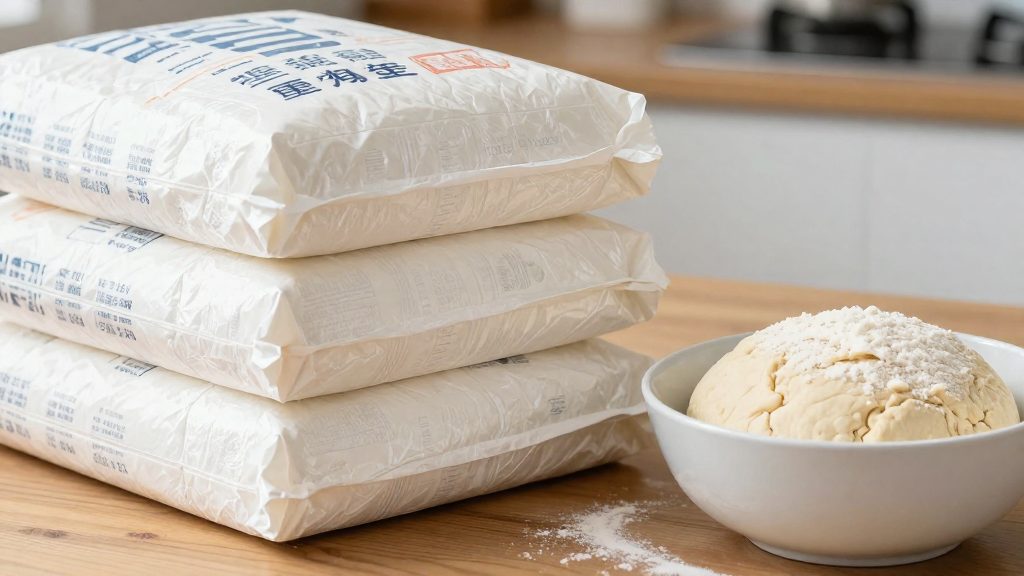
Canadian bread flour is higher in protein than Canadian and American all-purpose flours. According to CooksInfo (2022), it averages about 14% protein on a dry basis, within a range of 13.6 to 15.6%. Protein largely determines how much gluten a dough can develop, which is why this higher level is often chosen for chewy loaves and sourdough. The difference is clearest when Canadian and American all-purpose flours are compared side by side.
Why Canadian Bread Flour Is Different
The gap shows up in the protein figures. The table below lists the ranges cited by CooksInfo, all on a dry basis.
| Flour type | Protein (dry basis) |
|---|---|
| Canadian bread flour | 13.6 to 15.6%, average about 14% |
| Canadian all-purpose flour | 12.8 to 13.5% |
| American all-purpose flour | 10 to 11.5% |
These ranges help explain why a bag labelled “all-purpose” in Canada can behave more like a bread flour in an American kitchen. Higher protein gives a stronger dough, which holds gas better during long fermentation and produces a more open crumb. Lower-protein flours tend to give softer, more tender results, which suits cakes and pastries better than a rustic loaf.
Before comparing bags, check that the figures use the same dry basis. Moisture changes the weight of the flour, so figures stated on different bases are not directly comparable.
CooksInfo (2020) also notes that all-purpose and plain flours are required by law to be enriched in North America and the UK. The source does not list bread flour under that requirement, so check the label for enrichment rather than assuming it.
Bread Flour or All-Purpose: What’s the Difference in Canada?
Canadian bread flour and all-purpose flour differ mainly in protein content, which determines how much gluten the dough can build (see the comparison table above).
Higher protein gives a stronger gluten network, which traps the gas from yeast or a sourdough starter and produces a taller, chewier crumb. For pizza dough, which is stretched thin, the same strength helps the dough hold its shape on the peel.
Canadian all-purpose flour has a higher protein range than its American counterpart, so a recipe written for a US all-purpose flour may give a firmer dough with a Canadian one. Check the protein figure on the bag before substituting.
What protein level should you choose for bread?
For bread, the protein content of the flour matters more than most other label figures. When flour is mixed with water, its proteins form gluten, a network that traps the gas released by yeast or levain and lets the loaf rise and hold its shape. The 13.6 to 15.6% range for Canadian bread flour is the benchmark to check against when you compare bags.
Dry basis means the protein percentage is calculated with the moisture removed, so flours can be compared fairly. A label that states protein “as is” will read slightly lower for the same flour.
Canadian all-purpose flour sits just below the bread flour range. For sandwich loaves and a chewy crumb, aim for the upper part of the 13.6 to 15.6% range. For flatbreads and quick breads, all-purpose flour is usually enough.
Protein and Enrichment: What Matters More Than the Bleached or Unbleached Label
Bleached and unbleached flours differ in how they are processed. Reading the label and checking protein content is the most practical way to choose between them. For bread and pizza, protein content has the most direct effect on structure, and bread flour has more gluten-forming potential than all-purpose flour.
Enrichment is the other label detail to check. It adds nutrients to the flour, and the label tells you whether a flour has been enriched.
Protein percentage should guide the decision more than the bleached or unbleached label. For a chewy sandwich loaf or a pizza dough that needs to stretch without tearing, pick a bread flour with a higher protein figure. For softer baked goods, a lower-protein all-purpose flour is usually a better fit. Compare the protein figure on the bag first, then choose between bleached and unbleached based on what you are baking and how the dough behaves in your own kitchen.
Protein Ranges to Compare When Choosing a Canadian Flour
Canadian grocery stores carry several bread flours, and the protein content on the bag matters more than the brand name for bread. Bread flour is higher in protein than the all-purpose flours most home bakers use for cakes and cookies, which helps dough build the gluten structure needed for an open crumb.
Availability varies by store and region. Check the nutrition panel or product description for the protein figure, because bags labelled simply “flour” or “all-purpose” can differ considerably. The ranges in the table above let you judge a label quickly.
Which Flour for Sourdough and Pizza in Canada?
For sourdough and pizza, the number to check first is protein content, because protein forms the gluten network that traps gas and gives dough its structure. The higher protein level of bread flour suits long-fermented loaves and pizza doughs that must stretch without tearing.
A flour with less protein, such as the all-purpose flours in the table above, usually gives a softer, less elastic dough, which is harder to shape and can spread rather than hold its height in the oven.
How to choose:
- For sourdough loaves, pick a bread flour from the higher end of the Canadian range when you want an open, well-structured crumb.
- For pizza, a higher-protein flour supports a dough that is stretched thin, while a lower-protein all-purpose flour gives a more tender base.
- If the bag says only “all-purpose,” compare its protein figure against the ranges above before deciding.
How to Store Bread Flour
Store bread flour in an airtight container in a cool, dry, dark cupboard away from the oven, dishwasher, and direct sunlight. Flour absorbs moisture and odours from its surroundings, so good storage means keeping out air, humidity, and pests. The steps below apply to any bread flour, whether it is sold in paper sacks or plastic bags.
Choose the Right Container
An airtight container with a tight-fitting lid protects flour from humidity and from insects. Keeping flour in its original paper or plastic bag is acceptable only if the bag is sealed again after each use or if the bag sits inside a closed container. Opaque containers also help because they block light.
Control the Storage Environment
- Location: Choose a cupboard that stays cool and dry, away from heat sources.
- Humidity: Avoid storing flour near the sink, the dishwasher, or any spot where steam is common.
- Temperature changes: If flour is moved from a cold place into a warm kitchen, let the sealed bag reach room temperature before opening it. This limits condensation inside the bag.
Handle Flour Hygienically
Use a clean, dry scoop each time. Never return unused flour to the container after it has touched wet hands, dough, or a damp bowl, because moisture spreads quickly through a batch.
Check for Signs of Spoilage
Inspect the flour before baking. A sour or musty smell, clumps that do not break apart, or visible insects or webbing mean the flour should be discarded.
| Storage factor | Recommended practice | Reason |
|---|---|---|
| Container | Airtight, with a tight lid | Blocks humidity, odours, and pests |
| Location | Cool, dry, dark cupboard | Limits moisture and heat exposure |
| Handling | Clean, dry scoop only | Prevents moisture and contamination |
| Inspection | Smell and look before use | Catches early spoilage |
Frequently asked questions
Is Canadian bread flour higher in protein than all-purpose flour?
Yes. According to CooksInfo (2022), Canadian bread flour averages about 14% protein on a dry basis, within a range of 13.6 to 15.6%. Canadian all-purpose flour sits lower, at 12.8 to 13.5% on the same basis, so bread flour is the better choice when you want a strong dough.
Why do protein figures on two bags sometimes not match?
Moisture adds weight without adding protein, so a figure stated “as is” reads lower than the same flour’s dry basis value. Compare only figures stated on the same basis, or the comparison will mislead you.
Does enrichment tell me whether a flour suits bread?
No. CooksInfo (2020) reports that all-purpose and plain flours must be enriched by law in North America and the UK, but the same source does not list bread flour under that rule. Check the packaging for the enrichment statement, and use protein content to judge how well a flour will suit a loaf.