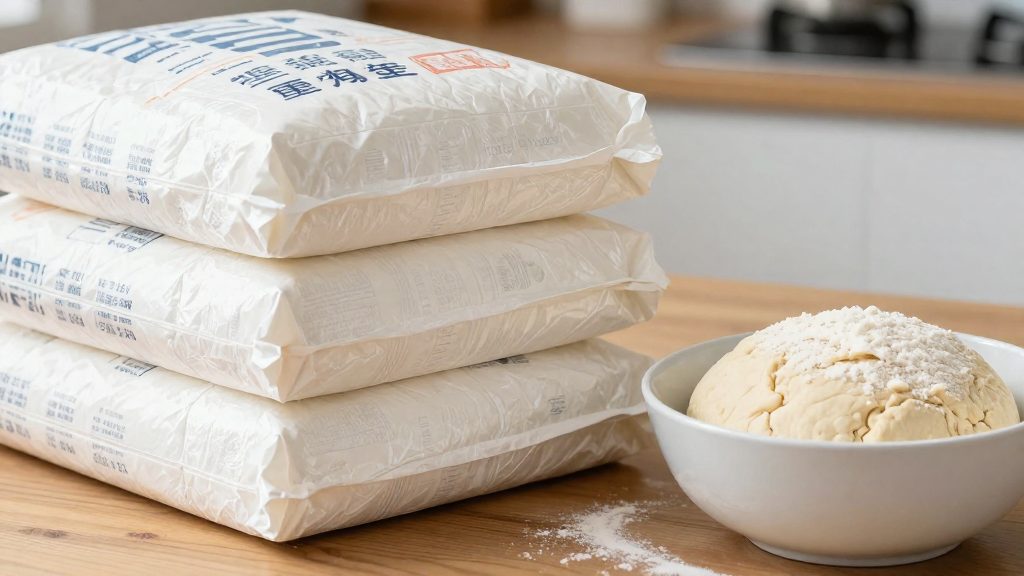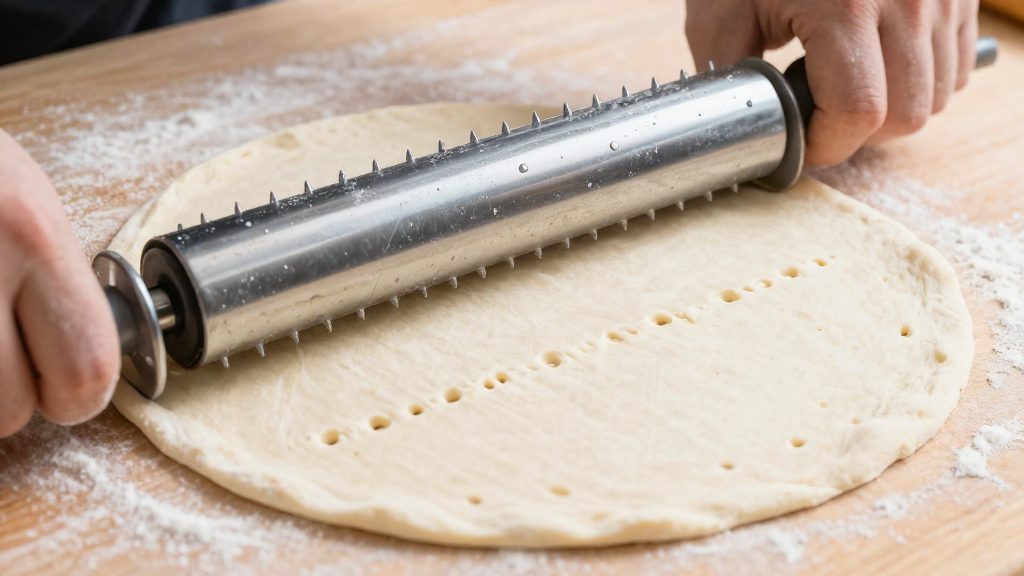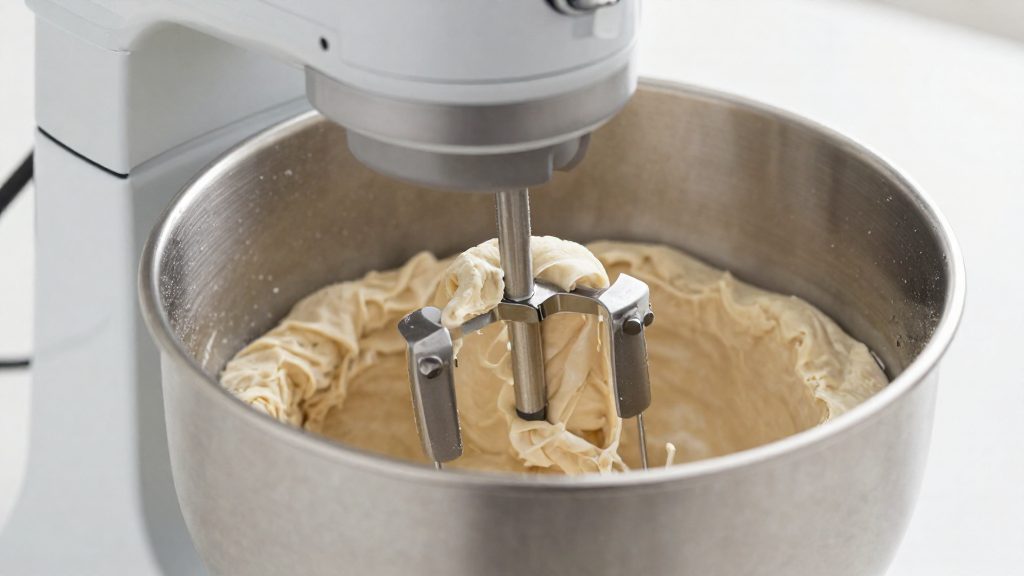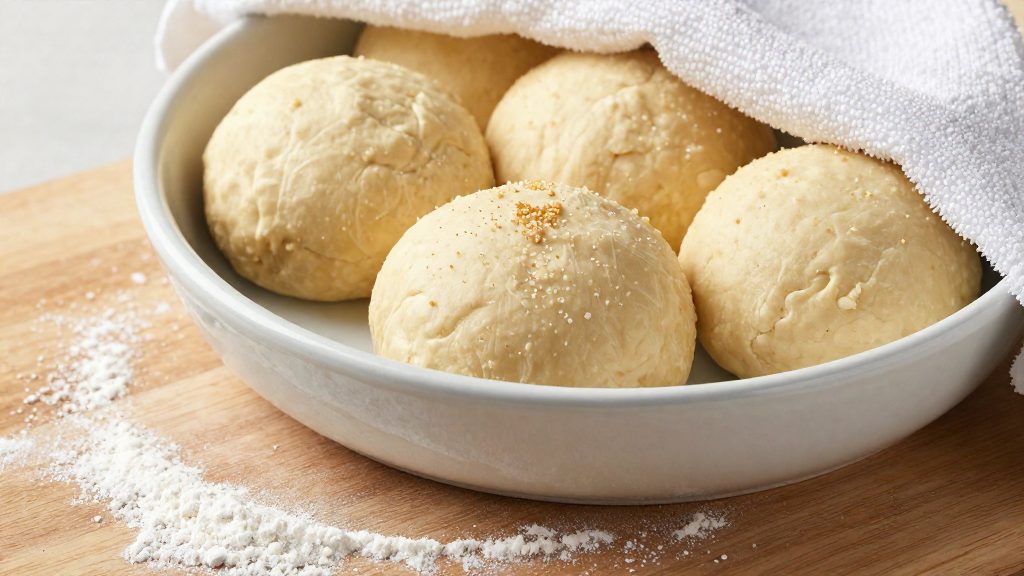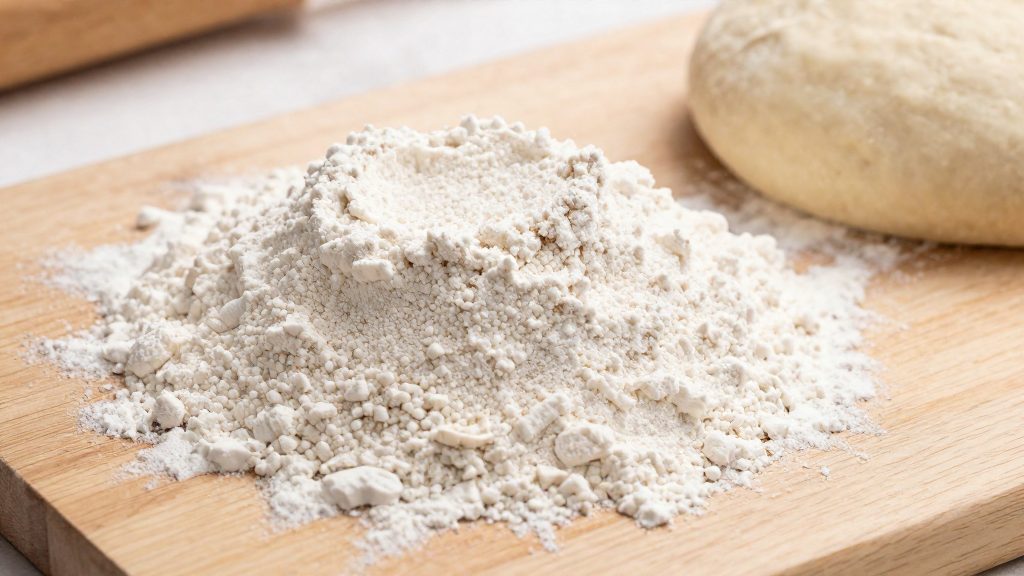
Bread flour and all-purpose flour differ mainly in protein content. According to Modernist Cuisine, bread flours in the authors’ tests contained about 11–13% protein, while all-purpose flour is generally 10–11%, though the figure varies widely between brands. That gap matters because protein forms the gluten network that holds gas during fermentation and baking, which shapes the structure and volume of a pizza base. All-purpose flour can suit some pizza styles, but only once its protein figure is confirmed on the bag.
What is the difference between all-purpose flour and bread flour?
Protein content is the main point of difference. The ranges below are the ones Modernist Cuisine reports for common flour types. They are reference values, not guarantees for any specific bag.
| Flour type | Protein content | Pizza styles it suits |
|---|---|---|
| All-purpose | Generally 10–11%, varies widely by brand | Thin-crust and deep-dish, if protein content is confirmed |
| Bread | About 11–13% (authors’ tests) | Deep-dish, Detroit-style, direct thin-crust |
| High-gluten | 13% or more | Doughs leavened mainly with commercial yeast |
The protein range of all-purpose flour overlaps with the lower end of the bread flour range, which is why the name on the bag alone does not tell you how a flour will perform.
What does protein do in pizza dough?
Protein is the raw material for gluten. When flour is mixed with water, its proteins form a network that traps the gas produced during fermentation and holds it through baking. According to Modernist Cuisine, this network provides the structure and volume that bread and pizza need. A flour with more protein can form a larger gluten network, which is why the protein figure is the main number to compare when choosing between flours.
Protein only explains part of the result. Fermentation, dough handling and oven conditions also affect the finished base.
Matching flour to pizza style
Each pizza style is linked to a flour type in the reference. The table below lists those links.
| Pizza style | Flour recommended or named | Protein condition |
|---|---|---|
| Neapolitan | 00 flour | Not stated in the source |
| Deep-dish | Bread flour | All-purpose flour also works if protein is confirmed |
| Detroit-style | Bread flour | None stated |
| Direct thin-crust | Bread flour | All-purpose flour also works if protein is confirmed |
| Thin-crust | All-purpose flour | Only if protein content is confirmed |
| Doughs leavened mainly with commercial yeast | High-gluten flour | 13% protein or more |
Because the same flour can appear under more than one style, choose the style first and then check that the flour’s protein figure matches the condition in the right-hand column.
Can you use all-purpose flour for pizza?
Yes, for thin-crust and deep-dish doughs, provided the protein content is known. Modernist Cuisine advises checking the label because protein levels differ between brands, so a bag labelled all-purpose does not guarantee the 10–11% range.
Before you bake, follow these steps:
- Read the protein percentage on the packaging or on the manufacturer’s product sheet.
- If no figure is listed, do not assume the flour matches bread flour. Treat it as unknown.
- Ask the manufacturer for the protein figure if it is not published.
- Compare the figure with the ranges in the table above. A value near 11% sits at the edge between all-purpose and bread flour, while 13% or more falls in the high-gluten category.
What about 00 and high-gluten flour?
00 flour is the choice Modernist Cuisine recommends for Neapolitan pizza. The reference does not give a protein percentage for 00 flour, so it cannot be compared with bread flour on protein alone. Check the packaging if you need that figure.
High-gluten flour, at 13% protein or more, is the category Modernist Cuisine links to doughs leavened mainly with commercial yeast. Its higher protein gives it the strongest gluten potential of the three flour types in the reference.
The protein range for bread flour reaches 13%, the same figure that defines high-gluten flour. Protein alone therefore does not separate the two categories cleanly. The leavening method and the intended style are what decide the choice.
What this guidance does not cover
Check the label wording where you buy. For sourdough-leavened doughs, hydration and kneading, follow your recipe, and use the protein figure only to decide which flour fits the style and leavening you plan to use.
Conclusion
Bread flour and all-purpose flour differ mainly in protein, and protein drives the gluten network that gives pizza its structure and volume. Choose the flour by pizza style: bread flour suits deep-dish, Detroit-style and direct thin-crust doughs, 00 flour is the reference choice for Neapolitan pizza, and high-gluten flour suits doughs leavened mainly with commercial yeast. All-purpose flour can work for thin-crust and deep-dish doughs, but only after its protein figure has been confirmed on the bag.