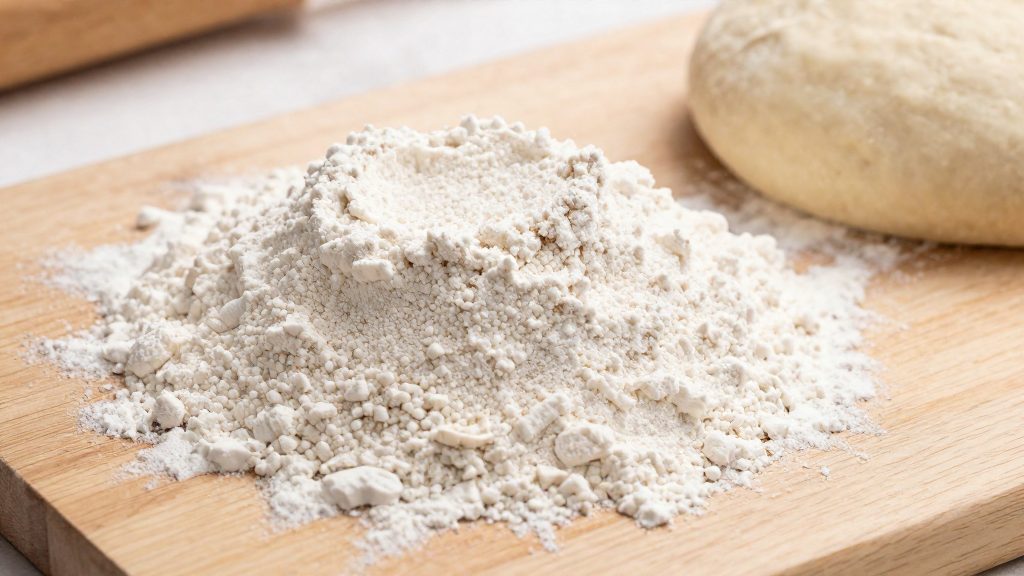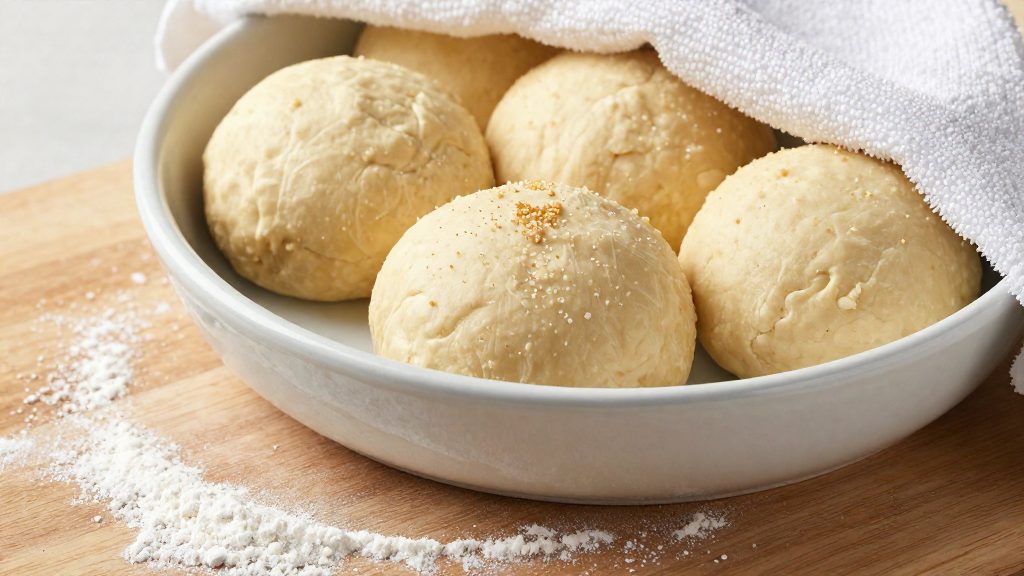
Instant yeast is a fine-granule form of dry yeast that you mix straight into the flour, and it gives a faster, more predictable rise than active dry yeast. Bakers choose it for pizza dough because it skips the separate dissolving step and keeps the dough’s timing easier to plan. According to Once Upon a Chef (2026), rapid-rise and bread machine yeast are the same as instant yeast and are used in the same amount.
Why use instant yeast for pizza dough?
Added directly to the flour
Fine granules mix into the dry ingredients without pre-activation. The recipes below add the yeast to the dry ingredients before the water.
| Source | Flour | Instant yeast | Water |
|---|---|---|---|
| Inspired Taste (2026) | 228 g all-purpose flour | 2¼ tsp (7 g) | ¾ cup lukewarm (110–115°F) |
| Lauren’s Cravings (2026) | 475 g bread or ‘00’ flour | 2 tsp | 300 ml lukewarm |
| Once Upon a Chef (2026) | 4 cups all-purpose flour | 1 tbsp | 1¼ cups plus 2 tbsp warm |
Faster, more predictable rise
With instant yeast, the dough starts fermenting from the first mix, which makes the timing of each batch easier to repeat. Faster, more predictable rise is the main reason many home bakers prefer it for weekly pizza.
Shelf life of unopened packets
Check the date printed on the packaging before buying a large quantity.
Ingredients and quantities
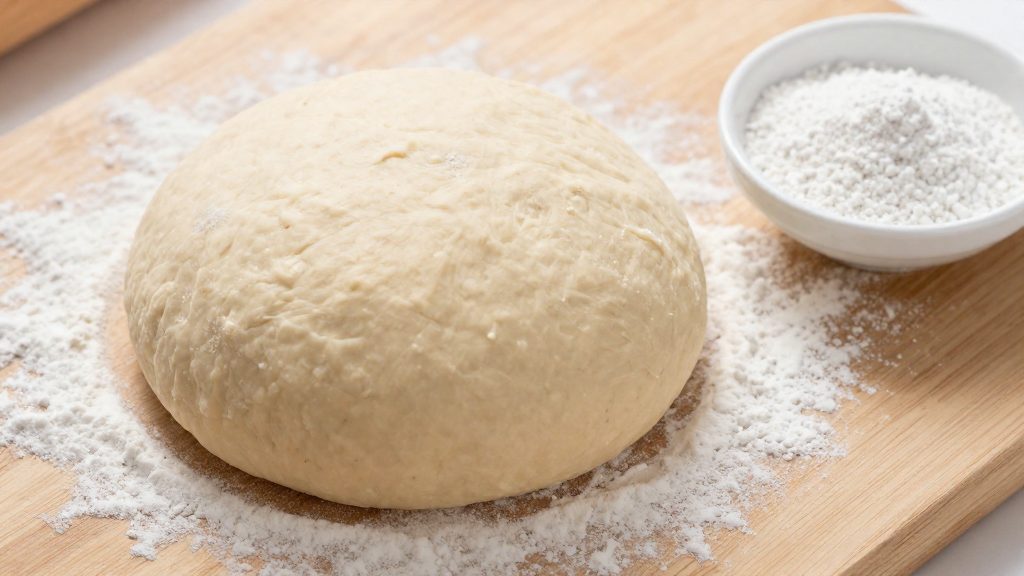
Three recipes in the consulted sources give the flour, water, salt and yeast for batches of different sizes. The two-ball recipe from Once Upon a Chef (2026) uses 4 cups of all-purpose flour, 1¼ cups plus 2 tbsp of warm water, 1 tbsp of instant yeast and 2¼ tsp of salt. The small batch from Inspired Taste (2026) uses 1¾ cups (228 g) of all-purpose flour, ¾ cup of lukewarm water, 2¼ tsp (7 g) of instant yeast and 1 tsp of salt. The bread-flour or ‘00’ recipe from Lauren’s Cravings (2026) uses 475 g of flour, 300 ml of lukewarm water, 2 tsp of instant yeast and 1 tsp of salt, and makes 2 to 3 bases.
Flour, water, salt and yeast by batch
| Source (year) | Batch | Flour | Water | Instant yeast | Salt |
|---|---|---|---|---|---|
| Once Upon a Chef (2026) | Two 1-lb balls | 4 cups all-purpose | 1¼ cups + 2 tbsp, warm | 1 tbsp | 2¼ tsp |
| Inspired Taste (2026) | Small batch | 1¾ cups (228 g) all-purpose | ¾ cup, lukewarm | 2¼ tsp (7 g) | 1 tsp |
| Lauren’s Cravings (2026) | 2 to 3 bases | 475 g bread flour or ‘00’ | 300 ml, lukewarm | 2 tsp | 1 tsp |
Hydration ratio
Hydration is the water weight divided by the flour weight, expressed as a percentage. Only the Lauren’s Cravings recipe gives both figures in metric units. Treating 1 ml of water as 1 g, which is our assumption and not a figure from the source, 300 ml of water on 475 g of flour gives a hydration of about 63%.
The two-ball recipe gives flour and water only in cups and tablespoons. The recipes consulted do not give gram weights for that batch, so its hydration cannot be confirmed by weight.
Salt and yeast per batch size
- Salt varies by recipe: 1 tsp for the small batch (228 g flour) and for the bread-flour recipe (475 g flour), and 2¼ tsp for the two 1-lb balls (4 cups flour).
- Instant yeast ranges from 2 tsp (Lauren’s Cravings) to 2¼ tsp or 7 g (Inspired Taste), with 1 tbsp for the two-ball batch.
Can you skip proofing the yeast?
Yes. Instant yeast can be mixed straight into the flour, so you don’t need a separate step of dissolving it in water first. You whisk the yeast into the dry ingredients, then add the water. Water temperature matters, because water that is too hot can kill the yeast.
The main risk is heat. Water temperature determines whether the yeast stays active, so measure it rather than guessing by feel. Reference points:
| Water temperature | What the source says | Source |
|---|---|---|
| About 105°F (41°C) | Ideal for instant yeast | Once Upon a Chef (2026) |
| 110–115°F (43–46°C) | Lukewarm range used in a small-batch recipe | Inspired Taste (2026) |
| Above 130°F (54°C) | Can kill the yeast | Once Upon a Chef (2026) |
A simple method for direct mixing:
- Weigh the flour and instant yeast into the bowl and stir them together so the yeast is spread evenly.
- Check the water with a kitchen thermometer, aiming for the 105–115°F (41–46°C) range.
- Pour the water over the dry mix and stir until no dry flour is left.
Step-by-step method
Pizza dough comes together in a few handling stages: mixing, kneading, dividing, and stretching. Each stage affects the final texture, so the order and the water temperature matter. The recipes below use all-purpose or bread flour with instant yeast, and the quantities differ between them.
Mixing order: flour, salt, yeast and water
Start by combining the flour and salt in one bowl so the salt is spread evenly before the water goes in. Stir the instant yeast into the dry mix, then pour in the water and mix until no dry flour remains. The quantities vary by recipe: one formula uses 4 cups all-purpose flour, 1 tbsp instant yeast, 2¼ tsp salt and 1¼ cups plus 2 tbsp warm water (Once Upon a Chef, 2026), while a smaller batch uses 1¾ cups (228 g) flour, 2¼ tsp (7 g) instant yeast, 1 tsp salt and ¾ cup lukewarm water at 110–115°F (Inspired Taste, 2026).
Kneading and the windowpane test
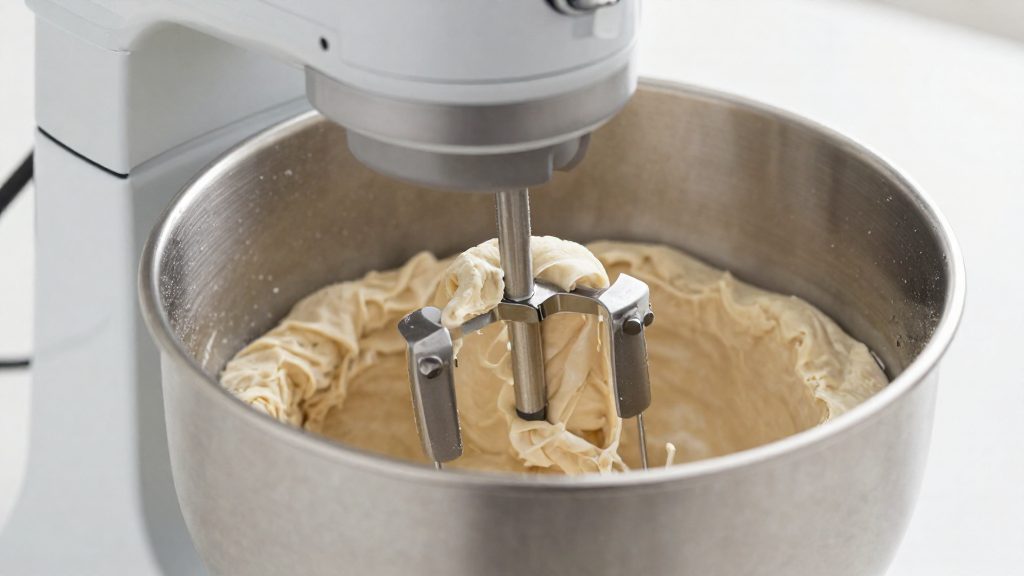
Knead the shaggy mass on a lightly floured surface until it becomes smooth and elastic and no longer sticks heavily to the work surface. Knead by hand or with a stand mixer; the time depends on the method and the dough’s texture, so judge by feel rather than by the clock.
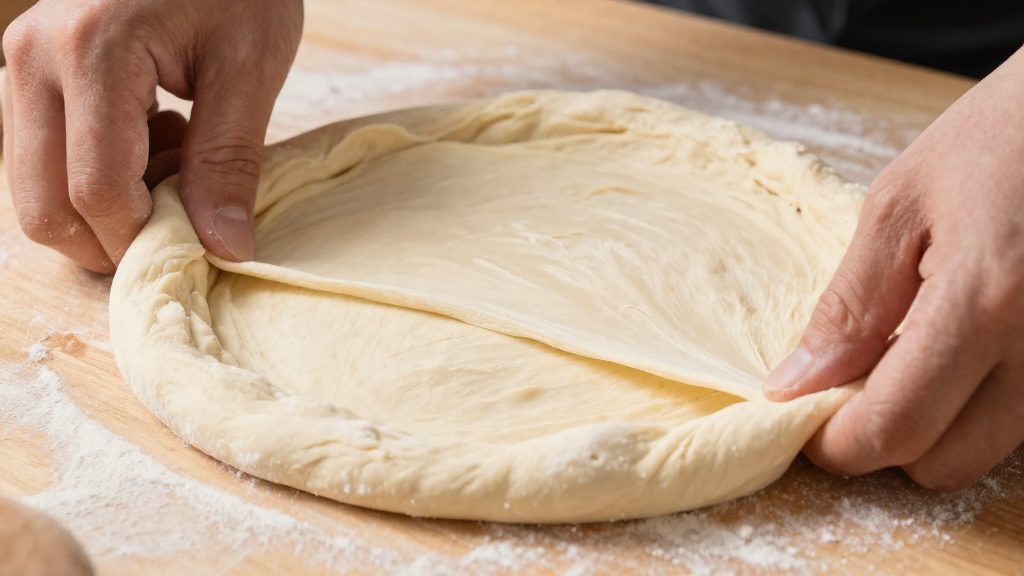
To check gluten development, use the windowpane test. Pinch off a small piece, then stretch it gently between your fingers. A well-kneaded dough stretches into a thin, almost translucent film that light can pass through without tearing. If it tears at once, knead for a few more minutes and test again.
Dividing, balling and stretching
Divide the dough into portions by weight or by eye. The 4-cup formula makes two 1-lb dough balls (Once Upon a Chef, 2026), and the bread-flour formula makes 2 to 3 bases (Lauren’s Cravings, 2026).
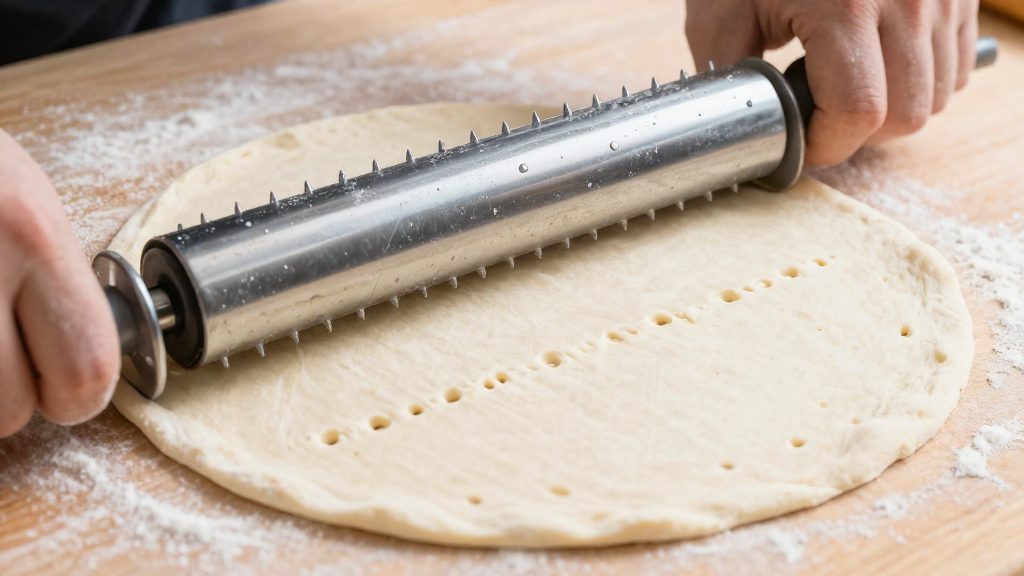
Shape each portion into a smooth ball by tucking the edges underneath, so the surface stays taut. To stretch, press the centre outward with your fingertips, then lift and rotate the dough, letting gravity lengthen it. Work from the centre to the rim, keeping the rim slightly thicker so it holds the sauce and cheese. Avoid pressing hard with a rolling pin, which can deflate the air pockets built during kneading.
How long should the dough rise?
The first rise for instant yeast pizza dough lasts 1 to 2 hours in the Once Upon a Chef recipe (2026) and 2 to 8 hours in the Lauren’s Cravings recipe (2026). The longer window depends on room temperature, so the same dough can need very different times in different kitchens. Once Upon a Chef gives a minimum total rise of at least 90 minutes before baking. After shaping, the Lauren’s Cravings recipe calls for a short bench rest of 30 to 45 minutes; Once Upon a Chef does not state one.
| Stage | Once Upon a Chef (2026) | Lauren’s Cravings (2026) |
|---|---|---|
| First rise | 1 to 2 hours | 2 to 8 hours, depending on room temperature |
| Bench rest after shaping | Not stated by the source | 30 to 45 minutes |
| Minimum total rise | At least 90 minutes | Not stated by the source |
First rise
The first rise happens after the dough is mixed and kneaded, while it is still one mass in the bowl. In the Once Upon a Chef recipe, which uses 4 cups of all-purpose flour and 1 tbsp of instant or quick-rise yeast for two 1-lb balls, the dough rises 1 to 2 hours. The Lauren’s Cravings recipe, built on 475 g of bread or “00” flour and 2 tsp of instant yeast, makes 2 to 3 bases and rises 2 to 8 hours. Because the source ties that range to room temperature, judge the dough by its size. It should roughly double in volume before you move on.
Bench rest after shaping
Once the dough is divided and shaped into balls, it rests again for 30 to 45 minutes. This short rest relaxes the gluten so the balls stretch without tearing. Lauren’s Cravings specifies this step. Keep the balls covered during the rest so their surface does not dry out.
Minimum total time before baking
Once Upon a Chef gives a floor of at least 90 minutes in total. Lauren’s Cravings does not state a total minimum, so the first rise and bench rest set the timing there.
Can you use active dry yeast instead?
Yes, but the swap is not one-to-one in method. Active dry yeast also works, but it needs an extra preparation step and a longer rise.
| Yeast type | Amount compared with instant yeast | Preparation | Rise time |
|---|---|---|---|
| Instant yeast | Reference amount | Added directly to the flour | Reference rise time |
| Rapid-rise yeast | Same amount | Added directly to the flour | Same as instant yeast |
| Bread machine yeast | Same amount | Added directly to the flour | Same as instant yeast |
| Active dry yeast | Not specified by the source | Dissolved in warm water for about 10 minutes first | About 50% longer |
How to swap in active dry yeast
The source says to dissolve active dry yeast in warm water for about 10 minutes first. Stir the yeast into warm water, let it stand for about 10 minutes, then add the mixture to the flour in place of the dry yeast. Allow about 50% more rise time.
Planning the extra time
Active dry yeast takes about 50% longer to raise the dough. If a recipe gives a rise time based on instant yeast, add about half that time again to the first rise. This adjustment applies to the rise only.
Fridge and freezer storage
Homemade pizza dough can be held in the refrigerator or frozen, so one batch can be spread across several bakes. According to Inspired Taste (2026), dough made with instant yeast can be refrigerated overnight and kept for up to 3 days. Dough that is oiled and sealed can be frozen for up to 3 months. These are the outer limits.
Holding limits
| Method | Maximum storage | Preparation |
|---|---|---|
| Refrigerator | Up to 3 days | Refrigerated overnight |
| Freezer | Up to 3 months | Oiled and sealed before freezing |
Preparing dough for the freezer
Oiling and sealing is the step that the freezing limit depends on. Lightly coat the dough ball with oil, then enclose it in a sealed bag or airtight container. The oil and seal reduce the chance of the surface drying out in the freezer.
Thawing before use
Thawing overnight in the refrigerator is the routine for frozen dough. Move the dough from the freezer to the fridge the evening before you plan to shape it, and leave it there overnight. Thawing this way lets the dough come up in temperature slowly and evenly, rather than being handled while still firm.
Baking: oven, stone or pizza oven?
A home oven and a dedicated pizza oven bake the same dough in very different times, mainly because of the temperature each one reaches. A home oven run as hot as possible, with a stone or steel, produces a good base but takes several minutes. A dedicated outdoor pizza oven cooks the same dough in seconds.
Home oven with a pizza steel or stone
Lauren’s Cravings (2026) advises running the oven as hot as possible, about 230°C (475°F), with a heavy tray or stone preheated inside it for 30 minutes. Inspired Taste (2026) gives a wider range: preheat for at least 40 minutes at 425–550°F with a pizza steel or stone, then bake for about 6 to 15 minutes. Lower temperatures in that range bake for longer. At 425–450°F the bake runs a little longer, which helps if smoke is a concern.
Why the surface matters
The heat retention of a steel or stone is what makes a home oven workable. A thick surface that has been fully preheated stores heat and transfers it to the base as soon as the dough touches it. Without that stored heat, the air in the oven alone must do the work, and the base cooks more slowly, often without the same crisp underside.
Dedicated pizza oven
Outdoor pizza ovens run above 400°C (750°F). Lauren’s Cravings (2026) gives a bake time of 90 to 120 seconds at that temperature. The main trade-off is clear: the home oven is more accessible and more forgiving with timing, while the pizza oven rewards quick, attentive handling of the dough.
| Setup | Temperature | Bake time |
|---|---|---|
| Home oven with steel or stone (Inspired Taste, 2026) | 425–550°F | about 6 to 15 minutes |
| Outdoor pizza oven (Lauren’s Cravings, 2026) | above 400°C / 750°F | 90 to 120 seconds |
Frequently asked questions
Can I use instant yeast in place of active dry yeast in a pizza dough?
Yes, but the timing changes. Instant yeast is mixed straight into the flour, while active dry yeast needs about 10 minutes of dissolving in warm water first and, according to Once Upon a Chef (2026), the dough takes roughly 50% longer to rise.
What water temperature should I use with instant yeast?
Aim for lukewarm water, around 105°F (41°C), which Once Upon a Chef (2026) describes as ideal. Water above 130°F (54°C) can kill the yeast, so check the temperature with a thermometer rather than by feel.
How long can the dough rest before baking?
Timing depends on the recipe. Inspired Taste (2026) states the dough can be refrigerated overnight and kept up to 3 days, and it can be frozen for up to 3 months once oiled and sealed. For the bread-flour or ‘00’ version, Lauren’s Cravings (2026) gives a first rise of 2 to 8 hours depending on room temperature.