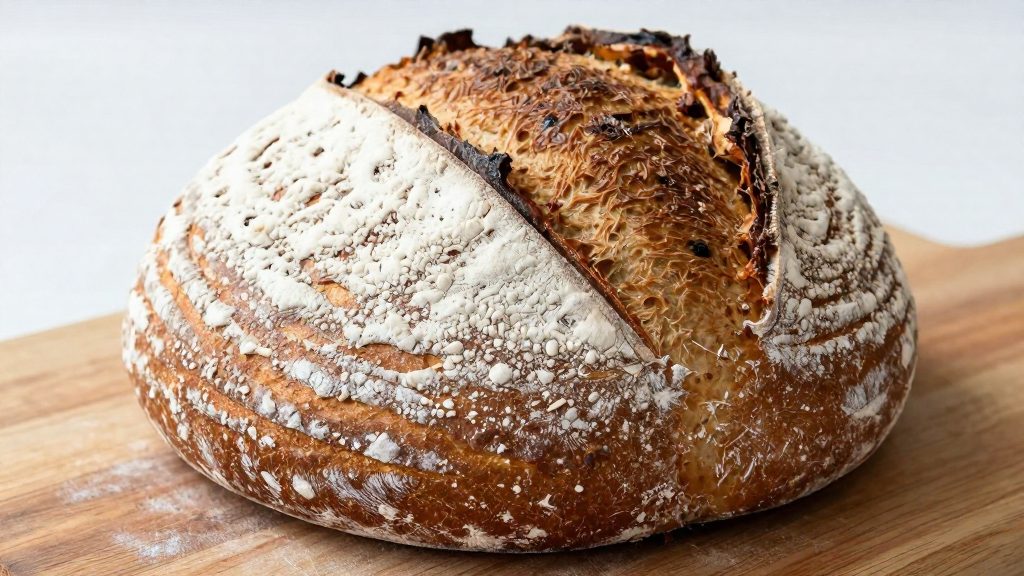
Why shaping changes everything
Shaping gives a loaf its surface tension, the taut outer skin that holds the dough’s gas and keeps its form in the oven. The sheet from The Clever Carrot notes that the amount of tension matters in both directions. Shaping that is too lax can produce a lopsided loaf with less oven spring, the rise the loaf makes in the first minutes of baking. Shaping that is too aggressive deflates the air bubbles that fermentation has built up. The goal is enough tension to hold the shape without crushing the gas inside.
Common shaping errors and their effects
| Shaping approach | Result | Adjustment from the sources |
|---|---|---|
| Too lax | Lopsided loaf, less oven spring | Tighten with a firm drag across the work surface |
| Too aggressive | Deflated air bubbles | Use gentler folds and stop once the dough holds its shape |
| Very sticky, high-hydration dough | Dough sticks to hands and surface | Use a lightly oiled or wet bench scraper (The Clever Carrot) |
Preparing the dough before shaping
Dough with high water content is harder to handle. For sticky, high-hydration dough, Better Baker Club (2024) recommends leaving it uncovered for 10–15 minutes before shaping so the surface firms up. Dust the work surface lightly. The Clever Carrot advises against heavy flouring, since too much flour makes the dough slide around instead of gripping the surface.
Resting after the folds
After the folds, The Clever Carrot recommends a 5–10 minute rest to relax the gluten, the protein network that gives dough its elasticity. A relaxed dough is easier to shape a second time without tearing. The rest is a separate step from the final shaping, and it should happen before the dough is tightened.
Boule and batard methods
Two common loaf shapes use different folds and different proofing setups.
| Shape | Folding method | Proofing position | Container |
|---|---|---|---|
| Boule (round) | Envelope method: fold each side to the center, then the bottom and top edges | Seam side up | Lined bowl or basket |
| Batard (oval) | Fold the top third down, fold both sides in to a triangle, fold the tip down and seal the seam | Seam side up in a floured banneton, or seam side down in a greased loaf pan | Banneton or loaf pan |
For a boule, the sheet describes flipping the dough with a bench knife, cupping it with floured hands, and dragging it in a circle to tighten it. For a batard, the dough is rolled once after folding to elongate it, as described by Better Baker Club (2024).
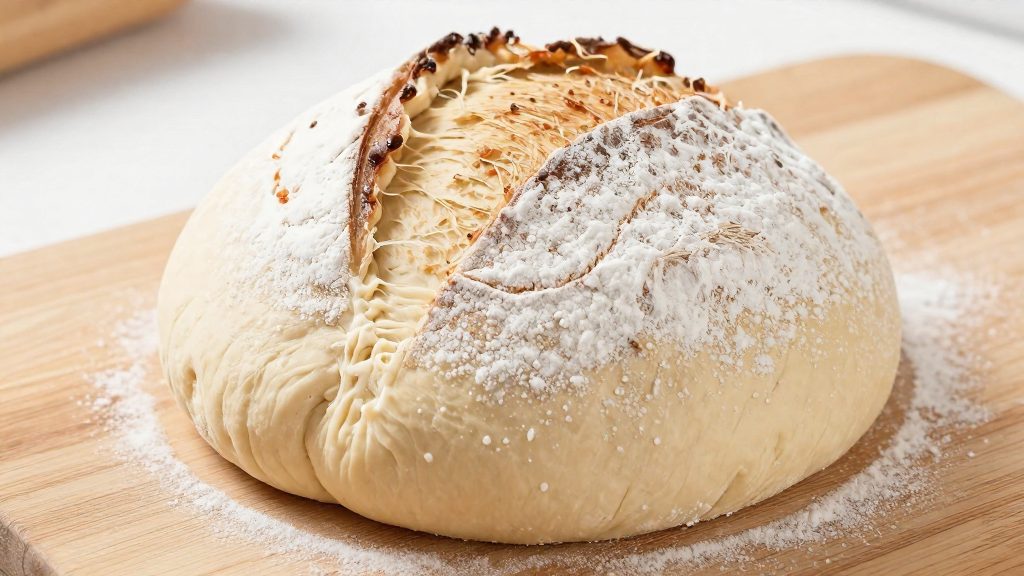
What equipment do you need to shape a sourdough loaf?
You need only a few basic tools to shape sourdough, and most exist to keep a wet, elastic dough from sticking or tearing. The shaping methods in The Clever Carrot and Better Baker Club (2024) rely on a bench knife, a bench scraper, a lined bowl or basket, a banneton, a loaf pan, and a small amount of flour. Each tool has a specific job during shaping and proofing.
| Tool or material | Role in shaping | Source |
|---|---|---|
| Bench knife | Flips the dough over before it rests | The Clever Carrot |
| Bench scraper | Helps handle very sticky, high-hydration dough when lightly oiled or wet | The Clever Carrot |
| Lined bowl or basket | Holds a boule seam side up for the second rise | The Clever Carrot |
| Banneton | Holds a batard seam side up during proofing | Better Baker Club (2024) |
| Greased loaf pan | Holds a batard seam side down during proofing | Better Baker Club (2024) |
| Rice flour or all-purpose flour | Dusts the banneton so the dough does not stick | Better Baker Club (2024) |
Tools for handling the dough
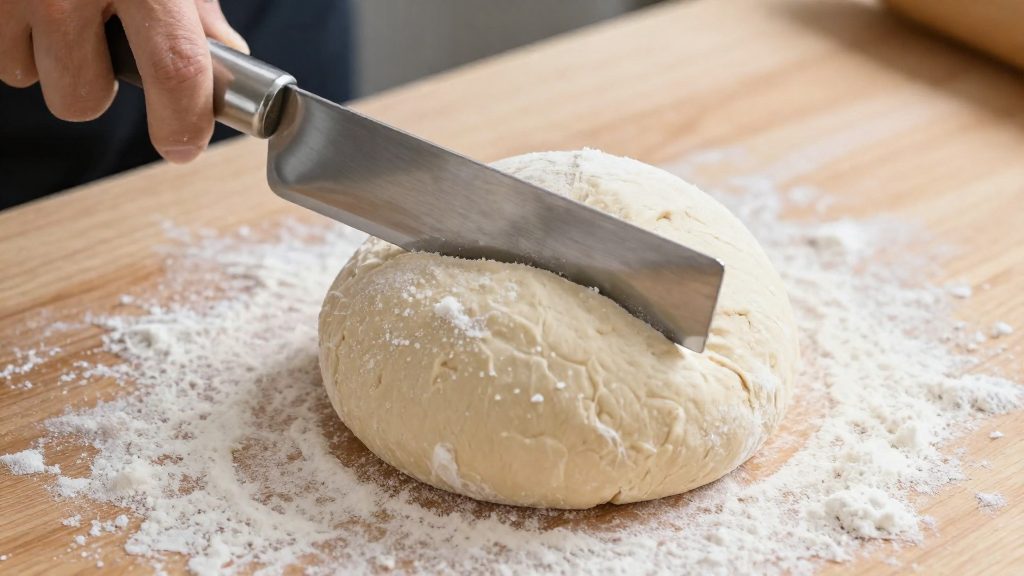
The bench knife lifts and turns the dough on the work surface. In the envelope method for a boule, you use it to flip the dough after the folds, then let it rest. For very sticky dough, a bench scraper that is lightly oiled or wet keeps the dough from clinging to the work surface and to itself.
Vessels for the final rise
A banneton is a basket that supports the dough while it proofs. Dust it with rice flour or all-purpose flour before placing the dough inside. A greased loaf pan can replace a banneton for a batard, placed seam side down.
How to Shape a Boule Step by Step
A boule is a round loaf, and the envelope method described by The Clever Carrot is a common way to shape one. The aim is to build surface tension without tearing the dough, so the loaf keeps its round form during the second rise and bakes evenly. Work on a lightly floured bench and use a bench knife to lift and turn the dough.
Folding the Dough
Start with the dough resting on the bench. Stretch one side toward the centre and fold it over. Fold the opposite side in the same way, then fold the bottom edge and the top edge toward the middle. Each fold adds a layer of tension to the outer surface.
Flipping, Resting and Tightening
Slide the bench knife under the dough and flip it so the seam faces down. The Clever Carrot advises a 5–10 minute rest after the folds to relax the gluten, which makes the next step easier. Then cup the dough with floured hands and drag it in a circle across the bench. This movement tightens the outer skin into a smooth ball.
Placing the Boule for the Second Rise
Place the shaped boule seam side up in a lined bowl or basket. Shaping that is too lax can produce a lopsided loaf with less oven spring. Shaping that is too aggressive can deflate the air bubbles already present in the dough.
Adjusting for Sticky Dough
Dough with high hydration is harder to handle, and the adjustments depend on how sticky it is:
| Dough condition | Adjustment | Source |
|---|---|---|
| Standard dough | Light dusting of flour on the bench; too much flour makes the dough slide around | The Clever Carrot |
| Very sticky, high hydration | Lightly oiled or wet bench scraper for folding | The Clever Carrot |
| Very sticky, high hydration | Leave uncovered for 10–15 minutes before shaping so it firms up | Better Baker Club (2024) |
How to Shape a Batard (Oval Loaf)
A batard is an oval loaf, shorter and wider than a baguette and longer than a boule. Shaping it is a sequence of folds: the dough is folded into a triangle, the tip is sealed, and the piece is rolled once into an elongated form before the second rise. Better Baker Club (2024) lays out the steps below, and The Clever Carrot adds guidance on tension and flour.
The Folding Sequence
| Step | Action |
|---|---|
| 1 | Fold the top third of the dough down toward you. |
| 2 | Fold both sides in to form a triangle. |
| 3 | Fold the tip down and seal the seam. |
| 4 | Roll the dough once to elongate it. |
| 5 | Place it seam-side up in a floured banneton, or seam-side down in a greased loaf pan. |
The seam sealing in step 3 matters because the seam ends up on top when the loaf is proofed in a banneton and underneath when it is proofed in a loaf pan. Pinch it firmly so it stays closed.
Preparing Sticky, High-Hydration Dough
Very wet dough is hard to fold. Better Baker Club (2024) recommends leaving it uncovered for 10–15 minutes before shaping so the surface firms up. For the bench, The Clever Carrot suggests a lightly oiled or wet bench scraper, which keeps the dough from tearing against the surface.
For the banneton, dust it with rice flour or all-purpose flour. The same guide notes that the dough should not be over-floured.
Controlling Tension
Tension is the balance that decides the final shape:
- Too lax: the loaf comes out lopsided and shows less oven spring, according to The Clever Carrot.
- Too aggressive: the stretching deflates the air bubbles built up during fermentation.
The 5–10 minute rest comes from The Clever Carrot’s boule method. The Better Baker Club batard steps do not specify a rest, so treat it as an optional way to relax the gluten.
How much flour to use on the work surface?
Use only a light dusting on the bench. The Clever Carrot advises this because too much flour on the work surface makes the dough slide around, which makes it harder to tighten the boule with cupped, floured hands. The goal is a thin film that stops sticking without creating a loose layer the dough can skid across.
Very sticky, high-hydration dough is the exception. Instead of adding more flour, The Clever Carrot recommends a lightly oiled or wet bench scraper, which lifts and turns the dough without adding dry flour to its surface. Better Baker Club (2024) suggests a different step: leave this kind of dough uncovered for 10–15 minutes before shaping so the surface firms up, then shape it with minimal extra flour.
The banneton needs its own approach. Better Baker Club (2024) recommends dusting it with rice flour or all-purpose flour and warns against over-flouring. Use the same restraint on the bench and in the basket.
| Situation | Flour or alternative | Source |
|---|---|---|
| Standard dough on the bench | Light dusting only | The Clever Carrot |
| Very sticky, high-hydration dough | Lightly oiled or wet bench scraper | The Clever Carrot |
| Sticky dough before shaping | Uncovered rest of 10–15 minutes | Better Baker Club (2024) |
| Banneton for proofing | Rice flour or all-purpose flour, not heavy | Better Baker Club (2024) |
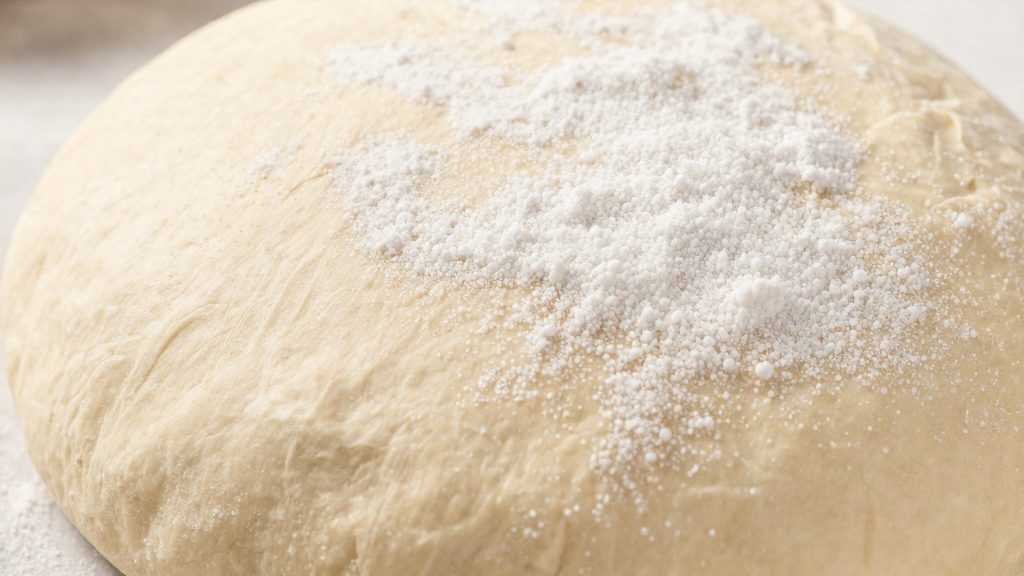
What to do with sticky or very high-hydration dough?
Sticky, high-hydration dough clings to the bench and tears when you fold it. The most direct fix is a short uncovered rest before shaping. According to Better Baker Club (2024), leaving sticky dough uncovered for 10–15 minutes lets it firm up enough to handle. Work with that firmer dough rather than pulling at it.
Adjusting the folds
Follow the envelope method for a boule, as described by The Clever Carrot: fold one side to the center, then the opposite side, then the bottom and top edges. Flip the dough with a bench knife, then rest it for 5–10 minutes to relax the gluten before tightening it.
Tension matters. If the shaping is too lax, the loaf can turn out lopsided with less oven spring. If it is too aggressive, it deflates the air bubbles. Aim for a surface that is taut but still holds its gas.
Using a bench scraper
For very sticky dough, The Clever Carrot recommends a lightly oiled or wet bench scraper. Use it to lift and flip the dough, and to free it from the work surface without tearing the skin.
Shaping and proofing a batard
Better Baker Club (2024) describes the batard method: fold the top third down, fold both sides in to form a triangle, fold the tip down and seal the seam, then roll once to elongate. Proof seam-side up in a banneton, or seam-side down in a greased loaf pan. Dust the banneton with rice flour or all-purpose flour before placing the dough inside.
| Stage | Adjustment for sticky dough | Source |
|---|---|---|
| Before shaping | Rest uncovered for 10–15 minutes | Better Baker Club (2024) |
| During folds | Use a lightly oiled or wet bench scraper | The Clever Carrot |
| After folds | Rest for 5–10 minutes before tightening | The Clever Carrot |
| Proofing | Dust the banneton with rice flour or all-purpose flour | Better Baker Club (2024) |
Common shaping mistakes
Most shaping problems come from applying too much or too little tension, or from managing flour and moisture badly. Tension decides the final shape and how the loaf rises in the oven. According to The Clever Carrot, shaping that is too lax produces a lopsided loaf with less oven spring, the rapid rise the loaf makes in the first minutes of baking. Shaping that is too aggressive does the opposite: it deflates the air bubbles built up during fermentation, so the dough loses the structure it needs to hold gas.
| Mistake | Result | Adjustment |
|---|---|---|
| Lax shaping | Lopsided loaf, less oven spring | Cup the dough with floured hands and drag it in a circle to tighten the surface |
| Aggressive shaping | Deflated air bubbles | Keep the tension firm but controlled rather than forceful |
| Too much flour on the bench | Dough slides around and resists shaping | Dust the work surface lightly |
| Very sticky, high-hydration dough | Difficult to fold and lift | Use a lightly oiled or wet bench scraper (The Clever Carrot) |
Excess flour on the work surface and in the banneton
A light dusting is enough. Too much flour on the bench makes the dough slide instead of gripping, which disrupts the folds. Better Baker Club (2024) also advises against over-flouring the banneton. For proofing baskets, it recommends a dusting of rice flour or all-purpose flour.
Handling sticky dough
For high-hydration dough that is hard to manage, Better Baker Club (2024) suggests leaving the dough uncovered for 10–15 minutes before shaping. The surface firms up in that time, which makes the dough easier to handle. The Clever Carrot recommends a 5–10 minute rest after the folds to relax the gluten, which helps the dough stretch without tearing.
Banneton or loaf pan: how to place the dough
Where the dough goes and which side faces up sets the final shape of the loaf. For a boule, the usual method is to place the dough seam side up in a lined bowl or basket for the second rise, as The Clever Carrot describes. For a batard, the container determines the orientation, as Better Baker Club (2024) explains.
| Shape and container | Seam position | Preparation | Source |
|---|---|---|---|
| Boule in a lined bowl or basket | Seam side up | Lined container | The Clever Carrot |
| Batard in a banneton | Seam side up | Floured banneton | Better Baker Club (2024) |
| Batard in a loaf pan | Seam side down | Greased pan | Better Baker Club (2024) |
Placing a boule in a basket
After the folds, flip the dough with a bench knife and let it rest. Then cup it with floured hands and drag it in a circle across the work surface to tighten the skin. Lift the dough with the bench knife and set it seam side up in the lined basket. The rest before tightening relaxes the gluten, so the dough holds its shape better under your hands.
Placing a batard in a banneton or pan
After rolling the batard once to elongate it, set it into the container. A floured banneton takes the dough seam side up. A greased loaf pan takes it seam side down, so the seam sits against the pan.
Dusting and sticky dough
Dust the banneton with rice flour or all-purpose flour. Avoid over-flouring, because excess flour makes the dough slide. For very sticky, high-hydration dough, leave it uncovered for 10–15 minutes before shaping so it firms up, and use a lightly oiled or wet bench scraper to handle it.
Common placement problems
Shaping that is too lax can produce a lopsided loaf with less oven spring, the rise the dough makes in the first minutes of baking. Shaping that is too aggressive deflates the air bubbles that the dough has built up during fermentation.
Frequently asked questions
What should I do if my sticky dough won’t hold its shape?
Let very sticky, high-hydration dough rest uncovered for 10–15 minutes before shaping so the surface firms up, as Better Baker Club (2024) recommends. Then work with an oiled or wet bench scraper, a tool The Clever Carrot suggests, rather than adding more flour to the dough.
How can I tell if I’ve shaped my loaf too tightly or too loosely?
A loaf shaped too loosely can bake up lopsided with a weaker rise, while overly rough handling squeezes out the gas that fermentation has built up. If the loaf spreads or looks uneven after the final drag, the surface tension was probably too weak, so tighten it with a firm drag across the work surface.
Which way should a batard sit in the proofing container?
Better Baker Club (2024) places a batard seam side up in a floured banneton, or seam side down in a greased loaf pan. Its batard steps do not include a rest, so the 5–10 minute rest from The Clever Carrot’s boule method is an optional extra for relaxing the gluten.