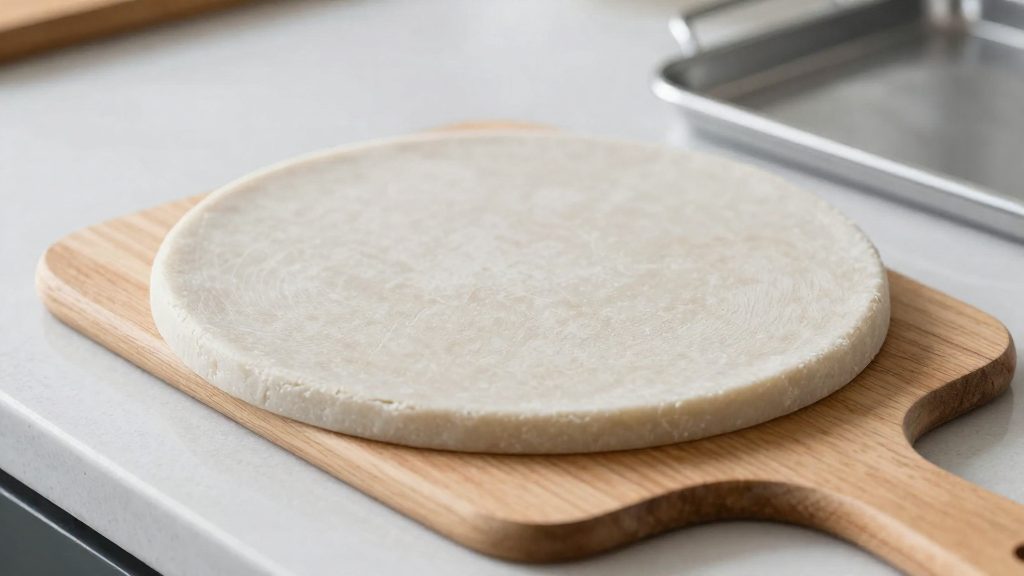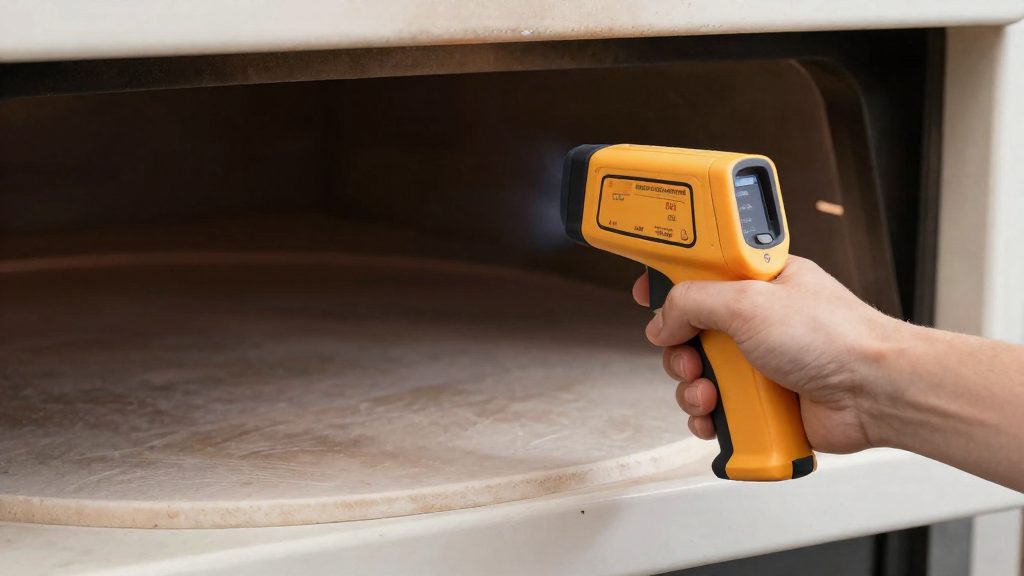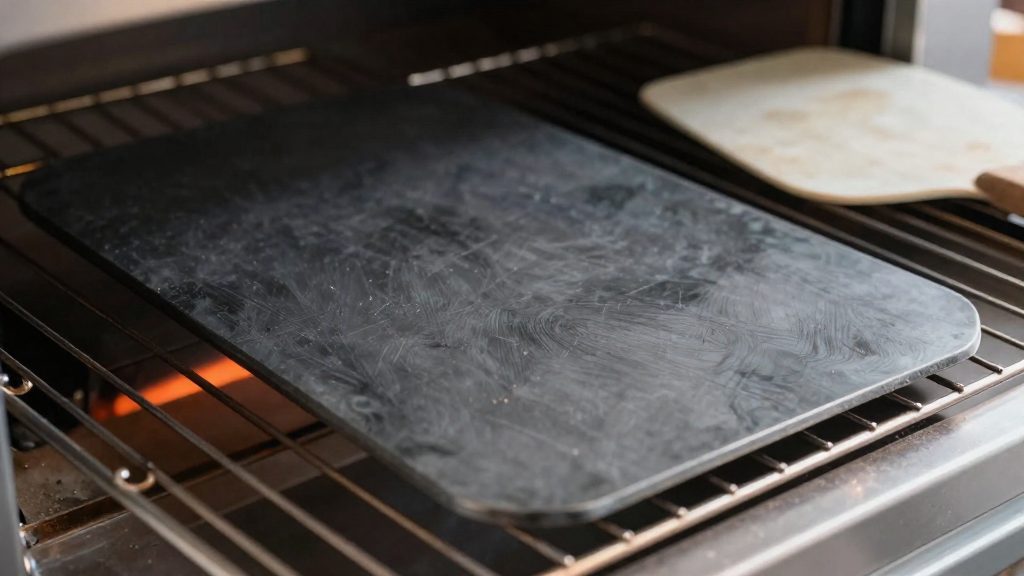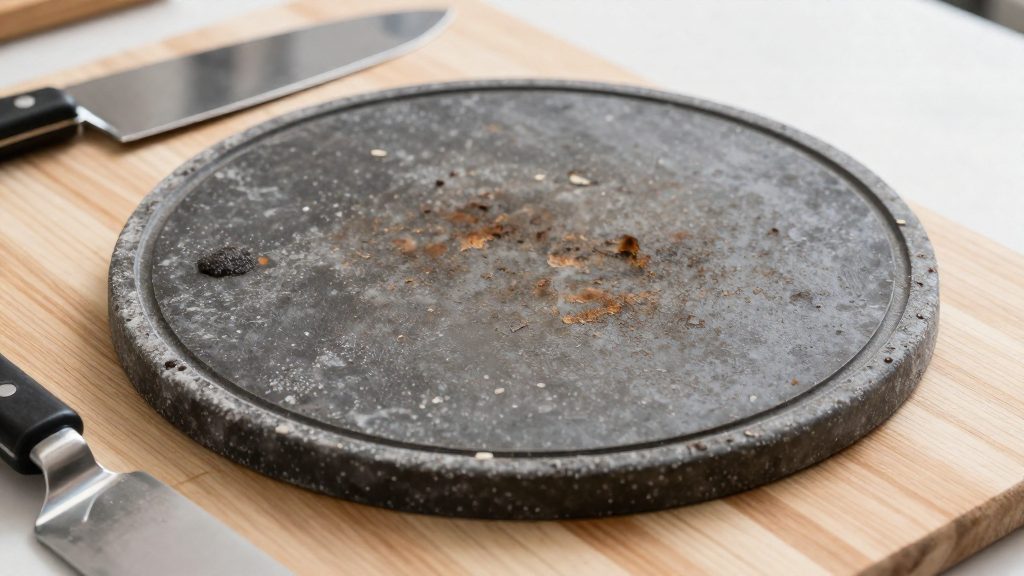
A pizza stone needs different care from most kitchen tools because it is porous and can crack under sudden temperature changes. In short: let it cool completely, scrape off food, scrub with a stiff nylon brush and no soap, keep water away from the hot surface, and dry it fully before storing. Dark stains are normal and do not mean the stone needs more cleaning.
Why a Pizza Stone Needs Special Maintenance
Porosity and water absorption
A porous stone absorbs liquids, which shapes how it should be cleaned. Tasting Table (2025) advises against soaking or submerging the stone, because it absorbs water and may crack. Soap follows the same logic: the stone takes it in, and pizza baked later can taste soapy, so soap should stay out of the cleaning routine.
Temperature changes and cracking
Heat stress is the main risk. Tasting Table (2025) recommends letting the stone cool completely and slowly before cleaning, since sudden temperature changes can crack it. America’s Test Kitchen (2025) adds that water should never touch a hot stone, because contact can crack it.
A cleaning routine that respects the stone
| Step | What to do | Source |
|---|---|---|
| 1. Remove debris | Scrape off food bits once the stone has cooled | America’s Test Kitchen (2025) |
| 2. Treat stubborn spots | Sprinkle a little salt or baking soda, then scrub with a stiff nylon brush | Tasting Table (2025) |
| 3. Rinse if needed | Use hot water and a stiff brush, with no soap | America’s Test Kitchen (2025) |
| 4. Dry | Pat dry, then let it air dry before storing | Tasting Table (2025) |
Only use the wet steps when food residue remains after scraping. Even then, use as little water as possible, never add soap, and dry the stone thoroughly afterward.
Stains are not a cleaning signal
Dark discoloration builds up with use and is normal. America’s Test Kitchen (2025) notes that residue burns off when the stone preheats to 500°F, so stains need no attention. Stains are normal and need no attention, so there is no reason to scrub them.
Should the stone cool before you clean it?
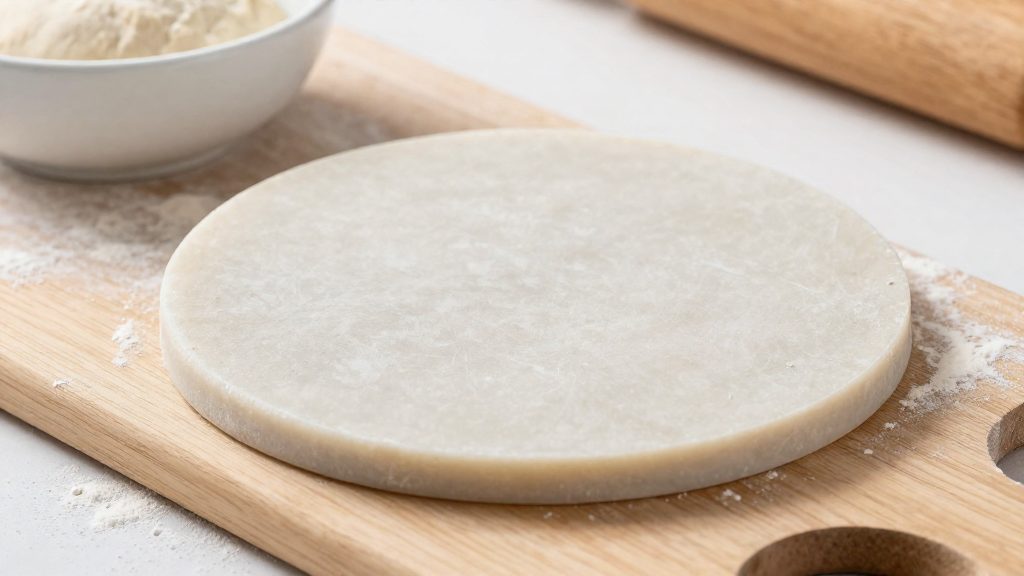
Yes. Let a pizza stone cool completely before you clean it, because sudden temperature changes can crack it (Tasting Table, 2025). Water carries the same risk: keep it away from a hot stone, since the stone can crack on contact (America’s Test Kitchen, 2025). Cleaning after the stone has cooled is the safer default after every bake.
Judge by touch, and let the stone return gradually to room temperature instead of cooling it quickly.
Scraping involves no water, but it follows the same order as the rest of the routine: America’s Test Kitchen (2025) advises scraping off food bits after baking, and the article recommends doing it once the stone has cooled. Brushing and scrubbing, however, should wait until the stone is cool, and the water rules still apply once it is.
| Stone state | Water contact | Source |
|---|---|---|
| Hot, just out of the oven | Keep water away; the stone can crack on contact | America’s Test Kitchen (2025) |
| Cooling down | Still avoid water; let it cool gradually | Tasting Table (2025) |
| Fully cool | Scrub with a stiff nylon brush; do not soak | Tasting Table (2025) |
How to Clean Your Pizza Stone After Each Use
Daily cleaning of a pizza stone comes down to removing loose food and letting the stone dry fully. The stone is porous, so the method matters as much as the tools. Let it cool completely first, because sudden temperature changes can crack it (Tasting Table, 2025). Once it is cool, scrape off any food bits that remain after baking (America’s Test Kitchen, 2025).
| Task | Method | Source |
|---|---|---|
| Cooling | Let the stone cool completely and slowly before cleaning | Tasting Table (2025) |
| Loose food | Scrape off after baking | America’s Test Kitchen (2025) |
| Stubborn spots | Scrub with a stiff nylon brush, adding a little salt or baking soda | Tasting Table (2025) |
| Heavier scrubbing | Use hot water and a stiff brush, only once the stone has cooled | America’s Test Kitchen (2025) |
| Soap | Do not use it; the stone can absorb it and give pizza a soapy taste | Tasting Table (2025) |
| Soaking | Do not submerge the stone, because it absorbs water and may crack | Tasting Table (2025) |
| Drying | Pat dry, then air dry before storing or reusing | Tasting Table (2025); America’s Test Kitchen (2025) |
Dark marks on the surface are normal and do not signal that the stone needs more cleaning. Any remaining residue burns off when the stone preheats to 500°F (about 260°C), according to America’s Test Kitchen (2025).
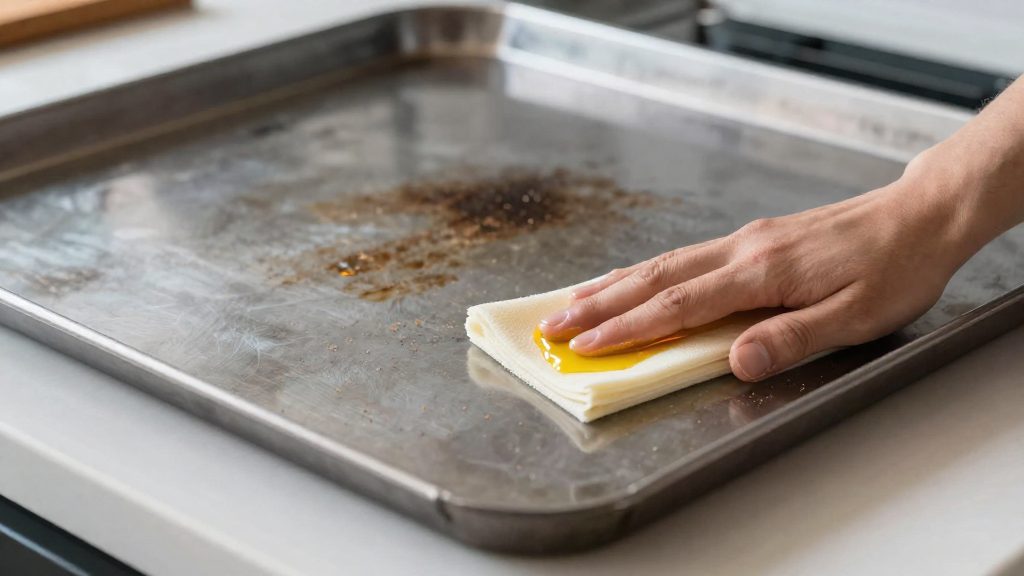
Do not oil a ceramic pizza stone. A light coat of oil is recommended for steel baking plates to prevent rust, but not for ceramic stones (America’s Test Kitchen, 2025).
Can You Use Soap or Water on a Pizza Stone?
Do not use soap on a pizza stone, and never soak it. A stone is porous, so it absorbs whatever touches it. According to Tasting Table (2025), absorbed soap can make the next pizza taste soapy. America’s Test Kitchen (2025) adds that soap can lodge in the pores of unglazed ceramic stones. Water is not forbidden, but it has to be used with care, and only after the stone has cooled completely. Tasting Table (2025) warns that sudden temperature changes can crack a stone, and America’s Test Kitchen (2025) notes that water can crack a hot stone on contact.
Cleaning Agents Compared
| Option | Verdict | Reason and source |
|---|---|---|
| Soap | Avoid | Absorbed into the pores; can make pizza taste soapy (Tasting Table, 2025; America’s Test Kitchen, 2025) |
| Soaking or submerging | Avoid | The stone absorbs water and may crack (Tasting Table, 2025) |
| Hot water with a stiff brush, no soap | Acceptable for scrubbing | Recommended by America’s Test Kitchen (2025), the same approach used for cast iron |
| Salt or baking soda | Acceptable on stubborn spots | Applied with a stiff nylon brush (Tasting Table, 2025) |
| Oil | Avoid on ceramic | Oil is for steel baking plates, to prevent rust, not for ceramic stones (America’s Test Kitchen, 2025) |
Cleaning Sequence
- Wait for the stone to cool. Do not clean it while it is hot.
- Scrape off food bits after baking, while they are still loose.
- Scrub with a stiff nylon brush. Use hot water with no soap only if the surface needs more than dry scraping.
- Dry the stone thoroughly. Pat it dry, then let it air dry before storing it (Tasting Table, 2025).
Stains and Reuse
Dark stains are normal and do not mean the stone needs more cleaning (Tasting Table, 2025). America’s Test Kitchen (2025) explains that residue burns off when the stone preheats to 500°F, so stains need no treatment. Before reuse, make sure the stone is fully dry (America’s Test Kitchen, 2025).
How to Remove Stubborn Stains and Residue?
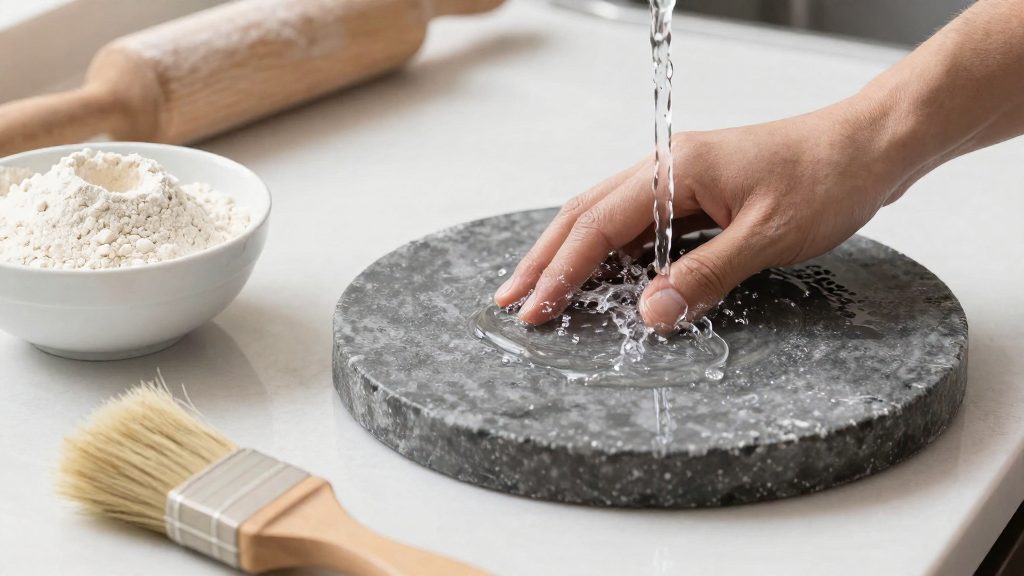
Stubborn residue on a pizza stone is usually removed by scraping and brushing, not by soaking or washing it like a dish. Let the stone cool completely and slowly first, because sudden temperature changes can crack it. Both Tasting Table (2025) and America’s Test Kitchen (2025) describe the same basic approach, and both note that the dark marks left by baking are often harmless.
Step-by-step method
Once the stone has cooled, scrape off any loose food bits. For spots that remain, scrub with a stiff nylon brush. On stubborn spots, Tasting Table (2025) suggests adding a little salt or baking soda to the brush work. If you need to scrub more heavily, America’s Test Kitchen (2025) recommends hot water and a stiff brush, without soap.
| Situation | Recommended approach | Source |
|---|---|---|
| Loose food bits after baking | Scrape off once the stone has cooled | America’s Test Kitchen (2025) |
| Stubborn spots | Stiff nylon brush with a little salt or baking soda | Tasting Table (2025) |
| Heavier scrubbing needed | Hot water and a stiff brush, no soap | America’s Test Kitchen (2025) |
| Dark stains | No extra cleaning needed | Tasting Table (2025) |
| Burnt-on residue | Burns off when the stone preheats to 500°F | America’s Test Kitchen (2025) |
Stains you can leave alone
Dark discoloration is a normal result of use and does not mean the stone needs more cleaning. Over-scrubbing adds no benefit, so limit cleaning to visible food debris and loose residue. Residue that is still on the stone burns off when it is preheated to 500°F, according to America’s Test Kitchen (2025).
Drying before storage
Keep water away from a hot stone, because it can crack on contact. After cleaning, pat the stone dry and let it air dry before storing it. Dry it thoroughly before the next use, since trapped moisture can cause problems when the stone heats.
Should you season a pizza stone with oil?
No. According to America’s Test Kitchen (2025), a light coat of oil is meant for steel baking plates, where it helps prevent rust. It is not for ceramic stones. The two materials need different care. A steel plate is a bare metal surface that benefits from a protective film, while a ceramic pizza stone is porous and is cleaned with plain hot water and a stiff brush. Because of this difference, oiling a ceramic stone is not part of the recommended routine.
The same principle explains why other additives are also left out. Tasting Table (2025) notes that the stone’s porous structure absorbs whatever touches it, which is why soap is excluded. America’s Test Kitchen (2025) makes a similar point: soap can lodge in the pores of unglazed ceramic stones. Neither guide lists oil as a cleaning or maintenance step, so no oiling schedule should be followed for a ceramic stone.
Stains do not call for oil either. Dark marks are normal and do not signal that the stone needs more cleaning. America’s Test Kitchen (2025) states that residue burns off when the stone preheats to 500°F, so the next bake takes care of most leftover marks.
| Surface | Oil coat? | Reason given |
|---|---|---|
| Ceramic or unglazed pizza stone | Not recommended | Oil is not for ceramic stones (America’s Test Kitchen, 2025) |
| Steel baking plate | Light coat | Prevents rust (America’s Test Kitchen, 2025) |
How to Dry and Store Your Pizza Stone
Drying is as important as cleaning, because a porous stone that stays damp can be damaged in use. After cleaning, pat the stone dry, then let it air dry completely before putting it away. According to America’s Test Kitchen (2025), the stone should be dried thoroughly before it is reused, and water must be kept away from it while it is hot, since contact can make it crack.
The main risk is absorbed water. Tasting Table (2025) warns that soaking or submerging a stone is a mistake because it absorbs water and may crack. For the same reason, avoid rinsing a stone that is still warm and wait until it is cool and dry before storing it.
Two points are often confused at this stage:
- Dark stains are normal. Tasting Table (2025) states that they do not mean the stone needs more cleaning. America’s Test Kitchen (2025) adds that residue burns off when the stone preheats to 500°F, so stains need no special treatment before drying or storage.
- Oil is not used on ceramic. A light coat of oil is meant for steel baking plates to prevent rust. It is not applied to ceramic pizza stones.
| Step | Purpose | Source |
|---|---|---|
| Pat dry, then air dry fully | Removes water the porous stone may have absorbed | Tasting Table (2025) |
| Keep water away while hot | Prevents cracking on contact | America’s Test Kitchen (2025) |
| Do not apply oil | Oil is for steel plates, not ceramic | America’s Test Kitchen (2025) |
Store the stone only once it is fully dry, in a place that stays dry. Store the stone only once it is fully dry, in a place that stays dry.
Frequently asked questions
Can I wash my pizza stone with dish soap if it gets greasy?
No. A porous stone takes in soap and holds onto it, so later pizzas can pick up a soapy taste. Scrape off the residue and scrub with hot water and a stiff brush instead. Tasting Table (2025) also recommends against soaking the stone.
What happens if I rinse the stone while it is still hot?
Cold or room-temperature water on a hot stone can crack it, a risk known as thermal shock. Let the stone cool completely before any water touches it. America’s Test Kitchen (2025) advises keeping water away from a hot stone for this reason.
Does a dark, blotchy surface mean my stone needs deeper cleaning?
No. The discoloration comes from baked-on residue that burns off when the stone preheats to 500°F (about 260°C), according to America’s Test Kitchen (2025). Scrubbing harder is unnecessary, and the stone only needs to be fully dry before you store it.