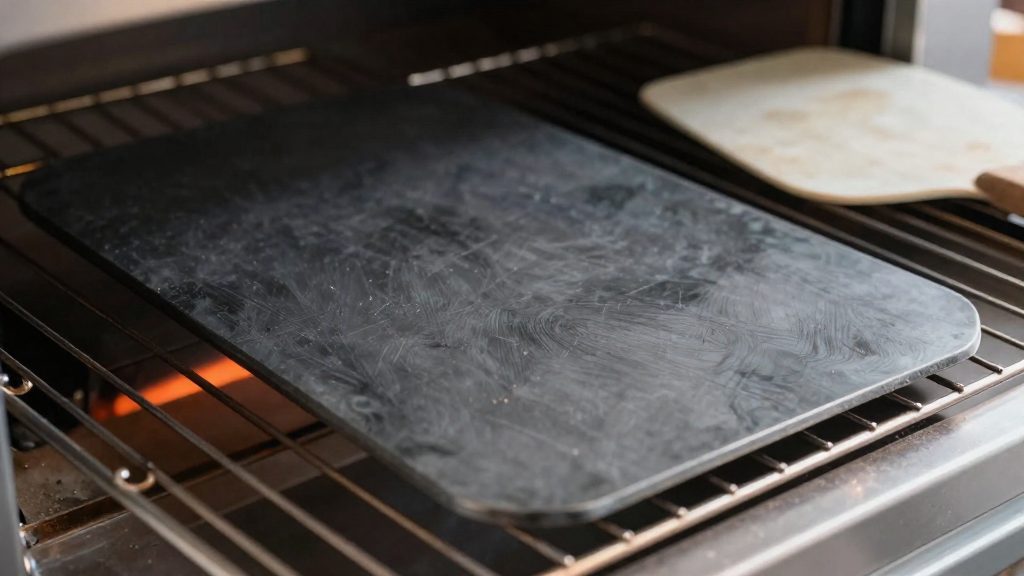
Preheat a baking steel for 45 to 60 minutes at 500–550°F (about 260–290°C), and aim for the full 60 minutes. Baking Steel’s 2025 guide gave 45–60 minutes, and its 2026 temperature guide advises the full hour: the surface may reach temperature in about 20 minutes, but the core needs the full hour. Baking Steel’s 2025 guide gave a range of 45–60 minutes, but its later temperature guide (2026) advises the full 60 minutes: the surface may reach temperature in about 20 minutes, but the core needs the full hour.
How long to preheat a baking steel for pizza
Preheating time matters as much as the oven setting. Baking Steel advises using convection and preheating for 45 to 60 minutes (2025), then specifies the full 60 minutes in its 2026 guide. The reason is thermal mass. A thick steel stores heat, and its surface can reach temperature well before its core does. A steel that is only hot on top gives the pizza base less stored energy during the first minutes of baking.
| Stage | Guidance | Source |
|---|---|---|
| Oven temperature | 500–550°F (about 260–290°C) | Baking Steel (2025) |
| Total preheat | 45–60 minutes; full 60 minutes recommended | Baking Steel (2025, 2026) |
| Surface reaches temperature | About 20 minutes | Baking Steel (2026) |
Finishing with the broiler
Baking Steel describes an optional finish: switch to broil for the last 5 to 10 minutes of preheating to add top heat. Turn the broiler off after a minute or two of baking. A pizza typically bakes in about 4 to 6 minutes, so the timing of the switch matters. Leaving the broiler on for the whole bake can scorch the top before the base is set.
Grills and wood-fired ovens
The same manufacturer gives different targets for other heat sources. For a grill, aim for about 400°F on the steel surface. For a wood-fired oven, aim for about 600°F in the chamber (Baking Steel, 2026). These targets differ by heat source and are not a higher setting for the same oven. A home oven never needs more than 550°F, and the steel itself withstands well over 1,000°F, so the steel’s tolerance does not set a higher preheat target for everyday baking.
Ideal Oven Temperature for the Steel
For a home oven, Baking Steel recommends setting the oven to 500–550°F (about 260–290°C) and preheating the steel for 45–60 minutes, using convection if the oven has it (Baking Steel, 2025). The manufacturer’s temperature guide (Baking Steel, 2026) advises a full 60 minutes at 500–550°F. The steel’s surface can reach temperature in about 20 minutes, but the core needs the full hour to heat through, so a shorter preheat can leave the base under-heated even when the surface feels hot.
Target Temperatures by Cooking Setup
| Setup | Target temperature | What the figure refers to |
|---|---|---|
| Home oven | 500–550°F (about 260–290°C) | Oven setting |
| Grill | About 400°F | Steel surface |
| Wood-fired oven | About 600°F | Chamber |
The steel itself tolerates well over 1,000°F. Baking Steel notes that a home oven never needs more than 550°F (Baking Steel, 2026), so the higher ratings do not translate into a higher setting for everyday baking.
Using the Broiler at the End of Preheating
Baking Steel describes an optional step: switch to broil for the last 5–10 minutes of preheating to add extra top heat (Baking Steel, 2025). Turn the broiler off after a minute or two of baking. At these settings, a pizza bakes in about 4–6 minutes (Baking Steel, 2025).
Why 60 Minutes and Not 20?
According to Baking Steel (2026), the surface of the steel can reach temperature in about 20 minutes, but the guide still calls for a full 60 minutes at 500–550°F (about 260–290°C). The reason is thermal mass. A baking steel is a thick block of metal, so its top surface warms well before the material beneath it. A surface that feels hot is not the same as a steel that has stored enough heat to recover after a cold dough hits it.
This matters because a pizza or loaf draws energy out of the steel the moment it touches. The steel has to replace that heat quickly, and it can only do so if the core is fully hot. A short preheat may leave a hot surface over a cooler core, so the guide asks for the full hour.
| Stage | Guidance | Source (date) |
|---|---|---|
| Surface reaches temperature | About 20 minutes | Baking Steel (2026) |
| Core reaches temperature | Full 60 minutes | Baking Steel (2026) |
| Recommended preheat range | 45–60 minutes at 500–550°F | Baking Steel (2025) |
Practical steps:
- Place the steel in the oven before turning it on, set the oven to the target range, and time the preheat for the full recommended duration.
- Keep the steel in the oven for the full preheat, even if the surface seems ready early.
- Use convection if your oven offers it, as the guide recommends.
A home oven does not need to go higher. Baking Steel (2026) notes that the steel withstands well over 1,000°F, but a home oven never needs more than 550°F, so extra temperature will not shorten the wait.
Where to place the steel in the oven
According to Baking Steel (2025), the steel should sit on the first or second rack from the top of the oven, with the steel about 7 inches (roughly 18 cm) below the broiler. The guide gives this position as the recommended one. Rack position therefore affects how the steel performs, not just how fast it heats.
| Rack position | Recommendation | Reason |
|---|---|---|
| First rack from the top | Recommended | Sits about 7 inches below the broiler, per Baking Steel (2025) |
| Second rack from the top | Recommended | Also within the recommended range for the steel |
| Bottom rack | Avoid | Too close to the heating element, which can burn the base of your bake |
The bottom rack is the position to avoid. Because it sits near the element, the steel’s underside gets too much direct heat, and the base of a pizza or loaf can scorch before the top is cooked. The top-rack positions avoid this problem.
Some practical points for placement:
- Set the rack before you start preheating. A steel that has reached cooking temperature is heavy and very hot, so moving it between racks is awkward and carries a burn risk.
- Confirm the distance to the broiler. If your oven’s racks are not labelled, measure from the element to the steel’s surface before choosing a position.
- Keep the steel on the first or second rack from the top when using the broiler. The broiler is only useful for extra top heat if the steel is near it. Baking Steel (2025) suggests using broil for the last part of preheating, which is why placement matters.
Measure your own oven before relying on these positions, since element layouts differ between ovens.
Should you use the broiler?
Baking Steel’s guide treats the broiler as an optional top-heat boost, not a requirement. The steel already transfers strong bottom heat, so the broiler mainly helps the top of the pizza brown and set faster. According to Baking Steel (2025), you can switch to broil for the last 5–10 minutes of preheating to add top heat before the pizza goes in.
The steel’s position in the oven matters here. The guide places it on the first or second rack from the top, about 7 inches below the broiler element. The bottom rack sits too close to the element and can burn the base.
Once the pizza is in, the broiler does not need to stay on for the whole bake. Baking Steel (2025) advises turning it off after a minute or two of baking, then letting the oven’s regular heat finish the job. A pizza typically bakes in about 4–6 minutes on the steel, so the broiler is only active for a small share of that time.
| Stage | Broiler setting | Timing (per Baking Steel, 2025) |
|---|---|---|
| Preheating | On (optional) | Last 5–10 minutes of the preheat |
| Pizza enters the oven | On | About 1–2 minutes |
| Remaining bake | Off | Until the pizza is done, about 4–6 minutes total |
If your oven has no broiler, skip this step. The preheat at 500–550°F (about 260–290°C), as recommended by Baking Steel (2025), still provides the core heat the steel needs.
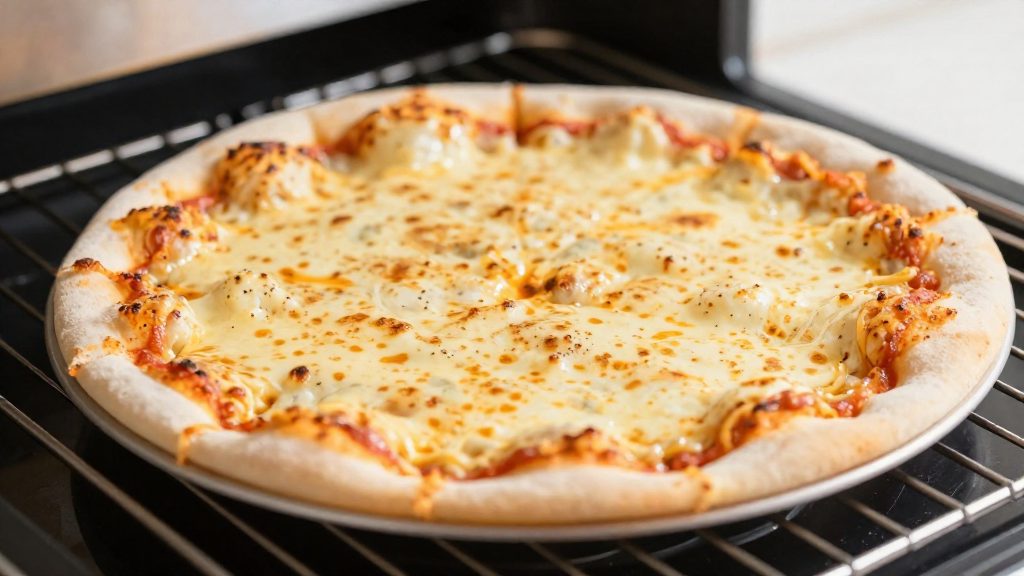
Preheat targets by setup: oven, grill and wood-fired oven
A baking steel needs much longer to preheat than a pizza needs to bake. According to Baking Steel (2026), the manufacturer recommends heating the oven to 500–550°F (about 260–290°C) and preheating the steel for 45–60 minutes with convection. The pizza itself bakes in about 4–6 minutes. The steel’s surface can reach temperature in about 20 minutes, but its core needs the full hour to store enough heat to transfer quickly into the dough. Rushing this step leaves a steel that looks hot but underperforms on the bottom of the crust.
Heat targets by setup
| Setup | Target temperature |
|---|---|
| Home oven with baking steel | 500–550°F (about 260–290°C) |
| Grill, steel on the grate | About 400°F on the steel surface |
| Wood-fired oven | About 600°F in the chamber |
Baking Steel (2026) notes that the steel withstands well over 1,000°F, but a home oven never needs more than 550°F.
Rack position and broiler use
For a home oven, place the steel on the first or second rack from the top, about 7 inches below the broiler. Baking Steel (2025) advises using the broiler for the last 5–10 minutes of preheating to add top heat, then turning it off one to two minutes into baking.
Stone and dedicated pizza ovens
Check each manufacturer’s instructions for stone slabs or dedicated pizza ovens before timing a session. The principle of heat soaking still applies: a dense cooking surface needs enough time for its core to reach the target temperature, not only its top layer.
Common preheating mistakes
Most preheating errors come from stopping too early or placing the steel too low in the oven. Baking Steel’s 2026 temperature guide advises a full 60 minutes at 500–550°F (about 260–290°C). The surface may reach temperature in about 20 minutes, but the core still needs the full hour. A steel that feels hot on top can still be cold underneath, and it will not supply the stored heat a pizza needs.
| Mistake | Correct practice |
|---|---|
| Stopping preheating at about 20 minutes | Preheat for the full 60 minutes (Baking Steel, 2026-01-13) |
| Placing the steel on the bottom rack | Use the first or second rack from the top, about 7 inches below the broiler (Baking Steel, 2025-05-26) |
| Keeping the broiler on for the whole bake | Turn the broiler off after a minute or two of baking (Baking Steel, 2025-05-26) |
| Setting the oven above 550°F | Stay within 500–550°F; a home oven never needs more (Baking Steel, 2026-01-13) |
Earlier guidance from the same manufacturer (Baking Steel, 2025-05-26) gave a range of 45–60 minutes. The later guide recommends the full hour, so the longer time is the safer default. The 2025 guide also recommends convection, which helps the oven hold a steady temperature during the preheat.
How long does a pizza take to cook on a baking steel?
According to Baking Steel (2025), a pizza bakes in about 4 to 6 minutes on a preheated baking steel. The guide gives this as the typical bake time after the recommended preheat at 500–550°F (about 260–290°C).
Within that window, the manufacturer’s guide points to two timing details:
- Broiler switch-off: If you used the broiler during the final minutes of preheating for extra top heat, turn it off one to two minutes into the bake, according to Baking Steel (2025).
- Bake window: Treat 4 to 6 minutes as the starting range rather than a fixed time. The guide gives a single range and does not specify how dough thickness, topping load, or the number of pizzas baked back to back changes it.
Timing is easiest to manage when you know when the clock starts. Note the moment the pizza goes onto the steel, then check the crust color and the melt of the cheese at the four-minute mark. Log the result for each bake so you can adjust within the 4–6 minute range.
Frequently asked questions
Can I preheat the steel for only 45 minutes to save time?
According to Baking Steel (2026), the full 60 minutes is recommended. The surface may be ready in about 20 minutes, but the core needs the rest of the hour to reach temperature. The 45-minute lower bound comes from the earlier 2025 guide.
Do I need to go above 550°F (about 290°C) for a steel?
No. Baking Steel says a home oven never needs more than 550°F (about 290°C), even though the steel itself tolerates well over 1,000°F (about 540°C). Other setups use different targets: about 400°F (about 205°C) on the steel surface for a grill, and about 600°F (about 315°C) in the chamber of a wood-fired oven.
Should I use the broiler to finish the preheat?
It is optional. Switch to broil for the last 5 to 10 minutes of preheating to add top heat, then turn the broiler off after a minute or two of baking. A pizza typically bakes in about 4 to 6 minutes, so the timing of the switch matters.