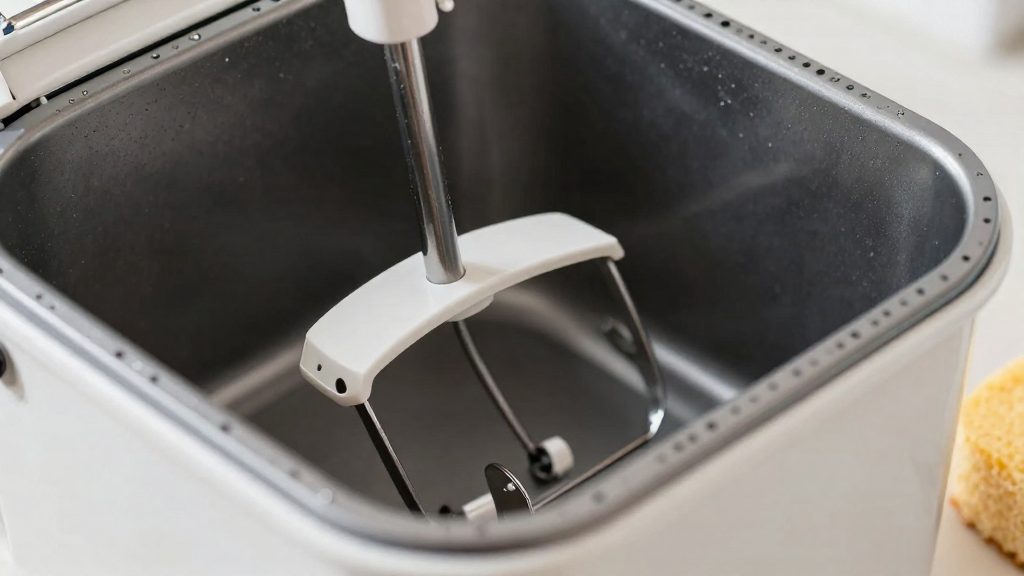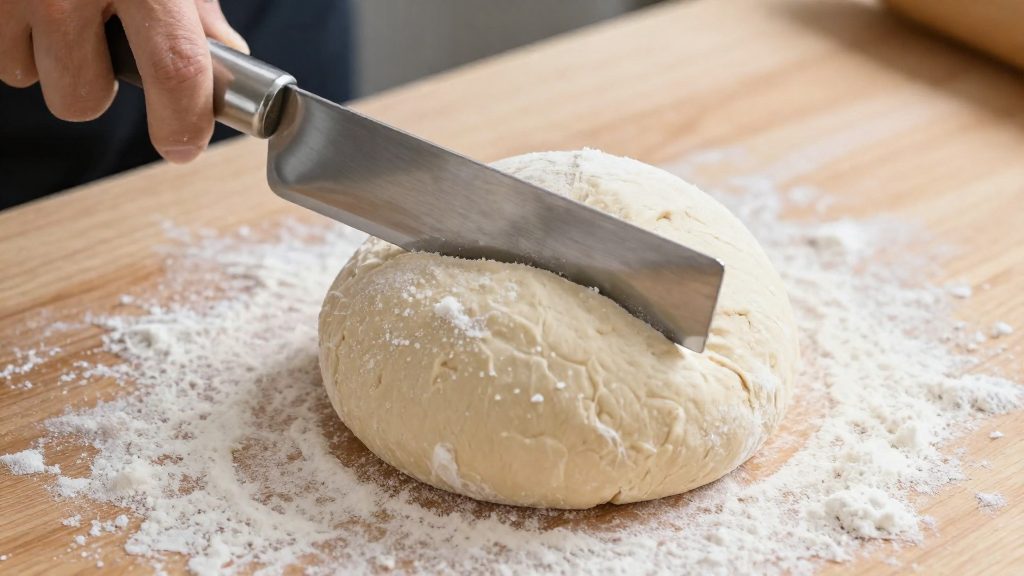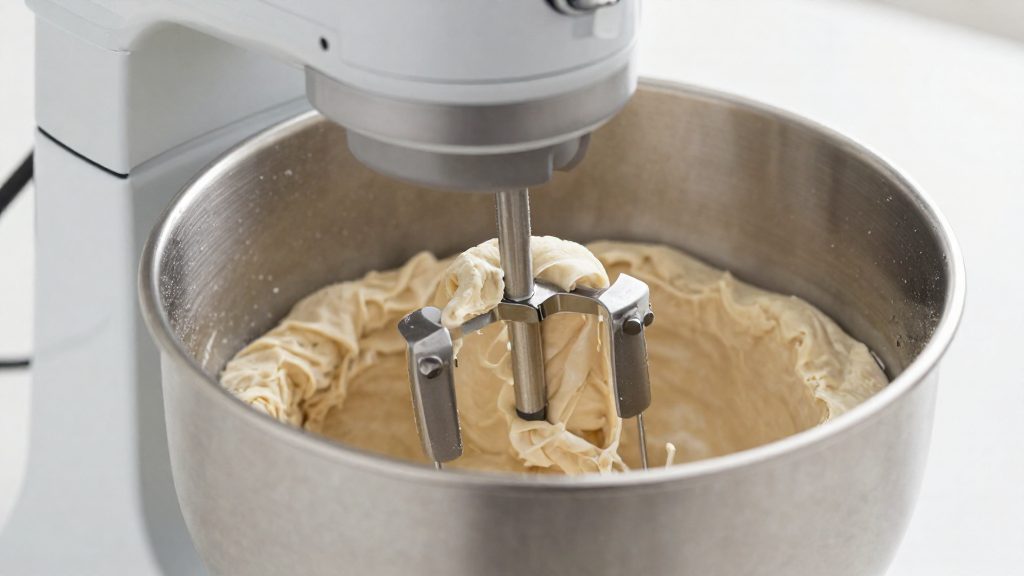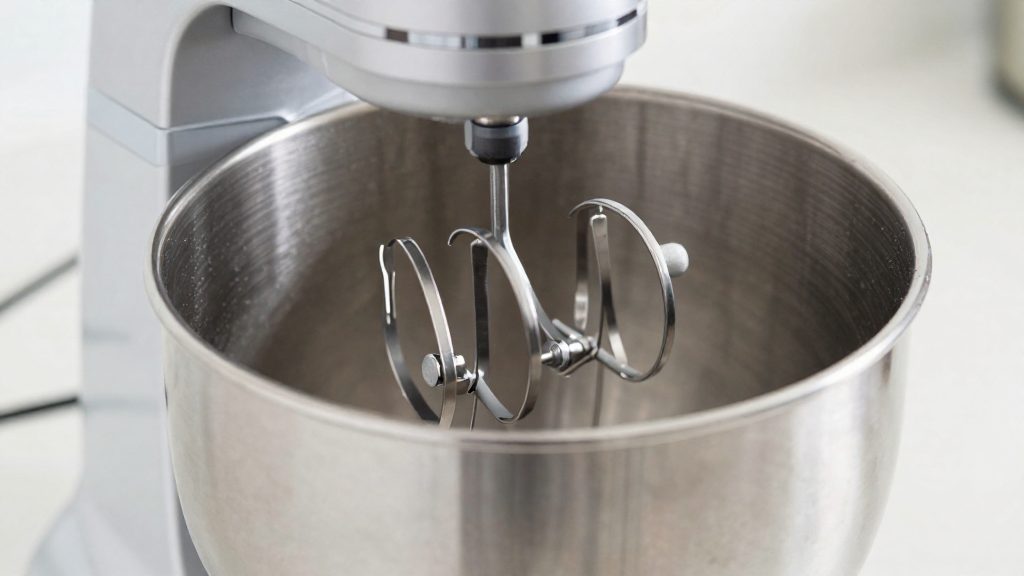
Early cleaning also keeps the tools ready for the next bake. A beater or hook that is already clean goes straight back on the mixer, with no soaking or scraping to delay the next batch.
Unplug first and remove the attachments
Before any cleaning starts, power off and unplug the mixer. According to KitchenAid (2026), a KitchenAid mixer should be turned off and unplugged before cleaning. Do this before you touch the bowl, the beaters or the head, so the motor cannot start while your hands are near moving parts. Switch the mixer off, let the beaters stop completely, then unplug it.
Once the mixer is unplugged, follow a fixed detachment order. Doing it the same way each time keeps dough residue from being pushed into the mechanism and helps you avoid forgetting a part.
- Check that the beaters have stopped completely and the plug is out before you lift the head, unlock the bowl or pull off any attachment.
- On a Bosch Universal Plus, remove the drive shaft first. The Bosch support documentation (NutriMill, 2026) says to remove it before any dishwasher cycle, so it is the first part to come off.
- On tilt-head models, unlock the bowl, lower the head if needed and lift the bowl out.
- Remove the flat beater, dough hook or wire whip by pulling it straight off its shaft.
Keep the parts separate until they are all detached, so you can see what is left on the machine and check it before you wash anything.
How do you remove dried dough from the hook?
Dried dough comes off a dough hook most easily when you soften it first, then scrape and brush the residue away. Switch the mixer off, unplug it, and work on the hook alone, away from the motor base, which must stay dry.
1. Soak only the hook
According to Tasting Table (2026), stuck-on dough softens when the attachments sit in warm soapy water. Put only the hook in the water. Leave the hook until the dough feels soft and begins to lift. The required time depends on how hardened the dough is, so check it by touch rather than relying on a fixed timer.
2. Scrape off the softened dough
NutriMill (Bosch Universal Plus support, 2026) advises scraping dried dough off the dough hook before washing it. Use a plastic scraper or a wooden spatula rather than a metal blade, to limit the risk of scratching the hook. Press the tool against the dough and lift it away from the hook in short strokes, working from the tip toward the shaft. Loosen the dough gradually instead of prying a large piece off at once, which can tear the hook’s surface and leave small pieces behind.
3. Brush out the dough hook opening
The point where the hook meets the shaft is where dough most often lodges. Tasting Table (2026) recommends cleaning this opening with a brush or cloth. Use a small, stiff brush, or wrap a cloth around a thin tool, and work the residue out of the gap in one direction so it is not pushed further in. Repeat until the cloth comes away without pale or grey dough residue.
4. Rinse, then dry completely
Rinse the hook thoroughly after scraping and brushing, so no soap or loosened dough remains in the opening. Fit the hook back onto the shaft only once it is completely dry.
Is the dough hook dishwasher safe?
On the KitchenAid Mini 3.5 Quart tilt-head stand mixer, the dough hook can go in the dishwasher, but only on the top shelf. According to KitchenAid (2026), the bowl, flat beater, dough hook, Flex Edge beater and pouring shield all share this rule. The dishwasher is an option for these parts, not the only safe method.
The wire whip is the exception. KitchenAid (2026) states that it is not dishwasher safe, so it should be washed by hand even though it is a removable attachment of the same mixer.
Attachments from other brands follow different rules. The Bosch Universal Plus source says to remove the drive shaft before any dishwasher cycle, but it does not specify whether the dough hook itself is dishwasher safe, so check your manual.
| Attachment | Model | Dishwasher rule | Source |
|---|---|---|---|
| Dough hook | KitchenAid Mini 3.5 Quart | Top shelf only | KitchenAid (2026) |
| Flat beater, Flex Edge beater | KitchenAid Mini 3.5 Quart | Top shelf only | KitchenAid (2026) |
| Wire whip | KitchenAid Mini 3.5 Quart | Not dishwasher safe | KitchenAid (2026) |
| Dough hook | Bosch Universal Plus | Dishwasher suitability not specified | NutriMill (Bosch Universal Plus support, 2026) |
Discoloration is the main damage to watch for. Tasting Table (2026) notes that some paddles can discolor, so check the manufacturer’s dishwasher instructions for your specific hook before running it through a cycle. After a few cycles, inspect the hook for dulling or color change, and switch to hand washing if you see any.
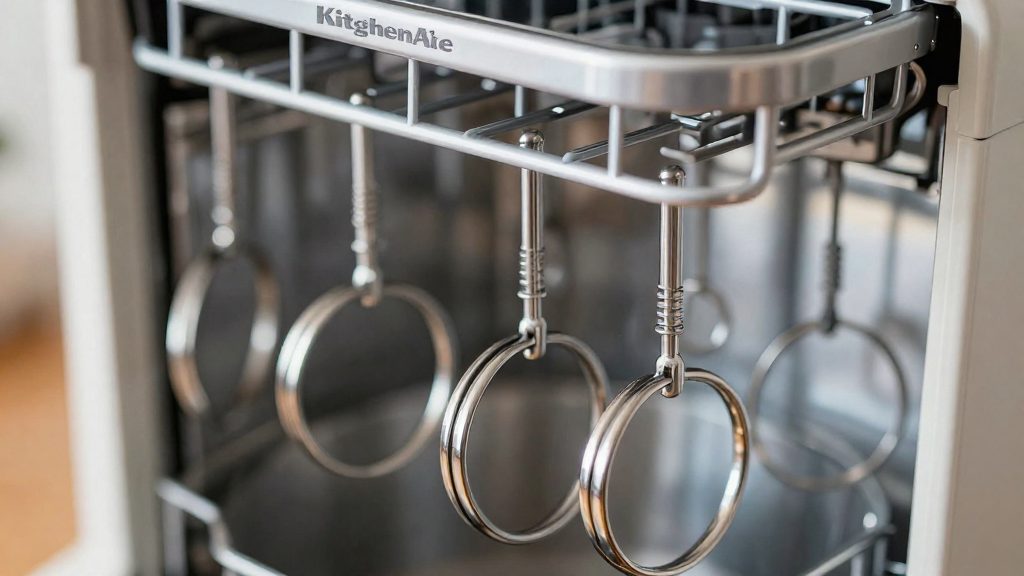
Cleaning the bowl and the head
Cleaning the bowl and the head of a stand mixer comes down to three habits: wash the bowl by hand, keep crumbs out of the locking mechanism, and let every part dry before reassembly. On the KitchenAid Mini 3.5 Quart tilt-head model, the bowl can be hand washed in hot, sudsy water and rinsed completely before drying, according to KitchenAid (2026).
| Area | Action | Reason |
|---|---|---|
| Bowl | Hand wash in hot, sudsy water | Removes dough and flour residue |
| Bowl lock (tilt-head) | Keep crumbs out | Crumbs can stop the bowl from locking firmly, per Tasting Table (2026) |
Washing the bowl by hand
Wash the bowl on its own, away from the other attachments. Dough that has dried onto the inner wall is harder to remove than fresh dough. After washing, rinse until no soap remains, because a film of soap can carry into the next batch of dough.
Keeping the bowl lock clear
On tilt-head models, the bowl locks into place, so the lock area needs attention after each batch. Before you fit the bowl back on, check the lock for flour and dough bits and brush or wipe them out with a dry cloth. A clear lock lets the bowl seat firmly.
Wiping the head
The head should be wiped, not rinsed. Use a soft cloth that is only damp, and wipe the top of the head and the bowl lock area.
Drying before reassembly
Dry the bowl and every part of the head completely before you put the mixer back together. For the Bosch Universal Plus, NutriMill (Bosch Universal Plus support, 2026) also advises letting everything dry fully before reassembly. Let all parts dry fully so that no moisture is trapped when you reassemble the mixer.
Where does dough hide on the mixer body?
Most of the dough and flour on a stand mixer ends up in places a quick wipe doesn’t reach. The bowl gets the most attention, but the body has several less visible zones where residue builds up over time, especially after kneading stiff bread dough. Knowing where these areas are makes a periodic deep clean faster and more complete.
| Zone | What collects there | Cleaning rhythm |
|---|---|---|
| Underside and rubber feet | Flour and crumbs | Periodic deep clean |
| Head seams | Dough residue | Periodic deep clean |
The underside and rubber feet sit on the worktop, where flour and crumbs settle and stay unnoticed. Tasting Table (2026) lists them among the zones to clean during a deep clean a few times a year.
The beater shaft and the seams where the head meets the body also collect dough. Tasting Table (2026) includes them in the deep clean a few times a year, but the shaft should also be wiped often, as KitchenAid advises.
The accessory ports and the control panel also need periodic deep cleaning, according to Tasting Table (2026). Clean them and keep residue out of the port openings.
Never immerse the motor base
The body of a stand mixer is cleaned by wiping, never by rinsing. KitchenAid states that the mixer body must never be immersed in water or any other liquid (KitchenAid, 2026). The motor and electrical parts sit inside the base and head, so any method that puts the body under liquid is ruled out, including a quick rinse under the tap or a soak in the sink.
To clean the outside of the mixer safely:
- Wipe the body with a soft, damp cloth. The cloth should be damp, not dripping, so that no water runs into the housing.
- Do not use household or commercial cleaners on the body. KitchenAid’s guidance covers both types (KitchenAid, 2026).
Bosch support for the Universal Plus uses the same approach: the motor base is wiped with a damp cloth and is not submerged (NutriMill (Bosch Universal Plus support), 2026).
| Source | Rule for the body |
|---|---|
| KitchenAid (2026), Mini 3.5 Quart tilt-head | Wipe with a soft, damp cloth; no household or commercial cleaners; never immerse |
| NutriMill (Bosch Universal Plus support) (2026) | Wipe the motor base with a damp cloth; do not submerge |
Frequently asked questions
Can I rinse the whole mixer under the tap after making dough?
No. KitchenAid (2026) says never to immerse the mixer’s motor body in water or any other liquid. Wipe the housing with a soft, damp cloth and avoid household or commercial cleaners on it.
Is the dough hook safe in the dishwasher?
It depends on the model and the part. On the KitchenAid Mini 3.5 Quart tilt-head, the bowl, flat beater, dough hook, Flex Edge beater and pouring shield can go on the top rack only, but the wire whip cannot. Tasting Table (2026) notes that some paddles can discolor in the dishwasher, so check the manufacturer’s instructions first.
How do I deep clean the mixer without damaging it?
Tasting Table (2026) recommends a deep clean a few times a year. Clean the underside, the rubber feet, the controls, the accessory ports and the seams around the beater shaft and head. On tilt-head models, keep crumbs out of the bowl lock, since they can stop the bowl from locking firmly.