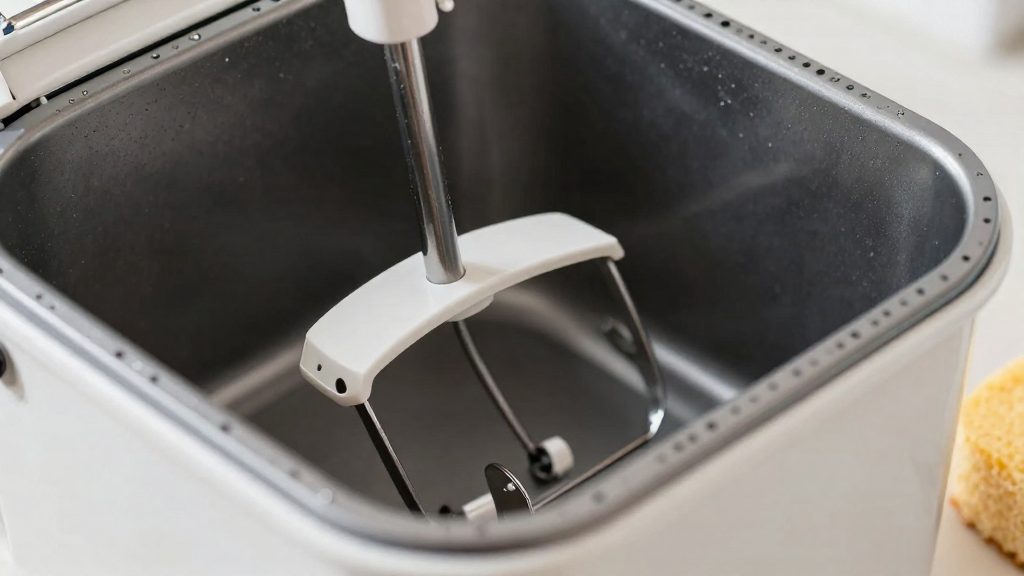
A kneading paddle can stick in four ways: fixed on the shaft after baking, caught inside the loaf, hard to pull off the shaft, or with a clogged blade hole. Each case has a recommended way to free the blade. Philips Support recommends soaking the pan with water above the blade level and lifting a blade caught in the loaf with the supplied metal hook, while Zojirushi recommends turning the blade left and right by hand.
Four Sticking Situations and the Method for Each
The manuals cover four situations, and each calls for a different method:
| Situation | Method | Source |
|---|---|---|
| Blade stuck on the shaft after baking | Fill the pan with water to a level above the blade, let it soak for 30 minutes, then remove the blade from the shaft | Philips Support |
| Blade stuck in the bread | Lift it out with the metal hook supplied with the appliance | Philips Support |
| Blade hard to pull off | Hold the main shaft under the pan, turn the blade left and right to loosen it, then pull it out | Zojirushi (manual hosted on ManualsDir) |
| Blade hole clogged | Soak the blade in water for a while, then clean the hole with a soft toothbrush | Zojirushi (manual hosted on ManualsDir) |
The soaking method needs a caveat. Philips Support advises filling the pan, but Zojirushi says not to immerse the base of the baking pan in water. Wipe the base with a damp cloth instead, and clean the rotating shaft with a soft sponge to avoid damaging the shaft seal. Check your model’s manual before soaking.
When you pry the blade loose, avoid metal spatulas, knives or forks. Zojirushi notes that these tools can damage the non-stick coating of the pan. After cleaning, reattach the blade securely to the pan.
Removing the Kneading Paddle from the Loaf or Pan
The kneading paddle sits on a rotating shaft at the bottom of the baking pan, and it can end up either in the pan or inside the loaf. The right method depends on where it is. Philips advises that if the paddle is stuck in the pan after baking, you should fill the pan with water to a level above the blade and let it soak for 30 minutes, then remove the blade from the shaft. Philips gives soaking as the first step before removing the blade from the shaft.
When the paddle stays in the pan
Zojirushi’s manual describes a mechanical method for a paddle that is still hard to remove. Hold the main shaft under the pan, turn the paddle left and right to loosen it, and then pull it out. Move the paddle gently in both directions rather than pulling straight away.
When the paddle is stuck in the loaf
If the paddle is caught in the bread, use the metal hook supplied with the appliance to lift it out. Do not slice the bread with the paddle still inside, because this may damage the blade.
| Situation | Method | Source |
|---|---|---|
| Paddle stuck in pan after baking | Fill pan with water above blade, soak 30 minutes, then remove blade from shaft | Philips Support |
| Paddle hard to remove from shaft | Hold main shaft under pan, turn paddle left and right, then pull out | Zojirushi manual (hosted on ManualsDir) |
| Paddle stuck in the bread | Lift out with the metal hook supplied with the appliance | Philips Support |
Avoid prying with hard tools
When you are working the paddle loose, avoid metal spatulas, knives or forks. Zojirushi notes that these can damage the non-stick coating of the pan, so rely on soaking and the hook instead.
Soaking the Kneading Blade for 30 Minutes
When the kneading blade stays locked on the shaft after baking, soaking is the first step to try. According to Philips Support, if the blade is stuck in the bread pan, fill the pan with water to a level above the blade and let it soak for 30 minutes. The water softens the baked dough around the blade, so it can be lifted off the shaft without force. Remove the blade once the 30-minute soak is complete.
| Situation | Action | Reference |
|---|---|---|
| Blade stuck on the shaft after baking | Fill the pan with water above the blade and soak for 30 minutes, then remove the blade | Philips Support |
| Blade hole clogged with dough | Soak the blade in water for a while, then clean it with a soft toothbrush | Zojirushi manual (hosted on ManualsDir) |
Soaking also helps with a clogged blade hole, but the two steps serve different purposes. The pan soak releases the blade from the shaft, while the blade soak loosens dough packed into the hole.
Cleaning the Blade and Shaft Without Damaging Them
The kneading blade and its drive shaft are the parts most easily damaged during cleaning. Guidance from Philips Support and Zojirushi centres on three habits: soak rather than scrape, keep water away from the shaft, and avoid metal tools on the pan’s surface. The right method depends on whether the blade is stuck in the pan, stuck in the loaf, or clogged.
Removing a stuck blade
If the blade stays fixed to the shaft after baking, Philips Support recommends filling the pan with water to a level above the blade and letting it soak for 30 minutes before removing it.
If the blade is still hard to pull off, Zojirushi advises:
- Hold the main shaft from underneath the pan.
- Turn the blade left and right to loosen it.
- Pull it out once it moves freely.
If the blade is trapped in the loaf, use the metal hook supplied with the appliance to lift it out. Philips Support also warns against slicing the bread with the blade still inside, as this may damage the blade.
Cleaning the blade
Zojirushi recommends cleaning the kneading blade with a soft sponge. If the blade’s hole is clogged with dough, soak the blade in water for a while, then clear the hole with a soft toothbrush. Once the blade is dry, reattach it securely to the pan so it sits firmly on the shaft during the next cycle.
Protecting the shaft and the pan base
The rotating shaft connects to a seal, and Zojirushi notes that rough cleaning can damage it. Wipe the base of the baking pan with a damp cloth, and clean the shaft itself with a soft sponge rather than anything rough.
Protecting the non-stick coating
Zojirushi advises avoiding hard utensils such as metal spatulas, knives, and forks when cleaning or removing dough from the pan. These tools can damage the non-stick coating.
What to do if the blade hole is clogged?
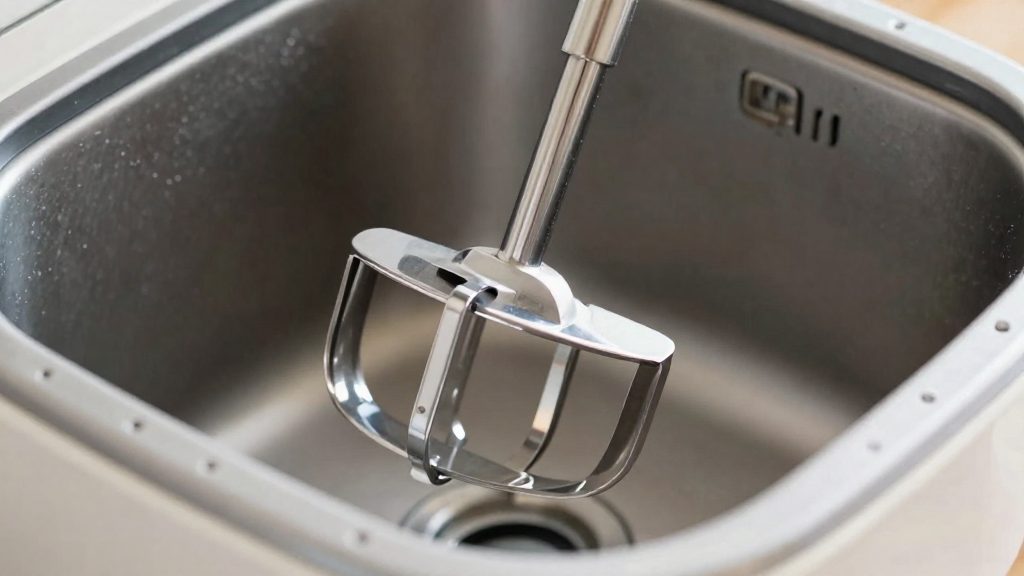
A clogged hole in a bread machine kneading blade is cleared by soaking the blade in water, then scrubbing the hole with a soft toothbrush. The goal is to soften the residue by soaking first, then clear the hole gently without scratching the metal or the coating. According to Zojirushi’s manual (hosted on ManualsDir), this is the recommended method. Soak the blade “for a while” until the residue softens.
Step-by-step method
- Remove the blade. If it is hard to pull off the shaft, hold the main shaft under the pan and turn the blade left and right to loosen it, then pull it out (Zojirushi, via ManualsDir).
- Soak the blade. Place it in water for a while so the residue softens.
- Scrub the hole. Use a soft toothbrush to work through the opening.
- Clean the body. Wash the rest of the blade with a soft sponge, then reattach it securely to the pan (Zojirushi, via ManualsDir).
Tools and their uses
| Tool | Use during cleaning | Source |
|---|---|---|
| Soft toothbrush | Scrubbing the inside of a clogged hole after soaking | Zojirushi (via ManualsDir) |
| Soft sponge | Cleaning the kneading blade and the rotating shaft | Zojirushi (via ManualsDir) |
| Damp cloth | Wiping the base of the baking pan | Zojirushi (via ManualsDir) |
Philips Support gives a 30-minute soak for a blade stuck in the pan, with water above the blade level. That instruction concerns a blade stuck in the pan, not a clogged hole, so it does not set a timing for clearing the opening.
Protecting the coating while you clean
Metal spatulas, knives and forks can scratch the non-stick coating, so do not use them to dig residue out of the hole (Zojirushi, via ManualsDir). Stick with a soft toothbrush. If the blade is still blocked after soaking and gentle brushing, avoid forcing it, and check the manufacturer’s guidance for your model.
Hand Cleaning a Stuck or Clogged Blade
The official manufacturer guidance consulted for this article does not say whether a bread machine kneading paddle can go in a dishwasher, so no dishwasher cycle is recommended here. The documented approach is hand cleaning: soak the blade when it is stuck or clogged, then clean it gently. Because the blade sits on a shaft that is sealed to the pan, how you handle the pan matters as much as how you clean the blade.
Soaking and removing a stuck blade
Most removal problems have a documented fix. The table below lists each situation with the method its source gives.
| Situation | Documented method | Source |
|---|---|---|
| Blade stays in the pan after baking | Fill the pan with water to a level above the blade, let it soak for 30 minutes, then remove the blade from the shaft | Philips Support |
| Blade stuck in the loaf | Lift it out with the metal hook supplied with the appliance. Do not slice the bread with the blade still inside, as this may damage the blade | Philips Support |
| Blade hard to pull off | Hold the main shaft under the pan, turn the blade left and right to loosen it, then pull it out | Zojirushi (manual hosted on ManualsDir) |
| Blade hole clogged | Soak the blade in water for a while, then clean the hole with a soft toothbrush | Zojirushi (manual hosted on ManualsDir) |
Cleaning the blade and protecting the pan
Clean the blade with a soft sponge, then reattach it securely to the pan. The same manual that covers blade cleaning also warns about the pan itself. The rotating shaft should be cleaned with a soft sponge, which helps avoid damaging the shaft seal.
To protect the non-stick coating on the pan, avoid hard utensils such as metal spatulas, knives or forks when you scrape out the blade area or the pan. Soft tools are the safer choice for every part of the cleaning routine.
Keeping the Blade From Sticking Next Time
The sources do not say why a blade sticks, but the Zojirushi manual (hosted on ManualsDir) covers the blade, the shaft and the pan, and a short care routine after each loaf follows its guidance. The Zojirushi manual (hosted on ManualsDir) covers the blade, the shaft and the pan, so a short routine after each loaf keeps the blade turning freely.
| Habit | What to do | Source |
|---|---|---|
| Keep the blade hole clear | If the hole is clogged, soak the blade in water for a while, then clean it with a soft toothbrush | Zojirushi (manual hosted on ManualsDir) |
| Clean the blade gently | Use a soft sponge on the kneading blade | Zojirushi (manual hosted on ManualsDir) |
| Protect the shaft seal | Clean the rotating shaft with a soft sponge and wipe the pan base with a damp cloth | Zojirushi (manual hosted on ManualsDir) |
| Choose softer tools | Avoid metal spatulas, knives and forks, which can damage the non-stick coating | Zojirushi (manual hosted on ManualsDir) |
Once the blade is clean and dry, securely reattach it to the pan before adding ingredients. The same manual asks for this step explicitly, so the blade sits firmly on the shaft.
Frequently asked questions
Which tools should I avoid when prying a stuck paddle loose?
Metal spatulas, knives and forks can end up damaging the non-stick coating of the pan, so keep them out of the job. Use your hands and the turning method described for the blade instead.
Is it safe to fill the whole bread pan with water?
Philips Support suggests filling the pan above the blade, but Zojirushi advises against immersing the base of the pan. Check your model’s manual first, and if it warns against immersion, wipe the pan base with a damp cloth.
What if dough has clogged the small hole in the paddle?
Soak the blade in water for a while to soften the dough, then clean the hole with a soft toothbrush, according to Zojirushi. Reattach the blade securely to the pan once it is clean and dry.