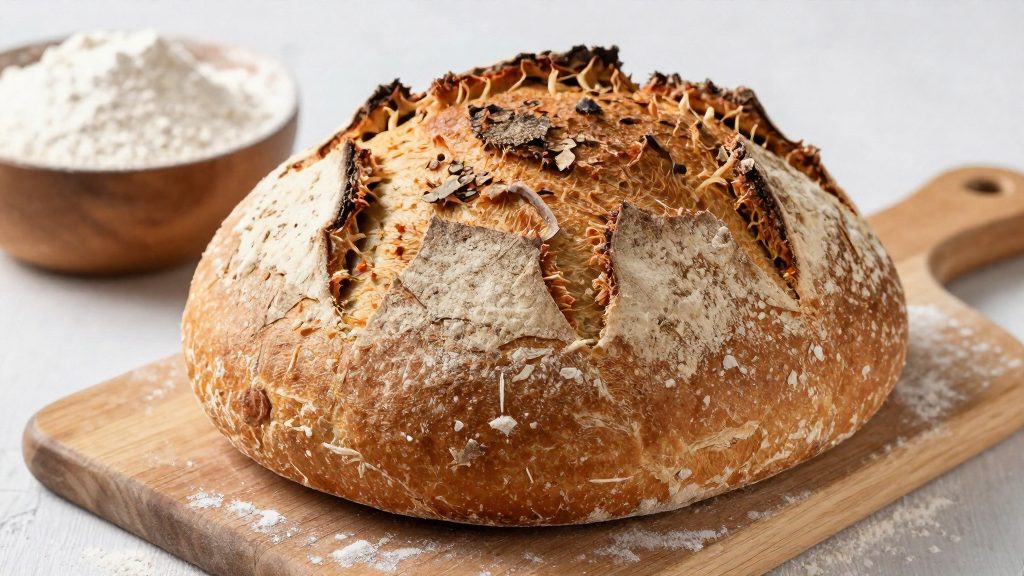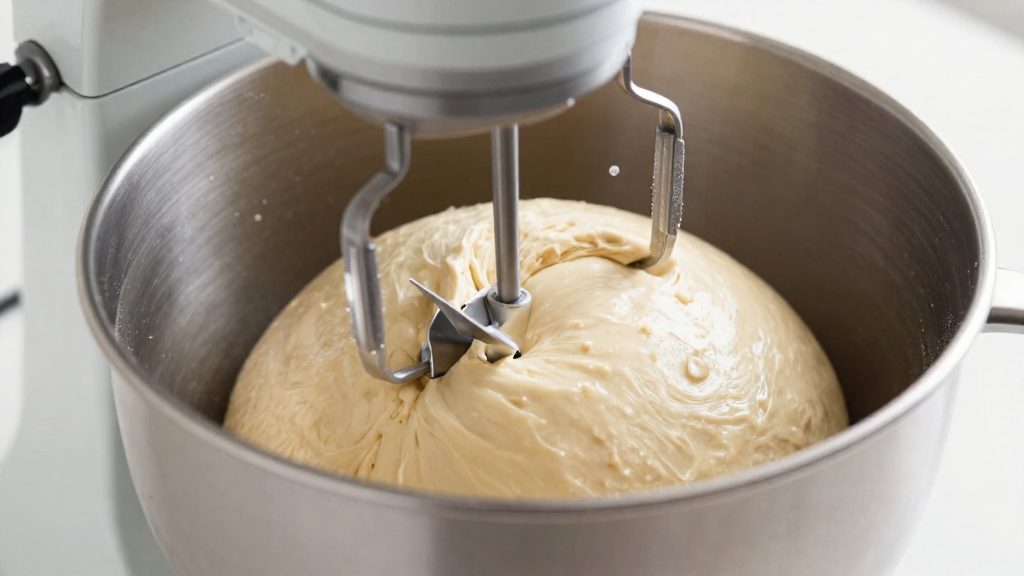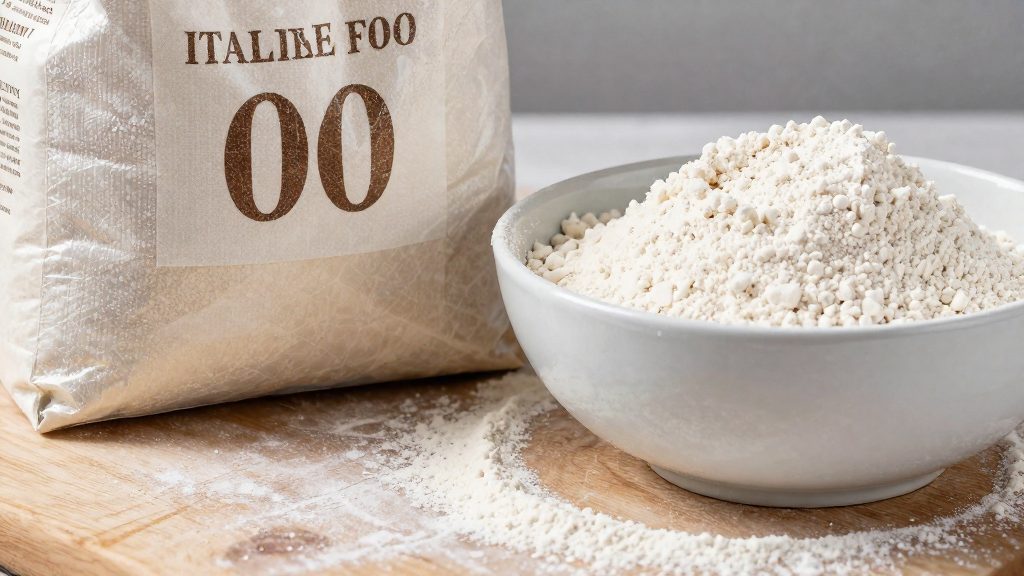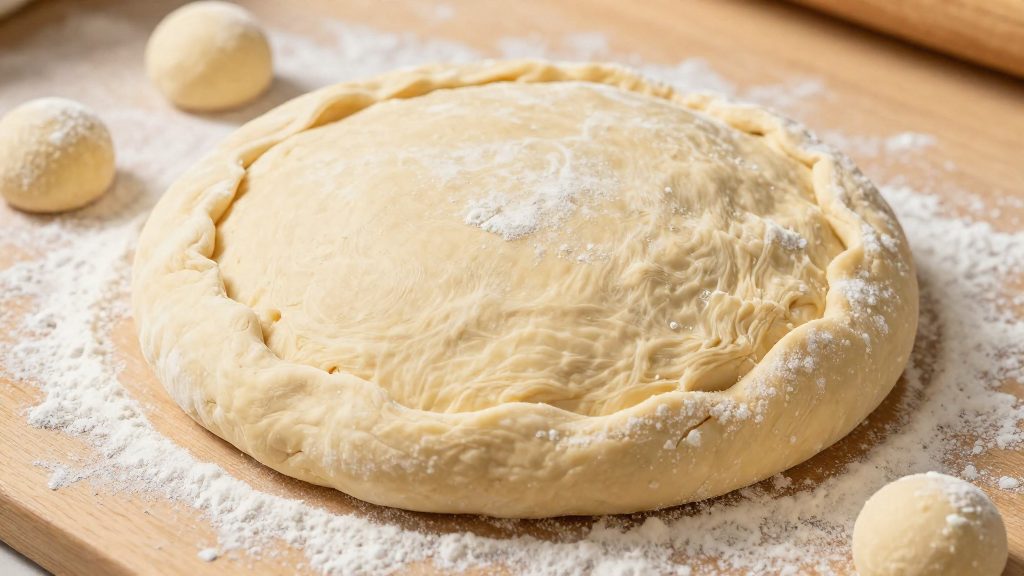
Cold fermentation is the slow rise of pizza dough in a refrigerator, usually overnight, instead of at room temperature. The cold keeps yeast working at a gentler pace, so the dough develops over many hours rather than a few. The overnight methods published by Gozney (2026) and Ken Forkish (via Wisconsin Public Radio, 2026) both rely on this principle, and the refrigerator is the stage that controls the pace.
What is cold fermentation?
Cold fermentation is a slow yeast fermentation carried out at refrigerator temperature. Yeast consumes the sugars in flour and releases carbon dioxide, which inflates the dough. Enzymes in the flour also break down starches and proteins during this time. Low temperatures slow both processes, so the dough still changes, but over a longer window that suits an overnight schedule.
Room-temperature proofing works the other way. The dough sits in a warm kitchen and rises within a few hours. The difference lies in the speed of change, not in the ingredients themselves. The two sources use warm and cold stages in different ways:
| Source | Stage | Temperature stated |
|---|---|---|
| Gozney (2026) | Dough balls resting | 22°C |
| Ken Forkish (Wisconsin Public Radio, 2026) | Water at mixing | 90–95°F |
| Ken Forkish (Wisconsin Public Radio, 2026) | Dough after mixing | 77–78°F |
Gozney holds the dough balls at 22°C (about 72°F) for up to 16 hours before refrigerating them. Forkish starts with warmed water so the dough reaches 77–78°F after mixing, then moves the shaped balls to the fridge. In both methods, the refrigerator stage is what slows the dough after its initial warm rise.
What matters is that the fridge runs noticeably colder than the 22°C room-temperature rest used in the Gozney method. Bakers treat the refrigerator as a controlled slowdown rather than as storage alone.
Why ferment pizza dough overnight in the fridge?
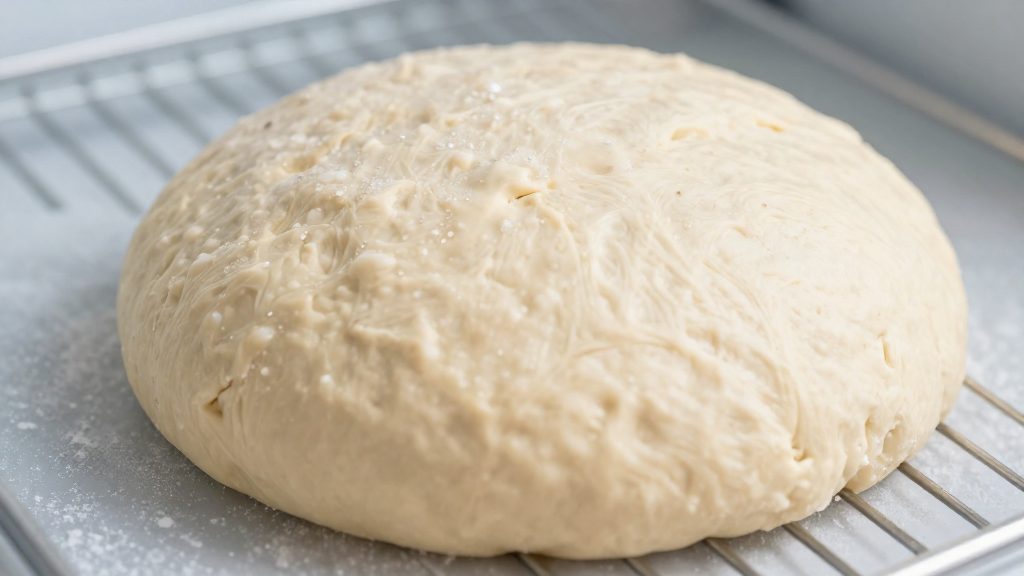
A long, slow fermentation changes the dough in three ways that matter at home: flavour, timing and crust appearance. Yeast and bacteria work slowly at low temperatures, so they produce slow acid production and gradual sugar breakdown over many hours. These byproducts give the crumb a more complex, slightly tangy taste than a dough made and baked the same day. The effect comes from time rather than from extra yeast, which is why published overnight recipes use very small amounts of it.
Scheduling is the practical benefit. You can mix in the evening, let the dough develop overnight, and bake the next day, which suits busy households. Two published methods show how this works:
| Detail | Gozney (2026) overnight dough | Ken Forkish overnight straight dough, via Wisconsin Public Radio (2026) |
|---|---|---|
| Flour | 1000 g | 1000 g |
| Water (hydration) | 600 g (60%) | about 700 g (about 70%) |
| Salt | 30 g (3%) | 20 g |
| Yeast | 0.2 g instant dry, or 0.5 g fresh | 0.8 g instant |
| Main fermentation | Dough balls rest at 22°C for up to 16 hours | Bulk fermentation of about 12 hours, until the dough has grown 2–3 times in volume |
| Dough output | Not stated | Five dough balls of about 340 g each |
The higher hydration in the Forkish dough gives a softer, more extensible dough, while the Gozney version is stiffer and easier to handle for beginners.
Crust colour and blistering also change with longer fermentation. Over a long rest, the dough’s sugars are more available, so the surface tends to brown more readily in the oven. Well-rested dough also tends to develop more blistering in the crust.
Ingredients and baker’s percentages
A baker’s percentage expresses each ingredient as a share of the flour weight, which is always set at 100%. To calculate it, divide the ingredient’s weight by the flour weight and multiply by 100. This lets you compare two formulas even when their total batch sizes differ. Both recipes below use 1000 g of flour, so their percentages can be read directly against each other.
According to Gozney (2026), its overnight dough uses 1000 g of flour, 600 g of water, 30 g of salt and a very small amount of yeast, either 0.2 g of instant dry yeast or 0.5 g of fresh yeast. Wisconsin Public Radio (2026), reproducing Ken Forkish’s overnight straight pizza dough, lists 1000 g of flour, about 700 g of water, 20 g of salt and 0.8 g of instant yeast.
| Ingredient | Gozney (weight) | Gozney (baker’s %) | Forkish (weight) | Forkish (baker’s %) |
|---|---|---|---|---|
| Flour | 1000 g | 100% | 1000 g | 100% |
| Water | 600 g | 60% | about 700 g | about 70% |
| Salt | 30 g | 3% | 20 g | 2% |
| Instant yeast | 0.2 g | 0.02% | 0.8 g | 0.08% |
The percentages in the table were calculated from the listed weights. Neither source gives them directly.
Hydration
Hydration is the water percentage. Gozney’s dough sits at 60% and Forkish’s at about 70%, a gap of roughly 10 percentage points. In grams, Forkish uses about 100 g more water per 1000 g of flour, which makes its dough noticeably softer and stickier to handle.
Salt
Salt is 3% in the Gozney formula and 2% in the Forkish formula. Gozney’s higher salt level is 10 g more per 1000 g of flour, while Forkish’s level is 2%, which is 10 g less per 1000 g of flour.
Yeast
The Gozney formula uses 0.2 g of instant yeast (0.02% of flour), while the Forkish formula uses 0.8 g (0.08%). Forkish therefore uses four times the instant yeast. Gozney’s fresh-yeast alternative of 0.5 g is about 0.05% of flour.
Step-by-step overnight dough method
The Ken Forkish overnight straight dough runs in four stages: mixing, bulk fermentation, dividing and shaping, and refrigerating the shaped balls for at least 6 hours. According to Wisconsin Public Radio (2026), which published the recipe, the water should be 90–95°F (about 32–35°C) and the dough should reach 77–78°F (about 25–26°C) after mixing. The dough then bulk-ferments for about 12 hours, until it has grown two to three times in volume.
| Stage | Target | What to check |
|---|---|---|
| Water temperature | 90–95°F (about 32–35°C) | Thermometer reading before mixing |
| Dough temperature after mixing | 77–78°F (about 25–26°C) | Probe thermometer in the center of the dough |
| Bulk fermentation | About 12 hours (temperature not specified in the source) | Volume grown two to three times |
| Dividing | Five pieces of about 340 g | Kitchen scale |
Mixing
Combine the flour, water, yeast and salt until no dry flour remains. Then check the dough temperature. If it falls outside 77–78°F, adjust the water temperature for the next batch, since the water is the variable you control directly.
Bulk fermentation
Cover the dough and keep it at room temperature. Because the goal is growth rather than a fixed time, judge the dough by its volume. Watch for it to reach two to three times its starting size, then move on to the next stage.
Dividing and sealing
Turn the dough onto a lightly floured surface and divide it into five pieces of about 340 g each, weighing each one. For sealing, pull the edges of each piece into the center and pinch the seam closed, so the top of the ball is smooth and the seam sits on the bottom. A tight seam helps the ball hold its shape during the rest that follows.
How long can pizza dough cold ferment?
Shaped pizza dough can rest in the refrigerator for a window that starts at a minimum of 6 hours and runs to two days. In Ken Forkish’s overnight method, the shaped balls are refrigerated for at least 6 hours, and leftover dough keeps up to two days in the fridge (Wisconsin Public Radio, 2026, reporting Ken Forkish’s recipe). Gozney’s overnight dough states its limit differently: its dough balls can go in the fridge for one to two extra days after the room-temperature rest (Gozney, 2026). This is not directly comparable with the Forkish figure.
The minimum chilling time
The minimum cold rest is 6 hours. This is the shortest chill the Forkish method specifies for shaped balls, and it gives the dough time to firm up and become easier to handle. Chills shorter than 6 hours fall below this minimum.
The maximum storage window
The two recipes differ in how they state their upper limit, so the table below separates them.
| Source | Refrigerated duration stated | Notes |
|---|---|---|
| Gozney (2026) | One to two extra days | Dough balls are refrigerated after the overnight rest |
| Ken Forkish, via Wisconsin Public Radio (2026) | At least 6 hours for shaped balls; leftover dough up to two days | The two-day figure applies to leftover dough |
Because the Forkish figure refers to leftover dough, the two-day limit is the outer boundary for that recipe. Gozney’s figure is also framed as “extra” days beyond the overnight rest, so the total cold time depends on how long the rest was.
Signs of over-fermentation
As a general practical check, a sour or alcohol-like smell is a common sign that fermentation has gone too far. Dough that feels slack, has lost its elasticity, and spreads or tears when shaped is another sign. Check both smell and feel before shaping.
How long should dough warm up before baking?
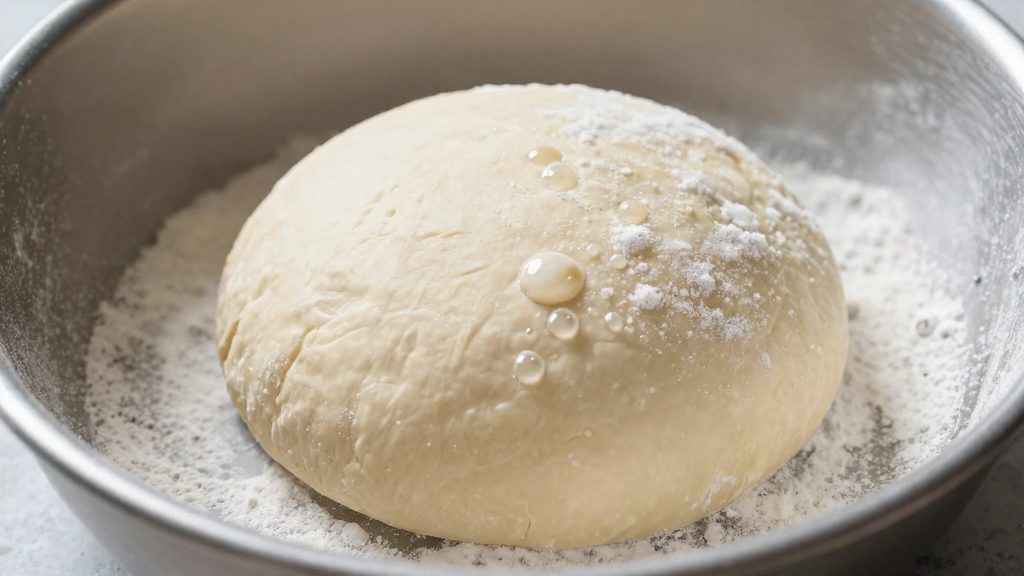
According to Gozney (2026), chilled overnight dough balls should come out of the fridge at least 6 hours before baking. That window lets the dough move from refrigerator temperature to a workable state, so it stretches without tearing and holds its shape on the peel.
Lead time by source
| Source | Stage | Stated minimum |
|---|---|---|
| Gozney (2026) | Dough balls taken out of the fridge before baking | At least 6 hours |
| Wisconsin Public Radio (2026), Ken Forkish recipe | Shaped balls refrigerated | At least 6 hours; the warm-up time before baking is not specified |
Judging readiness before shaping
The clock alone does not confirm that dough is ready. Check the dough’s softness by touch:
- Press a dough ball gently with a fingertip. A relaxed dough gives under light pressure, and the dent fills back slowly.
- A quick rebound, or a firm and springy feel, means the dough is still cold and tight.
- Lift the edge of a ball and let it hang. Dough that is ready stretches smoothly under its own weight instead of snapping back.
Once the dough passes these checks, begin shaping. Dough that is still cold resists stretching, so it is better to wait a little longer than to force it.
Adjusting lead time for kitchen temperature
The temperature Gozney gives relates to the overnight bulk rest at 22°C, which is a separate stage and not a warm-up benchmark. In a cool kitchen, the dough will take longer to soften, so start checking earlier. In a warm kitchen, it will soften faster, so check sooner than the six-hour mark.
Best flour, oven and stone for cold-fermented dough
Choosing flour, oven and baking surface for cold-fermented pizza dough depends on three things: how the flour holds its structure over a long rest, how much heat the oven can deliver, and how well the baking surface stores that heat. The products below are common in home baking. When comparing them, check the packaging and manufacturer listings for protein content, temperature ratings and the thickness of steel or stone.
Flour: Caputo Pizzeria 00 versus King Arthur Bread Flour
- Caputo Pizzeria 00 is marketed for pizza by its name and is milled fine. It suits short, very hot bakes, and its performance over a long cold rest depends on the strength rating printed on the bag.
- King Arthur Bread Flour is made for bread. Bread flours generally have a higher protein content than pizza flours, which tends to produce a chewier crust. Check the protein figure on the label before you compare.
| Factor | What to check | Why it matters for cold dough |
|---|---|---|
| Protein content | Label or manufacturer data | Protein builds the gluten network that carries a long rest |
| Strength rating | Bag information | Indicates how well the dough tolerates extended fermentation |
| Intended use | Product name and description | Pizza flours are usually milled for quick, hot bakes |
Oven: Gozney Roccbox versus Ooni Koda 16
Both are portable pizza ovens, and the Gozney brand is named as the source of an overnight dough method, so it is a reasonable reference point. The differences that matter most are the fuel type and the maximum temperature. Compare these on each manufacturer’s current product page.
Baking surface: Baking Steel Original versus cordierite stone
- Heat retention is the main difference. Steel conducts heat faster than cordierite, which helps the base brown quickly and evenly.
- Cordierite is a ceramic stone that stores heat well and is widely used with home pizza ovens.
Common mistakes to avoid
Most cold-fermented doughs that fail come from handling errors, not from the recipe itself. Each mistake below has a specific cause and a simple fix.
Leaving dough balls uncovered
Exposed dough balls lose surface moisture during the long rest, and an open surface has hours to dry. Place each ball in a lightly oiled, lidded container or a sealed bag, and leave room for the dough to expand.
Letting a dry skin form in the fridge
Cold storage is where the surface is most at risk. The balls must stay covered for the whole period they are in the fridge. A dry skin stretches poorly and tears when shaped. Keep the balls sealed until use. Shaping cold dough straight from the fridge is a common cause of tears.
Measuring salt and yeast by volume
Spoon measurements are unreliable because the same spoon can hold very different weights depending on how fine or coarse the salt is, or how tightly yeast is packed. The error matters most for yeast, since the amounts are tiny. Gozney’s recipe uses 30 g of salt (3% of the flour weight) and 0.2 g of instant dry yeast.
Over-flouring the bench
Heavy dusting during shaping adds flour that is not in the formula. Forkish’s overnight dough uses about 700 g of water per 1000 g of flour, and extra bench flour lowers the effective hydration. The dough may feel easier to handle, but the baked crust turns dry and tough. Use a light dusting, or a thin film of oil on your hands, and shake off any excess before stretching.
Frequently asked questions
Can I bake the dough straight from the fridge?
No. According to Gozney (2026), dough balls should come out of the fridge at least 6 hours before baking so they can warm up. Plan the timing so the cold dough balls have soaked up that warmth before you stretch them.
How long can cold-fermented dough stay in the fridge?
Gozney (2026) allows the dough balls to stay refrigerated for one to two extra days after the initial rest. Ken Forkish’s method, published by Wisconsin Public Radio (2026), says leftover dough keeps up to two days, so two days is the longest storage window both sources support.
Does the water temperature matter?
In the Forkish method, it does. Wisconsin Public Radio (2026) specifies water at 90–95°F and a dough temperature of 77–78°F after mixing, which sets the starting point before the dough moves into the cold stage.