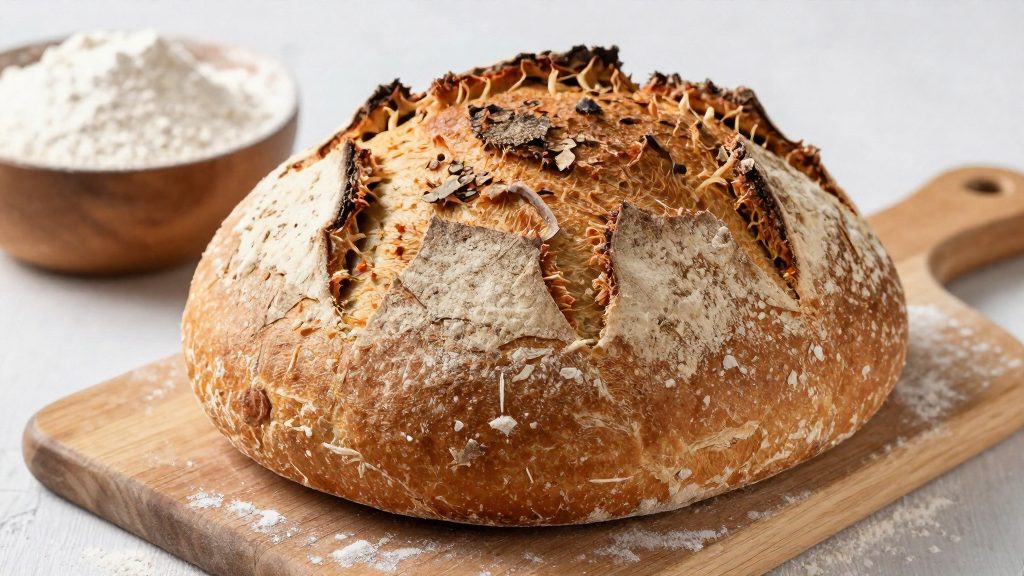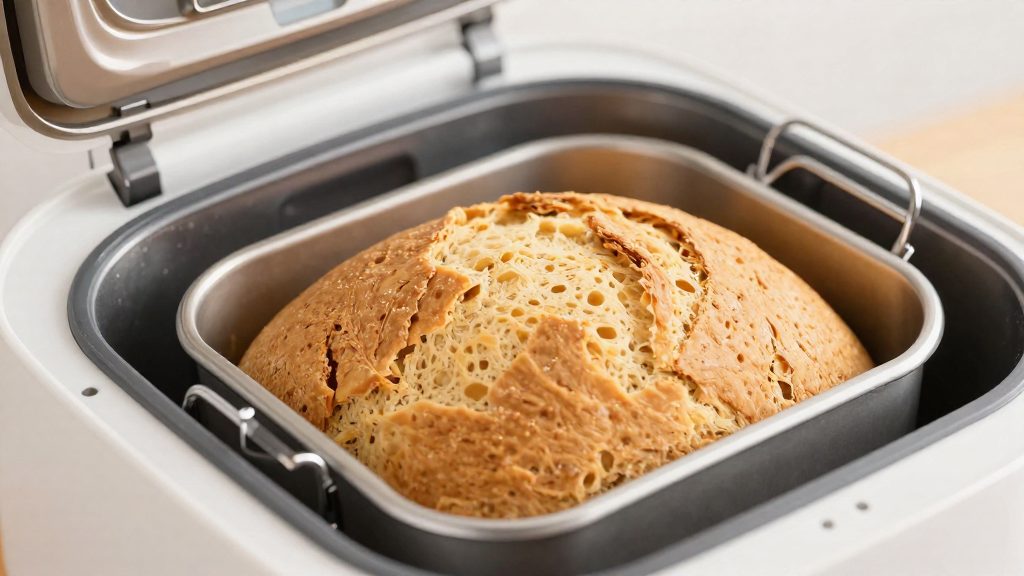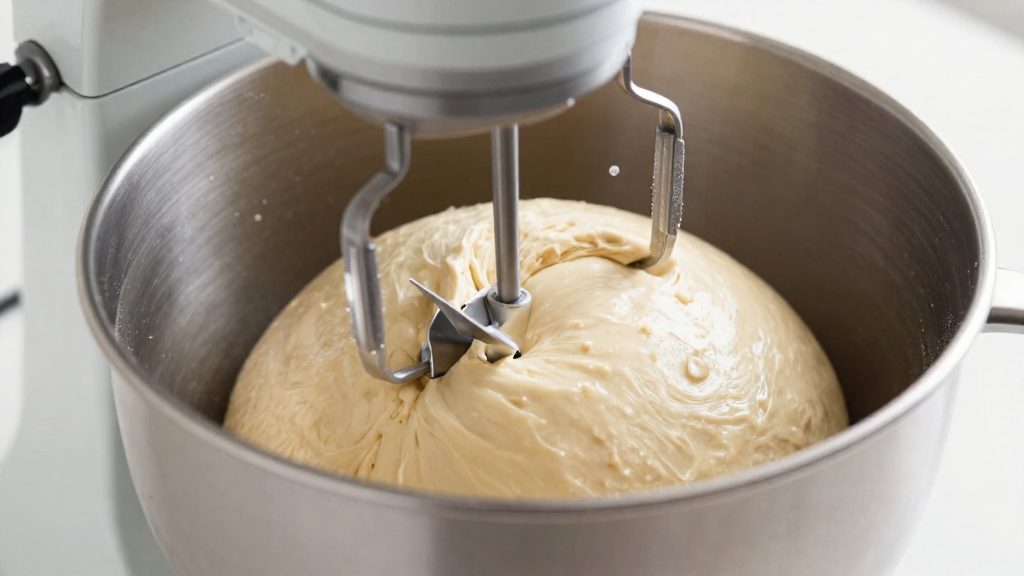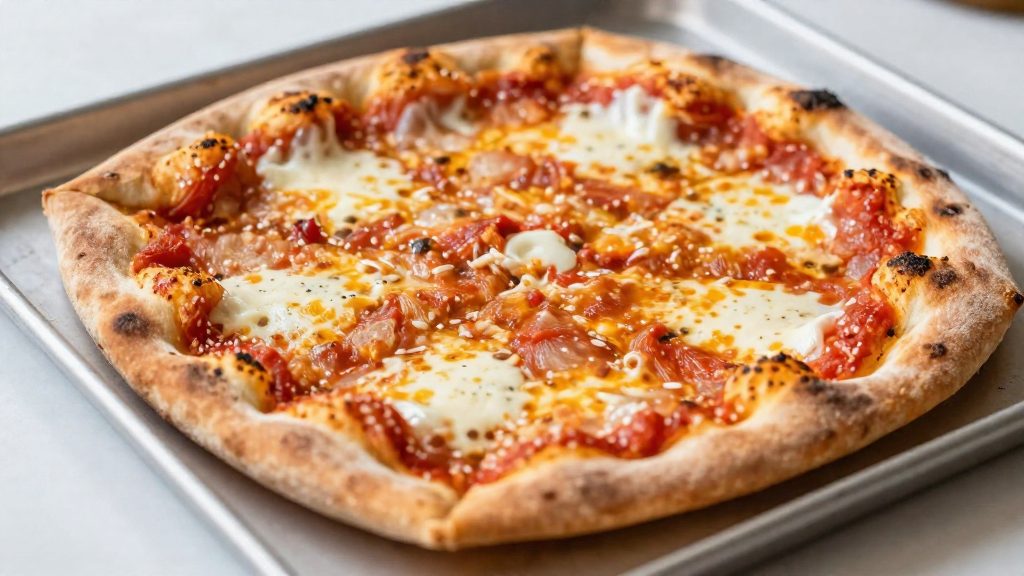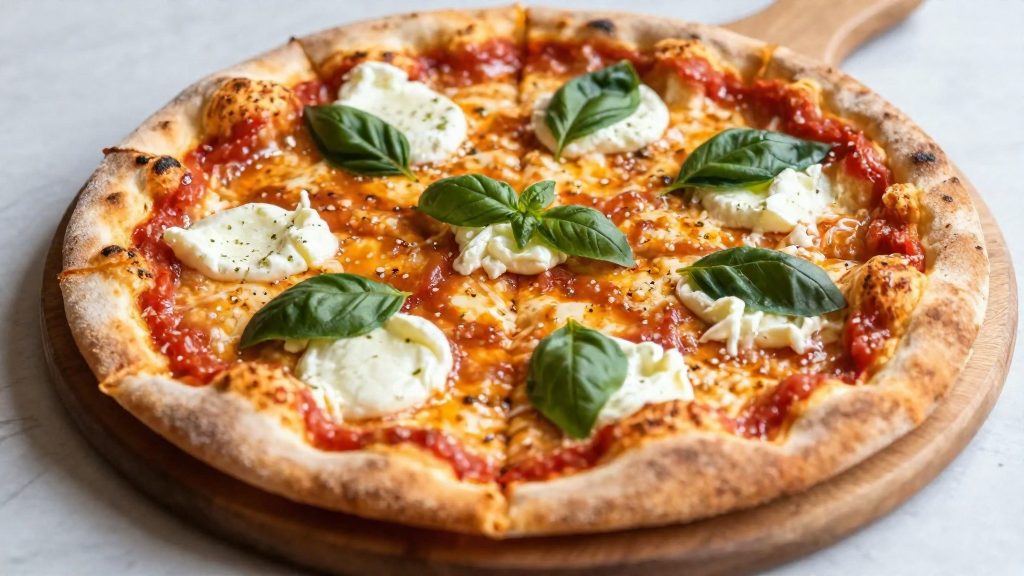
A margherita is defined by three toppings: tomato, fresh mozzarella and basil. Its identity comes from that combination and from the Neapolitan tradition that established it, not from a single technique. A home version can keep the same three toppings while adapting the method to a domestic oven and baking sheet.
What makes a margherita pizza authentic?
The three-ingredient identity
The red of the tomato, the white of the mozzarella and the green of the basil echo the Italian tricolour, which is why these three toppings are treated as the margherita’s signature. Authenticity is judged mainly by the presence of these ingredients and by how they are prepared and placed, rather than by extra toppings.
Neapolitan pizza and its EU recognition
Neapolitan pizza is recognised under the EU Traditional Specialities Guaranteed (STG) scheme. This is a European designation and has no bearing on a pizza made at home in the US. Check the current EU specification before describing a pizza as certified.
How a home-style margherita differs
The main differences concern equipment and handling, not the core toppings:
| Element | Traditional Neapolitan | Home version |
|---|---|---|
| Cooking surface | Hot oven floor in a wood-fired oven | Rack or cornmeal-dusted baking sheet; no peel or stone required (Love and Lemons, 2026) |
| Stretching | Shaped by hand | Stretched by hand (Once Upon a Chef, 2026) |
| Cheese | Fresh mozzarella | 8 oz of fresh mozzarella, sliced or torn (Galbani, 2026; Love and Lemons, 2026) |
| Basil | Fresh basil leaves | Added after baking so it does not wilt (Love and Lemons, 2026) |
Hand-stretching is the step that most closely links a home pizza to the traditional method. Because the home bake happens on a sheet rather than a stone, the basil is best added once the pizza leaves the oven.
Ingredients you need
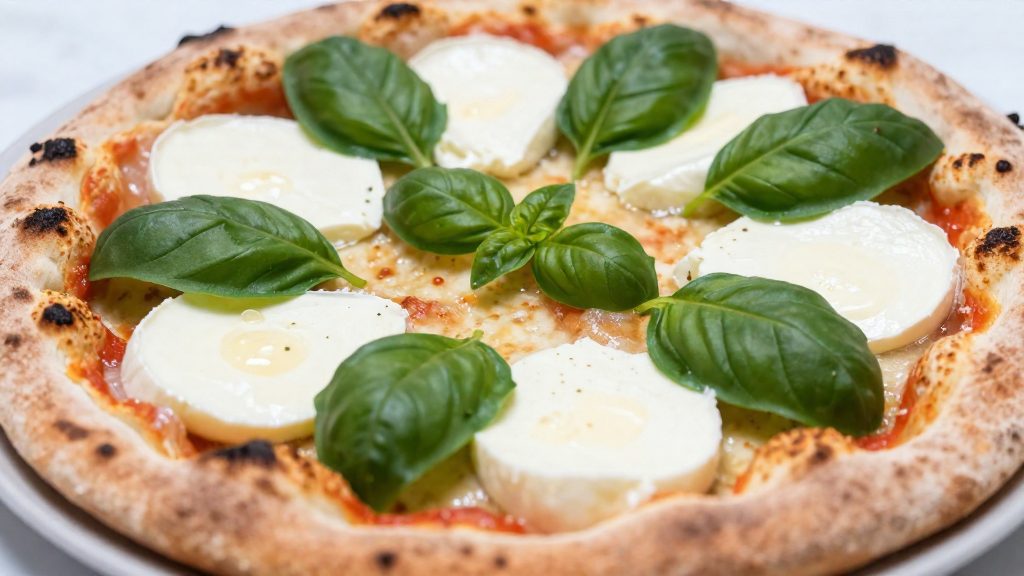
For two margherita pizzas, the core shopping list is short. The quantities below come from published recipes: Once Upon a Chef (2026) makes two 12-inch pizzas from two 1 lb dough balls, and Galbani (2026) and Love and Lemons (2026) both use 8 oz of fresh mozzarella. Where a source gives no figure, this section gives no figure either.
| Component | Quantity for two pizzas | Notes |
|---|---|---|
| Pizza dough | Two 1 lb dough balls (about 454 g) | Once Upon a Chef (2026) uses this amount for two 12-inch pizzas. |
| Fresh mozzarella | 8 oz per recipe (Galbani and Love and Lemons; not a two-pizza figure) | Galbani (2026) slices it. Love and Lemons (2026) tears or thinly slices it. Adjust the amount to the number of pizzas you make. |
| Fresh basil | Leaves, to taste |
Canned tomatoes and sauce. The consulted sources do not specify a can size or a sauce volume for two pizzas. Buy a single can of plain tomatoes and spread the sauce in a thin layer. Keep enough back to adjust the amount once you see how the first pizza bakes.
Salt and olive oil. No quantities are given in the consulted sources. Add salt and olive oil according to the dough recipe you follow, and use the same measurements for both pizzas.
Flour: type 00 or bread flour. The consulted sources do not compare type 00 flour with bread flour. Use the flour named in your dough recipe. If the recipe does not name one, the flour choice is yours, and a single flour type for the whole batch keeps the two pizzas consistent.
Which fresh mozzarella works best?
Fresh mozzarella for a homemade margherita comes in two main forms: water-packed, stored in its brine, and drained or dry. Choose fresh mozzarella that is not packed in water when you can, because extra liquid is what makes a margherita soggy. If only water-packed mozzarella is available, it has to be dried thoroughly before it goes on the dough.
Water-packed versus dry fresh mozzarella
Water-packed mozzarella carries liquid into the oven, and that liquid spreads into the dough as the cheese heats. Dry fresh mozzarella releases less liquid, which makes it the better choice for a thin crust.
Buffalo mozzarella versus fior di latte
Buffalo mozzarella and fior di latte are the two types most often named for pizza. Check the packaging of each product for its water content and form instead of assuming one is drier than the other.
Draining, drying and slicing to limit surface water
The sources handle the cheese in different ways:
| Source | Cheese preparation |
|---|---|
| Galbani (2026) | 8 oz of sliced fresh mozzarella |
| Love and Lemons (2026) | 8 oz, torn or thinly sliced |
| Once Upon a Chef (2026) | Not packed in water |
Whichever form you use, the goal is to remove surface water before the cheese reaches the dough:
- Take the mozzarella out of its liquid and set it aside to drain.
- Slice or tear it into pieces.
- Spread the pieces in a single layer on paper towels.
- Press more paper towel on top to absorb the moisture on the surface.
- Repeat with fresh paper towel until the pieces no longer look wet.
Thin slices lie flat on the dough, while torn pieces leave gaps between them. Pick the cut that suits your method, and dry the cheese either way.
How do you make the dough?
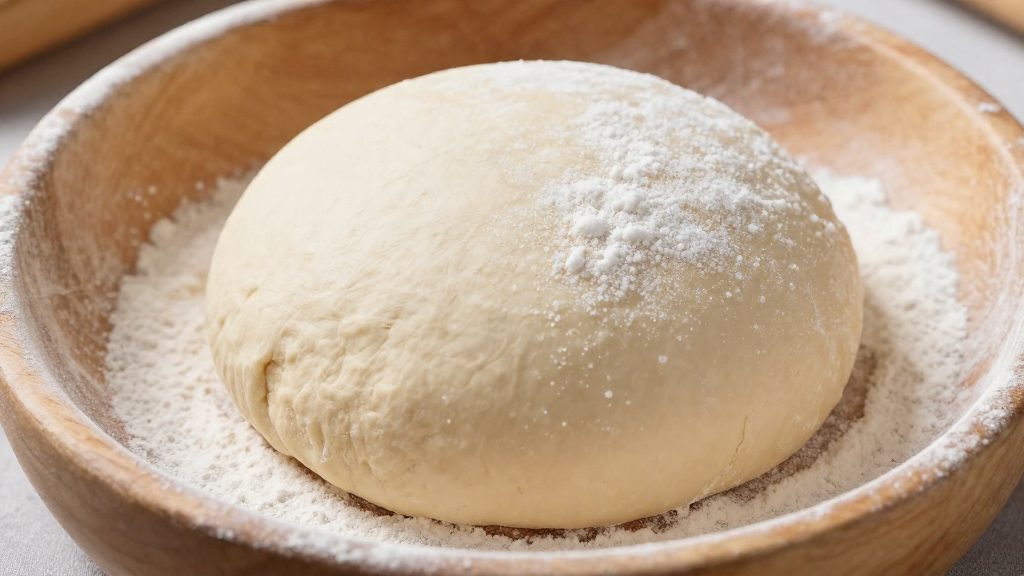
Making the dough for a homemade margherita comes down to mixing and a bulk rise, an optional cold rest, and a gentle hand-shaping step that keeps the gas bubbles in place. The two recipes consulted differ mainly in how much dough they use. Love and Lemons (2026) starts from 1 lb of pizza dough, which can be store-bought or homemade, while Once Upon a Chef (2026) makes a batch that divides into two 1-lb balls for two 12-inch pizzas.
| Source | Dough quantity | Pizza size |
|---|---|---|
| Love and Lemons (2026) | 1 lb, store-bought or homemade | Not specified in the source |
| Once Upon a Chef (2026) | Two 1-lb dough balls | Two 12-inch pizzas |
Mixing and bulk fermentation
Combine the flour, water, yeast and salt until a cohesive dough forms, then knead until it is smooth and springs back when pressed. Follow a tested recipe or use 1 lb of store-bought dough as Love and Lemons (2026) allows. During bulk fermentation, the dough rises as a single mass in a covered, lightly oiled bowl. Let it rise until it looks visibly puffed and feels airy. Judge the rise by the dough’s volume and texture rather than by the clock.
Cold retarding and balling
For cold retarding, place the dough in the refrigerator for a slower rise. The cold slows fermentation, which lets the flavour develop gradually.
Once the dough has risen, divide it into portions. Shape each portion into a tight ball by pulling the edges underneath and pinching the seam closed. Cover the balls so their surfaces do not dry out, and let them rest briefly. The rest relaxes the gluten, so the dough stretches without snapping back.
Hand stretching to keep the air
Hand stretching is the step where most of the dough’s texture is set. Once Upon a Chef (2026) advises stretching the dough by hand rather than with a rolling pin, because this preserves the air bubbles. Press the centre outward with your fingertips, then lift and rotate the dough, letting its weight pull it wider. Keep the rim slightly thicker than the centre so it can puff during baking.
How hot should the oven be?
The recipes consulted use oven temperatures between 375°F and 500°F, and the two settings produce different bakes. According to Galbani (2026), a thin crust baked at 375°F for 14–16 minutes uses 8 oz of sliced fresh mozzarella. According to Love and Lemons (2026), a 500°F oven finishes the pizza in 10–12 minutes with the same 8 oz of cheese, torn or thinly sliced. The table compares the two approaches and the parbaked method described by Once Upon a Chef (2026).
| Source (year) | Oven temperature | Bake time | Method notes |
|---|---|---|---|
| Galbani (2026) | 375°F | 14–16 minutes | Thin crust, 8 oz sliced fresh mozzarella |
| Love and Lemons (2026) | 500°F | 10–12 minutes | 8 oz torn or thinly sliced mozzarella, 1 lb dough |
| Once Upon a Chef (2026) | 500°F | 7 minutes parbake, then about 4 more minutes | Sauce first, cheese added after the parbake |
Bake temperature and time: 375°F versus 500°F
The bake time is the main difference between the two settings. At 375°F, the thin-crust method runs 14–16 minutes, which gives a longer, lower-heat bake. At 500°F, the Love and Lemons method finishes in 10–12 minutes, so the pizza spends less time in the oven overall. Both temperatures are set on the oven’s own dial, so check the pizza near the end of the range and adjust from there.
Rack position and preheating
Once Upon a Chef (2026) bakes at 500°F with the rack in the bottom position, which puts the base closer to the heat source. Preheat the oven fully at the chosen temperature before the pizza goes in, using the oven’s own indicator as the signal.
Parbaking the crust with sauce before adding cheese
Parbaking means baking the base before the toppings go on. Once Upon a Chef (2026) spreads the sauce on the dough, bakes it at 500°F for 7 minutes, and only then adds the cheese, which bakes for about 4 more minutes. The total bake is roughly 11 minutes, close to the 10–12 minutes given by Love and Lemons (2026) for a single-stage 500°F bake. The method is a two-step sequence: the base is set first, and the cheese is added afterward.
Stone, steel or baking sheet?
Three surfaces come up most often for a homemade margherita: a ceramic pizza stone, a steel plate, and a rimmed baking sheet. The main differences are how much heat the surface stores and how the pizza gets from your work surface into the oven. A stone or steel is usually loaded with a peel, while Love and Lemons (2026) shows that a baking sheet works without a peel or stone.
Baking Steel Original versus Emile Henry ceramic pizza stone
The Baking Steel Original is a steel plate, and the Emile Henry is a ceramic pizza stone. Steel is generally described as conducting heat faster than ceramic, while ceramic releases heat more gradually. Follow each manufacturer’s guidance on preheat times and heat recovery before relying on a particular time.
Heat retention and surface heat transfer compared
| Surface | How it stores heat | How heat reaches the dough | Transfer method |
|---|---|---|---|
| Baking Steel Original | Steel plate, conducts heat quickly | Fast direct conduction into the base | Peel |
| Emile Henry ceramic pizza stone | Holds heat and releases it gradually | Slower, steadier conduction | Peel |
| Nordic Ware half sheet pan | Thinner metal pan, less stored heat | Lower heat input to the base unless preheated | Pan itself, cornmeal dusted |
Nordic Ware half sheet pan with cornmeal dusting
A rimmed half sheet pan from Nordic Ware works as a peel-free option. Dust the pan with cornmeal, stretch the dough directly on it, add the toppings, and bake. Love and Lemons (2026) uses this approach. Because the pan stores less heat than a stone or steel, the base will usually be paler and softer. That trade-off suits a thin margherita, but it is less forgiving if you want a leopard-spotted, crisp crust.
Common mistakes to avoid
Three errors cause most of the problems with a homemade margherita: basil added too early, slicing before the cheese sets, and too many toppings. Each one changes the texture or flavor of the finished pizza, and each has a simple fix for the next bake.
Wilted basil from adding it before baking
Basil placed on the pizza before it goes into the oven wilts in the heat. Love and Lemons (2026) adds the basil after baking so it does not wilt. Keep the leaves whole or tear them by hand and scatter them over the hot pizza.
Resting time skipped before slicing
Cutting straight out of the oven lets steam escape from the cheese and crust before the mozzarella has firmed up. The slices slide, the cheese pools on the board, and the cut edge of the crust can turn soggy. Galbani (2026) recommends resting the pizza for 3–4 minutes before cutting. Use that pause to let the cheese set, then cut with a sharp pizza wheel or knife. The rest is short, but it is the difference between a clean slice and a messy one.
Topping overload that leaves the center underdone
Piling sauce, cheese, and basil onto the dough adds weight and moisture that the crust has to bake through. The edges brown quickly while the middle stays pale and soft, and the slices fold or collapse when lifted. Galbani (2026) and Love and Lemons (2026) each use 8 oz of mozzarella in their recipe, so staying close to that amount is a practical reference point. Leave a small border free of toppings so the crust can rise and brown properly.
Frequently asked questions
What kind of mozzarella should I use for a margherita?
Use fresh mozzarella that is not packed in water, according to Once Upon a Chef (2026). If you can only find water-packed mozzarella, dry it thoroughly, because extra liquid makes the pizza soggy.
Do I need a pizza stone or peel to bake it at home?
No. Love and Lemons (2026) stretches the dough on a cornmeal-dusted baking sheet, so no peel or stone is needed. A peel is the usual tool for sliding a pizza onto a hot stone or steel, which is a different setup.
What oven temperature should I use, and how long should I wait before cutting?
The recipes consulted use 375°F for 14–16 minutes in Galbani’s thin-crust version (Galbani, 2026) and 500°F for 10–12 minutes in Love and Lemons’ version (Love and Lemons, 2026). Galbani also advises a rest of 3–4 minutes before cutting.