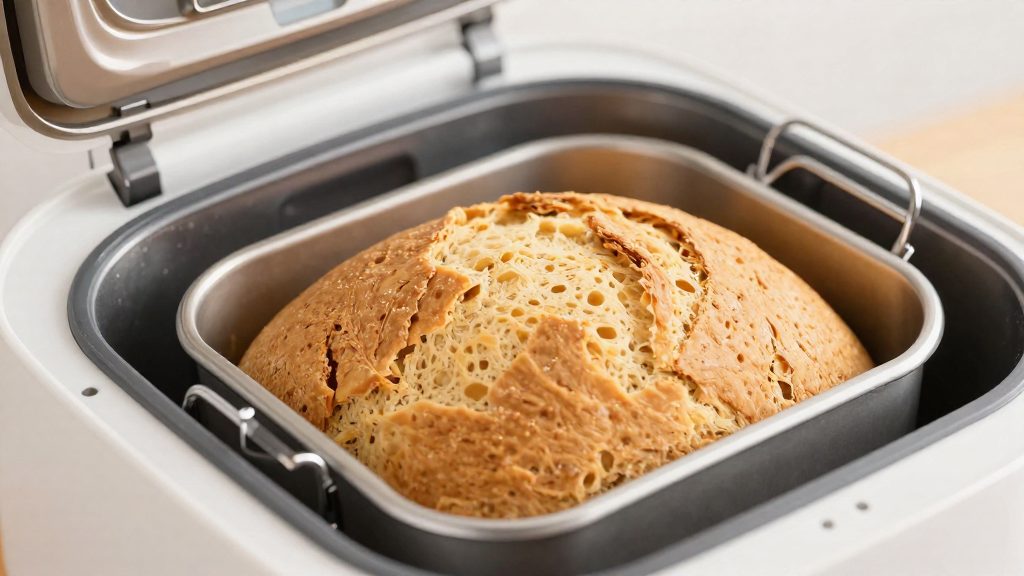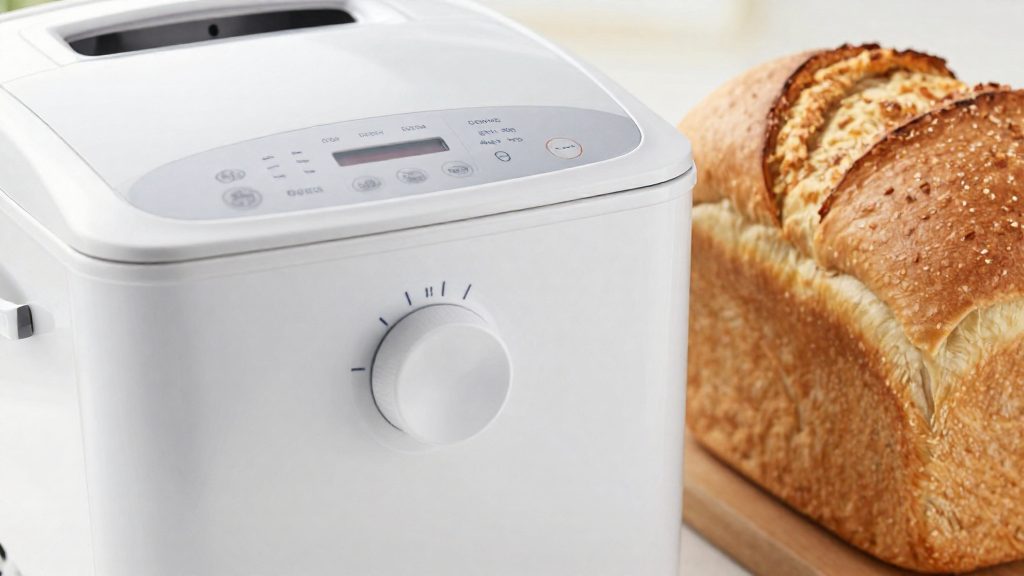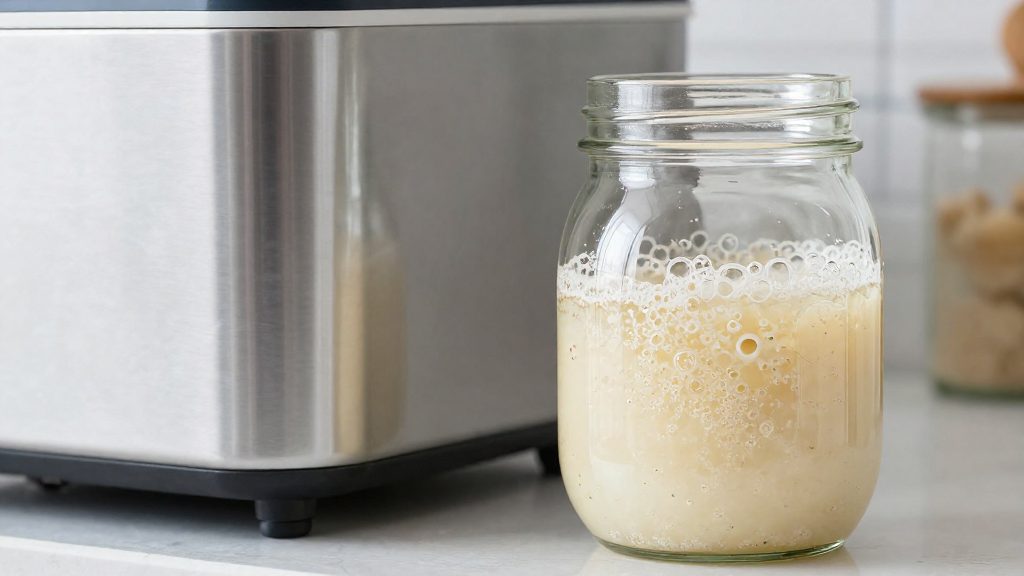
Not automatically. A sourdough setting on a bread machine is a timed program, and whether it leavens with wild yeast depends on what you put in the pan. The Zojirushi Home Bakery Virtuoso Plus (BB-PDC20) makes a 2-lb loaf and offers 15 menu settings, including Dough, Sourdough Starter and Homemade. The name on the button describes the program, not the fermentation.
Does a bread machine sourdough setting really make sourdough?
Commercial yeast versus wild yeast
Sourdough is leavened by a wild yeast and bacteria culture kept in a starter, not by packaged commercial yeast. A bread machine cannot tell which one is in the pan. If the recipe includes commercial yeast, the loaf rises mainly from that yeast, even when the program is labelled sourdough. Read the ingredient list before you rely on the label.
Does the sourdough label mean long fermentation?
No. A sourdough label names a preset, and presets are built around the machine’s fixed knead, rise and bake steps. The Virtuoso Plus Homemade setting lets you change the knead, rise and bake times yourself. According to Zojirushi America (manufacturer, 2026), that makes it a possible route for a true long-ferment sourdough program. The machine follows the times you save; it does not decide how long the dough needs.
Starter-only versus added yeast in programmed cycles
The ingredients determine the leavening, so check the recipe for each combination:
| Ingredients in the pan | Main leavening | How to confirm |
|---|---|---|
| Starter, no added yeast | Wild yeast and bacteria from the starter | Recipe lists starter and no yeast |
| Starter plus commercial yeast | Both, with commercial yeast doing much of the lift | Recipe lists both |
| Commercial yeast only | Commercial yeast | Recipe lists only yeast |
What a sourdough cycle does and doesn’t do
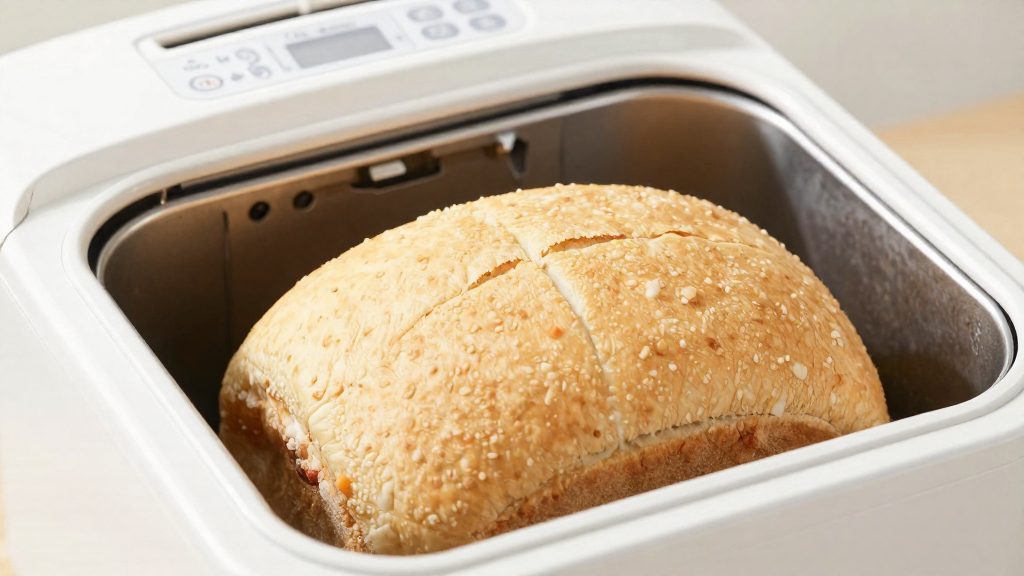
A bread machine sourdough setting runs a fixed sequence of kneading, rising and baking. That fixed sequence sets the limits of the method. The official sources consulted do not specify the duration of each stage in the built-in sourdough program, so the stages below are described in general terms.
Stage by stage
| Stage | What the machine does | What it leaves out |
|---|---|---|
| Knead | Combines flour, water, starter and salt into a cohesive dough | Hand-stretching to build gluten by feel |
| Rise (bulk fermentation) | Holds the dough at a set temperature while it ferments | Judging the dough’s readiness by its volume and texture |
| Bake | Heats the dough in the pan until the crust sets | Adjusting the bake to the dough’s state |
Bulk fermentation compared with bakery schedules
A bakery usually lets bulk fermentation run for a long period and decides when to move on by looking at the dough. A bread machine follows its clock. The rise stage therefore suits a dough that is ready on the machine’s schedule, but a slow, cool ferment that develops more flavour will not fit a fixed program unless you adjust the timing.
Steps the cycle does not include
- Stretch and fold: Gently lifting and folding the dough during bulk fermentation to strengthen it. Standard cycles do not do this, so it must be done by hand by opening the lid at the right moment.
- Cold retard: Chilling the shaped dough in the refrigerator before baking to slow fermentation and add flavour. This is also a manual step outside the cycle.
Which machines offer a sourdough or custom program?
The Zojirushi Home Bakery Virtuoso Plus (BB-PDC20) is the named model in this comparison that offers both a sourdough-related setting and a customizable program. The official sources consulted do not give the full list of the other 12 menus, so this section does not name them.
Sourdough Starter and Homemade, side by side
The two settings serve different purposes. The Homemade menu lets you set the program yourself.
- Sourdough Starter: a fixed preset listed among the 15 menus. The consulted sources describe it by name only.
- Homemade: a programmable setting.
Three memory slots on the Homemade setting
The Homemade setting has 3 memory slots, and each one lets you customize the knead, rise, and bake times (Zojirushi America, 2026). This makes it the more flexible of the two options.
Practical use: keep one slot for a long-rise sourdough, one for a shorter rise, and one for a variation you bake often. Once a slot is saved, you can reuse it without re-entering the times.
Dough cycle, French cycle or custom program?
For a long-fermentation sourdough, the Homemade setting on the Zojirushi Home Bakery Virtuoso Plus (BB-PDC20) is the only route that the manufacturer documents as adjustable. The official sources consulted do not specify the built-in timings for the Dough or Sourdough Starter settings. Each route has trade-offs in control and in how much testing you must do.
Built-in Dough cycle limits
A preset Dough cycle is designed to produce a dough quickly, with a fixed knead and rise sequence. For a sourdough that spends hours in bulk fermentation at a cool room temperature, that fixed sequence may end before the dough has developed enough. The main limitation is that you cannot change the individual phases, so the cycle’s timing becomes the limit on fermentation.
French cycle timing for lean, long-rise dough
Lean dough contains only flour, water, salt and starter, with no fat, sugar or eggs. It depends on time for flavour and structure, so a cycle built around a standard rise can rush it. The official sources consulted do not specify the French cycle timing for the Virtuoso Plus.
Building a custom long-ferment program, step by step
- Select the Homemade setting and read the manual for the default knead, rise and bake times.
- Set the knead slot to a short mix, since lean sourdough needs gentle handling rather than long kneading.
- Set the rise slot to your target bulk length. Base this on your own test loaves, not on a preset.
- Set the bake slot to the timing you need, or check whether your manual allows a slot to be skipped if you prefer to shape and bake in your oven.
- Log each batch (dough temperature, bulk length, crumb and crust) and adjust one slot at a time.
| Approach | What you control | Open question |
|---|---|---|
| Dough cycle | Preset phases only | Built-in timings are not specified in the sources consulted |
| French or lean cycle | Preset phases for lean dough | Timing for the Virtuoso Plus is not specified in the sources consulted |
| Homemade custom program | Knead, rise and bake times in 3 memory slots | Requires test batches to find your timings |
How much starter should you use in a bread machine?
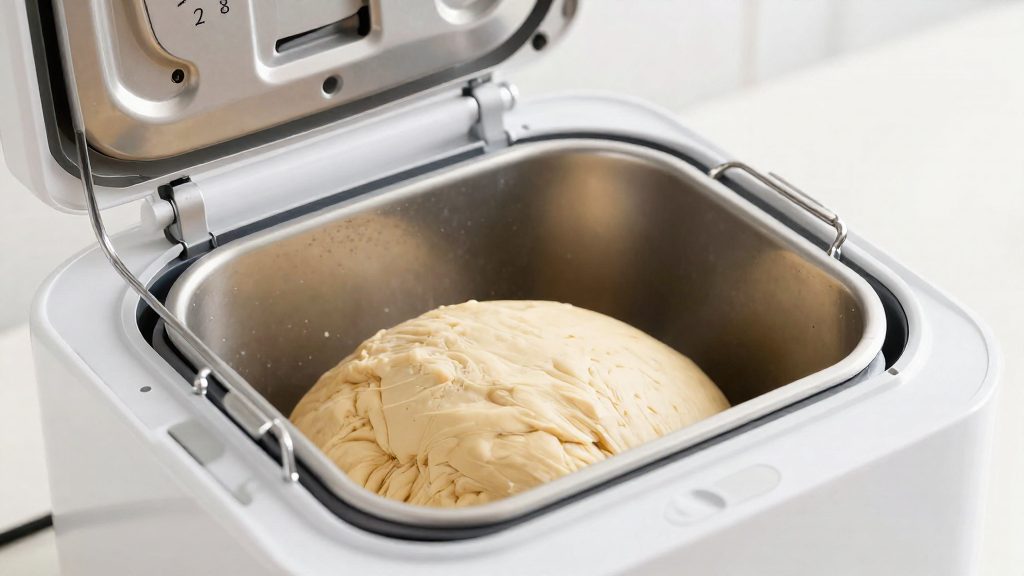
Starter is usually expressed as a share of the recipe’s flour weight, and recipes differ on whether the starter’s own flour is included, so follow the convention your recipe states. The recipe’s stated ratio is the reliable reference, and weighing the starter on a kitchen scale is more consistent than measuring it by volume, because a spoonful of active starter can vary a lot in weight depending on how bubbly and packed it is. If your recipe counts the starter’s flour and water toward its totals, include them, so the dough’s overall hydration stays where the recipe intends.
Reducing added water
A liquid levain or starter already contains water and flour, so the water you add to the pan must be reduced to compensate. The usual method is to subtract the water contained in the starter from the water called for in the recipe. Starter that is thick (stiff) holds less water, so you cut less; a very wet, fluid starter holds more, so you cut more. Adjust in small steps, because the machine’s kneading does not correct a dough that has too much liquid.
Signs of too much or too little starter
| Symptom | Likely cause | Adjustment |
|---|---|---|
| Dough is slack, sticky, and spreads in the pan | Too much starter or too much water | Reduce starter or the added water on the next bake |
| Loaf is dense, tight, or under-risen | Too little starter or a weak starter | Increase starter slightly, or confirm the starter is active |
| Strong sour smell and collapsed crumb | Over-fermentation, possibly from too much starter or too long a rise | Use less starter or a shorter rise, and check the dough earlier |
The official sources consulted do not specify starter quantities for the Zojirushi Home Bakery Virtuoso Plus (BB-PDC20), so use the quantities in your own tested recipe.
Is a bread machine good enough for sourdough?
A bread machine can produce a usable sourdough loaf, but it works best as a repeatable process that handles mixing and timing, while you still choose the recipe, the starter and the final bake. Compared with hand kneading and stand mixers, the right choice depends on how much control you want over each stage of the dough.
Kneading strength compared with hands and stand mixers
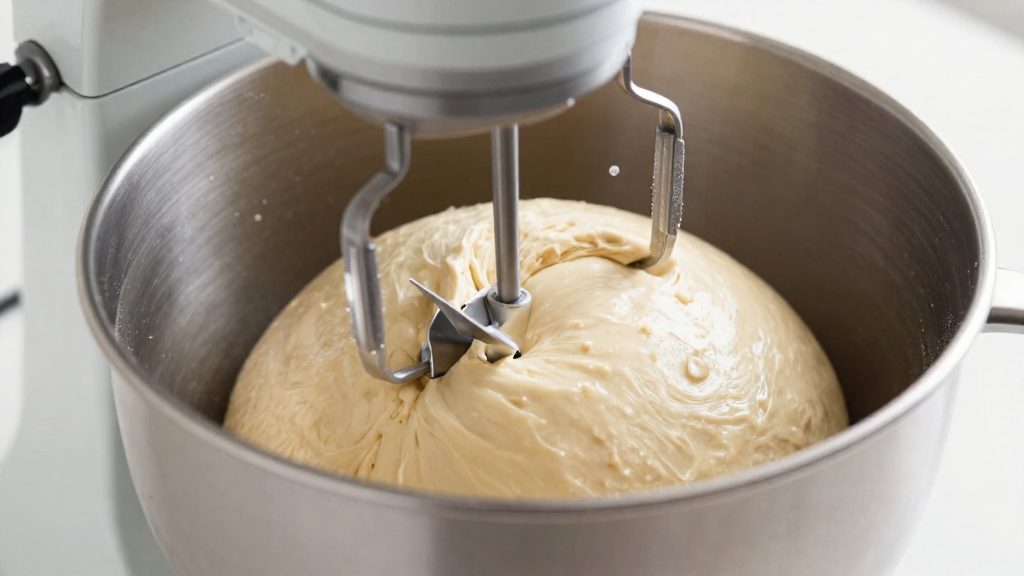
Kneading builds the gluten network that traps gas from the starter and gives sourdough its structure. Hand kneading lets you feel the dough change and adjust as you go. A stand mixer applies steady mechanical force with a dough hook. A bread machine uses a paddle inside a pan on a programmed cycle, so it is consistent but gives you less direct feedback on texture. Checking the dough early in the cycle, and adding flour or water in small amounts if it looks too slack or too stiff, helps close that gap.
| Method | Kneading control | Hands-on effort | Best fit |
|---|---|---|---|
| Hand kneading | Direct feel of the dough at every stage | High | Bakers who want to learn dough texture |
| Stand mixer | Steady force from a dough hook | Low to medium | Bakers who want less kneading work than by hand |
| Bread machine | Fixed paddle on a preset or custom cycle | Lowest | Beginners and bakers repeating the same recipe |
Consistency across repeated bakes
The main strength of a machine is repeatability. Because each cycle runs the same sequence of kneading, rising and baking, small differences in handling are removed, which matters for sourdough where timing changes the result.
Who suits a machine?
- Beginners benefit because the machine handles the mechanical work, leaving you free to learn starter maintenance and dough texture.
- Experienced bakers can use a machine as a controlled base for testing one variable at a time, or use it only for mixing and rising while shaping and baking by hand.
- Bakers who want full control over shaping, scoring and oven baking will find a machine limiting, since the loaf is formed and baked in its pan.
Crust, size and loaf shape limits
A bread machine limits what you can bake through three physical features: the pan capacity, the paddle hole, and the crust setting. The pan sets the maximum batch, the paddle shapes the base of the loaf, and the crust control affects how far the surface browns. The official sources consulted do not specify the maximum flour weight or loaf height for any model, so check the manual before scaling a recipe up or down.
Pan capacity determines loaf size. The Zojirushi Home Bakery Virtuoso Plus (BB-PDC20) makes a 2-lb loaf, according to Zojirushi America (manufacturer, 2026). Dough that is too large for the pan can rise over the lid or bake unevenly. Scale a recipe down to fit the capacity by reducing all ingredients in the same proportion, so the flour-to-water ratio stays the same.
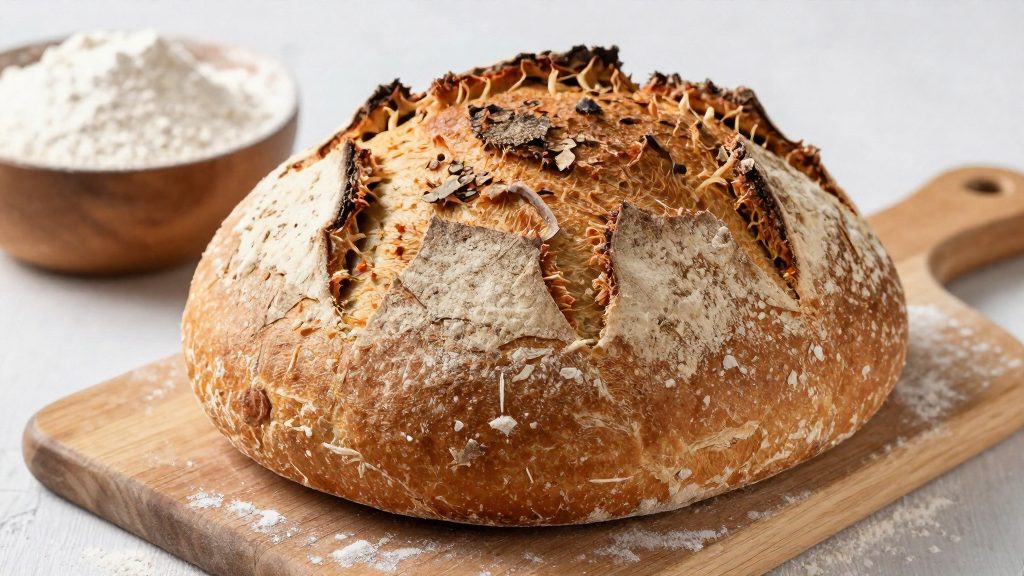
The paddle hole is the second limit. The kneading paddle sits in the bottom of the pan, which leaves a hole in the base of the finished loaf. The paddle’s position is fixed by the machine, so you cannot remove the hole. The loaf also generally takes the pan’s form, so shapes such as a round boule or a long batard are not possible inside the machine. For those shapes, the dough must be shaped by hand and baked in an oven.
The crust setting controls browning by changing the bake phase. The official sources consulted do not specify the crust levels or bake temperatures for the Virtuoso Plus, so use the options in your model’s manual rather than a number from another source. Bake time can be customized on a programmable setting such as Homemade; check your manual to see whether any other menu allows it. Use the crust-color control for browning, and don’t shorten the bake just to get a paler crust, because the loaf may be underbaked inside.
Frequently asked questions
Can the Sourdough Starter setting on the Virtuoso Plus make a true sourdough loaf?
It depends on the ingredients, not the button label. A loaf is sourdough only when its wild yeast and bacteria culture comes from a starter, so check whether your recipe also adds commercial yeast. The official sources consulted do not specify what the Sourdough Starter menu does, so check the manual before you assume it bakes a finished loaf.
How can a beginner get a longer fermentation on this machine?
Use the Homemade setting, which lets you set the knead, rise and bake times yourself. According to Zojirushi America (2026), it has 3 memory slots, so you can save a long-rise program and reuse it without re-entering the times.
How much starter should I add, and does its flour count toward the total?
Starter quantity is usually given as a percentage of the recipe’s total flour weight. Recipes differ on whether the starter’s own flour and water are included in those totals, so follow the convention your recipe states.