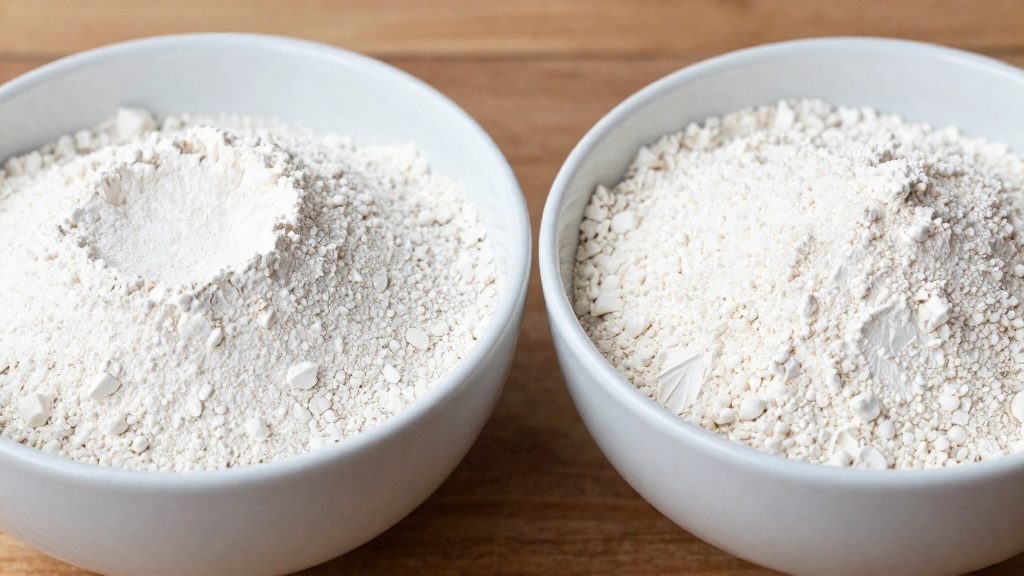
Yes. In King Arthur Baking’s sandwich bread test (2016-07-21), bread flour could replace all-purpose in the same amount, and the reverse swap worked too. Bread flour absorbs slightly more liquid, so with all-purpose the dough may need a small adjustment. According to Tasting Table (2022-11-14), the difference won’t make or break a bake. According to Tasting Table (2022-11-14), the difference won’t make or break a bake.
Can you use all-purpose flour instead of bread flour?
The one-to-one swap in sandwich bread
For sandwich bread, use the same amount of all-purpose flour as the recipe lists for bread flour. King Arthur Baking’s test (2016-07-21) found that both sandwich loaves rose about the same, so the swap does not change the rise. The same test also found that the all-purpose loaf spread over the pan sides, while the bread flour loaf held its shape and had a slightly tighter crumb.
Swaps that the reported tests cover
| Swap | Result reported | Source |
|---|---|---|
| All-purpose in place of bread flour, same amount (sandwich bread) | Both loaves rose about the same | King Arthur Baking (2016-07-21) |
| Bread flour in place of all-purpose, same amount | The reverse swap works too | King Arthur Baking (2016-07-21) |
| All-purpose in a 50/50 whole wheat loaf | Very similar to the bread flour version overall | King Arthur Baking (2016-07-21) |
Most home bread recipes and the reverse swap
Most home bread recipes can absorb the swap without trouble, because the difference between the two flours is small enough not to ruin a bake, according to Tasting Table (2022-11-14). The reverse swap also works: bread flour can go into a recipe that calls for all-purpose, using the same amount. Test a new recipe with the swap before relying on it for a large batch.
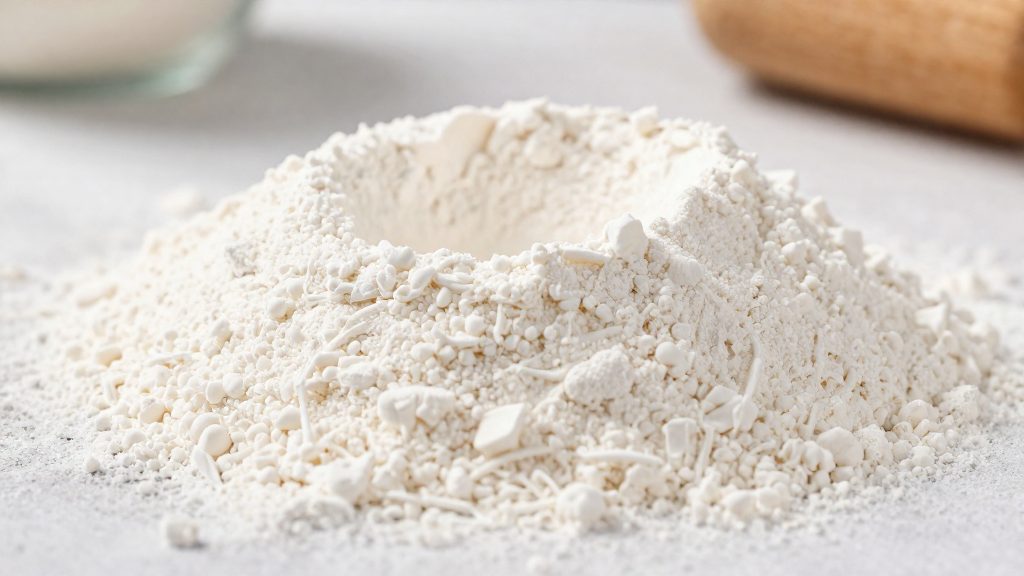
Bread flour vs all-purpose: protein difference
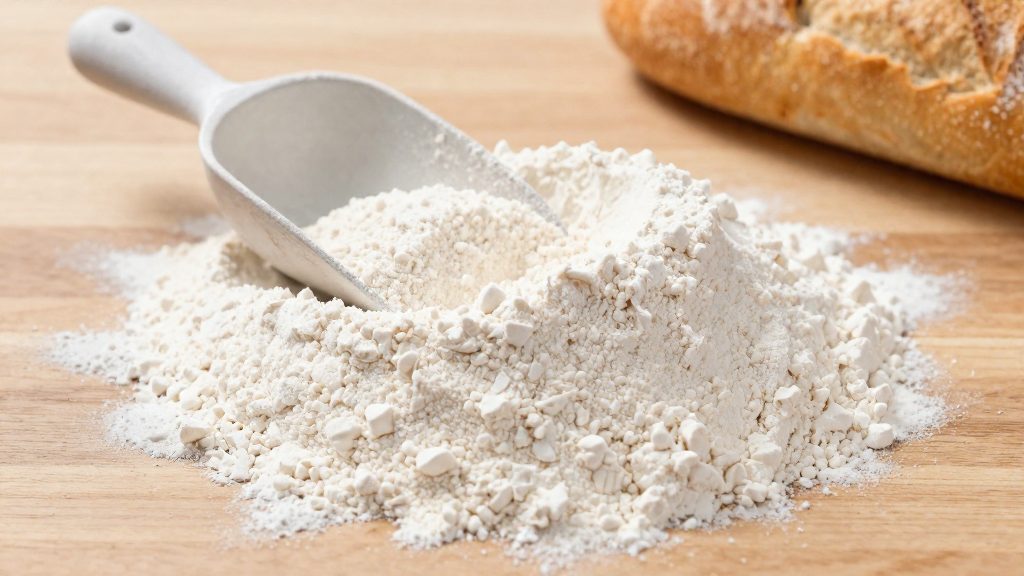
Protein content is the main difference between bread flour and all-purpose flour, and protein is what forms gluten, the network that gives dough its structure. King Arthur Baking (2016-07-21) reports 12.7% protein for its bread flour and 11.7% for its all-purpose flour, a gap of about one point. These figures come from a single brand, so they show the direction of the difference rather than a universal standard.
Typical protein ranges
Across the wider market, the ranges are broader and overlap:
| Flour type | Example figure | Typical range |
|---|---|---|
| Bread flour | 12.7% (King Arthur Baking, 2016-07-21) | About 12–14% |
| All-purpose flour | 11.7% (King Arthur Baking, 2016-07-21) | About 9–12% |
Tasting Table (2022-11-14) gives these ranges. It attributes the bread flour range to Webstaurant Store and the all-purpose range to Epicurious. Because the two ranges meet at 12%, a bread flour at the low end and an all-purpose flour at the high end can have similar protein levels.
Gluten strength
All-purpose flour generally has less gluten than bread flour, so bakes made with it come out somewhat softer, though brands overlap, so check the listed protein.
Brand variation
Protein levels are not fixed by the type name on the bag. King Arthur Baking (2016-07-21) notes that other brands’ flours can differ by 2 to 3 points, which can noticeably change a loaf. That range is larger than the one-point gap between King Arthur’s own bread and all-purpose flours. In practice, a bread flour from one brand may have less protein than an all-purpose flour from another, so the label name alone is not a reliable guide.
What changes in the loaf
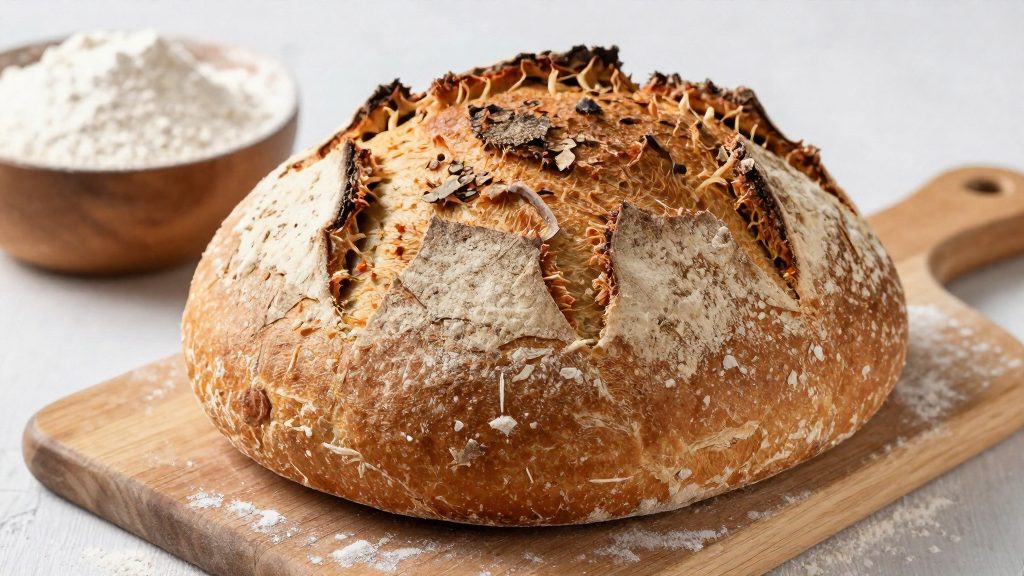
Swapping bread flour for all-purpose flour in a sandwich loaf changes less than many bakers expect. The main differences show up in the shape and interior of the bread, not in its height. In King Arthur Baking’s side-by-side test (2016-07-21), both sandwich loaves rose to about the same height. The bread flour loaf held its shape in the pan, while the all-purpose loaf spread over the pan sides, even though both rose about the same.
Spread and crumb in white sandwich loaves
The spread is the clearest visible difference. The all-purpose loaf widened toward the pan walls, and the bread flour loaf kept a more contained form. The bread flour loaf also had a slightly tighter crumb, meaning its interior was less open than the all-purpose version’s.
The 50/50 whole wheat test
King Arthur Baking also tested a 50/50 whole wheat loaf. The all-purpose version was wider on top and slightly more tender. Otherwise, the two loaves were very similar in rise, structure, crust and crumb. This suggests that in a whole wheat blend, the flour swap mainly affects the loaf’s width and softness.
Summary of the test results
| Loaf | Rise | Spread or width | Crumb or texture |
|---|---|---|---|
| Sandwich, bread flour | About the same as all-purpose | Held its shape in the pan | Slightly tighter |
| Sandwich, all-purpose | About the same as bread flour | Spread over the pan sides | Less tight than bread flour |
| 50/50 whole wheat, all-purpose | Very similar to the bread flour version | Wider on top | Slightly more tender |
The tenderness is the same trait that appears in the whole wheat test.
How to adjust hydration
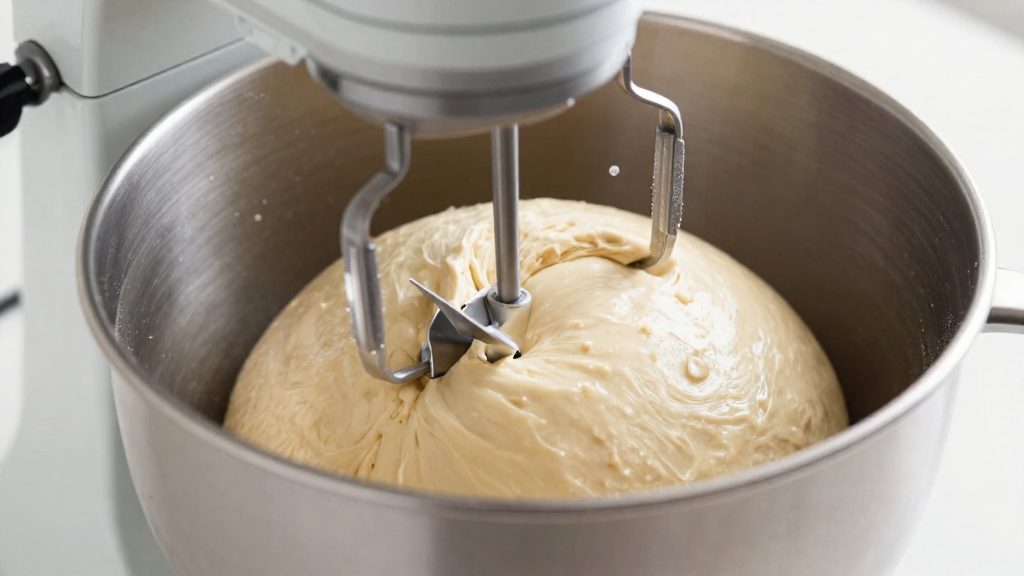
When all-purpose flour stands in for bread flour, the main change is how much liquid the flour takes up. According to King Arthur Baking (2016-07-21), bread flour absorbs slightly more liquid than all-purpose. Keep the measured amounts the same, then judge the dough by feel and make one small correction if it’s off.
Why the dough feels different
Because all-purpose absorbs slightly less liquid, the same quantity of water leaves more of it free in the dough, so the dough may feel looser or stickier than the recipe describes.
Dough seems wet: sprinkle in flour
If the dough is sticky, slack, or clings to your hands and the bowl, sprinkle in flour a little at a time. Mix or knead after each addition, then reassess before adding more. Adding too much flour at once can make the loaf dense, so stop as soon as the dough holds together and handles without excessive sticking.
Dough seems dry: add a little water
If the dough feels stiff, shaggy, or doesn’t come together, add a little water. Add it in small splashes, work the dough, and check again. Make only one type of correction per attempt. If you add water and then flour, you lose track of what changed.
| Dough feel | Fix | Approach |
|---|---|---|
| Sticky, slack, clings to hands | Sprinkle in flour | Small amounts, mix between additions |
| Stiff, dry, does not come together | Add a little water | Small splashes, work the dough between additions |
Does it work for pizza dough?
The supplied sources do not test pizza dough. Because all-purpose flour has less gluten, the crust is likely to be somewhat softer and less chewy than with bread flour, but this is an inference, not a tested result.
How the crust texture changes
Because all-purpose flour has less gluten, the crust bite is tender rather than springy. If you want a soft, tender pizza, all-purpose flour is a close match. If you want a more pronounced chew, bread flour is the better choice.
Handling the dough
When you switch flours, the dough’s consistency can shift, so check it while mixing.
If the dough resists and springs back when you stretch it, let it rest for a few minutes before stretching again. Resting relaxes the gluten and makes the dough easier to shape.
Matching the flour to the pizza style
| Factor | Bread flour | All-purpose flour |
|---|---|---|
| Gluten content | Higher | Lower |
| Liquid absorption | Slightly more | Slightly less |
| Expected crust | Chewier | Softer, less chewy |
Choose the flour based on the crust you want. For a pie where a soft, tender bite matters most, all-purpose flour fits. For a crust that should hold a firmer, chewier texture, bread flour is the closer match.
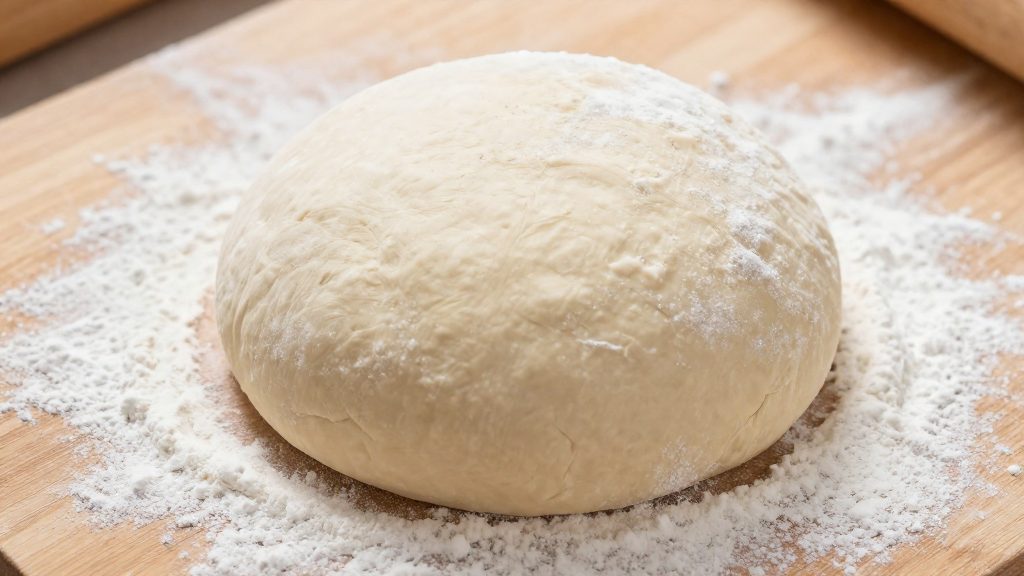
Can you make bread flour from all-purpose?
A common approach is to add vital wheat gluten to all-purpose flour to raise its protein. The right amount depends on how much protein your all-purpose flour already contains. Find the blend by testing rather than copying a fixed ratio.
Start from the protein gap
Bread flour is typically about 12–14% protein, and all-purpose is about 9–12%, according to Tasting Table (2022-11-14). King Arthur Baking (2016-07-21) lists its own bread flour at 12.7% protein and its all-purpose at 11.7%. Your protein gap is the distance between your flour and the bread flour range you want to reach.
| Flour | Protein | Source |
|---|---|---|
| Bread flour (general) | about 12–14% | Tasting Table (2022-11-14) |
| All-purpose (general) | about 9–12% | Tasting Table (2022-11-14) |
| King Arthur bread flour | 12.7% | King Arthur Baking (2016-07-21) |
| King Arthur all-purpose | 11.7% | King Arthur Baking (2016-07-21) |
A flour at the low end of the all-purpose range has a bigger gap to close than one at the high end, so it generally needs more added gluten.
Blend and test in a small batch
- Weigh, don’t measure by volume. Scoops of flour vary, so weighing gives you a repeatable blend.
- Stir the vital wheat gluten into the dry flour until no clumps remain, so it spreads evenly through the dough.
- Make a small test batch first. Note how the dough rises, how the loaf holds its shape, and what the crumb looks like.
- Change only one thing between tests, such as the amount of gluten, so you can tell which change caused which result.
Use a true bread flour loaf as your benchmark. A blend that holds its shape and produces a similar crumb is close to bread flour.
Keep expectations realistic. For a casual loaf, a close approximation is often enough.
Bread machine and sourdough tips
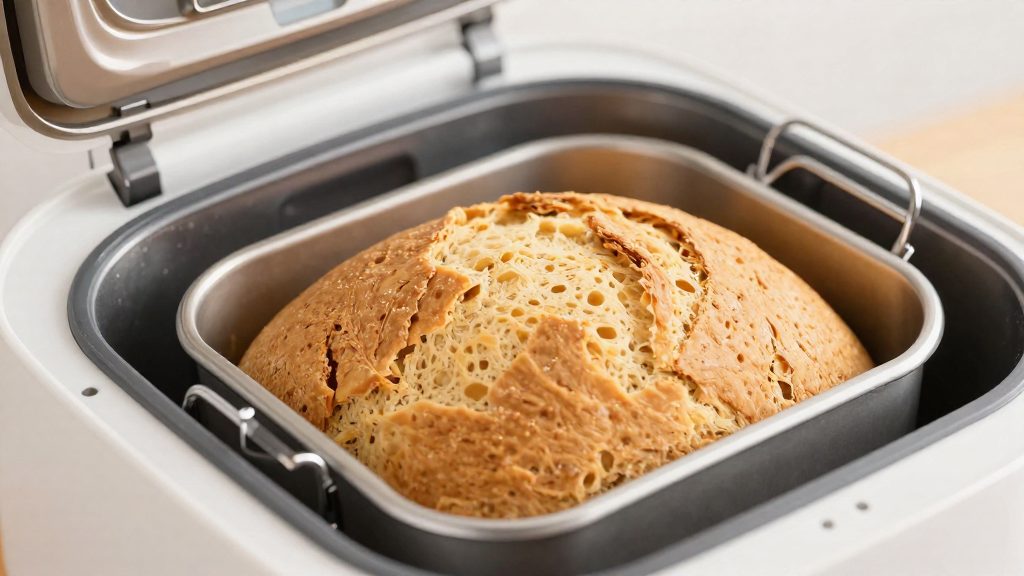
Swapping in all-purpose flour changes how the dough handles more than it changes the ingredient list. The cited sources do not test bread machines or sourdough. All-purpose flour has less gluten, so the general handling tips below are practical suggestions rather than tested results.
Bread machine dough cycle
- Use the dough cycle and check the dough by hand before the cycle ends. A dough built on all-purpose flour should feel smooth and cohesive, but it may look slacker than a bread flour dough.
- Add ingredients in the order your machine’s manual specifies, so the flour is fully hydrated before kneading starts.
- Remove the dough as soon as the cycle finishes. Leaving it in a warm machine after the cycle can push fermentation further than planned.
Levain feeding and bulk fermentation timing
A levain built with all-purpose flour should be fed on the same schedule you normally use, then watched closely at its peak. Rely on visual cues to judge timing.
Bulk fermentation is the stage where the dough rises before shaping. With weaker gluten, plan for this stage to run on the dough’s own schedule:
- Watch for a clear increase in volume and visible bubbles on the surface.
- Gently press the dough. It should spring back slowly rather than collapse.
- Stop bulk once the dough is airy and jiggles slightly, instead of waiting for a fixed time on the clock.
Shaping and proofing weaker gluten doughs
To compensate, shape with firm shape tension: pull the surface taut as you roll the dough so it holds together during proofing. Use a loaf pan or a container with sides to support the dough, and avoid overproofing, since a weaker structure has less capacity to hold a loaf upright. King Arthur’s whole wheat test also showed that an all-purpose 50/50 loaf was wider on top and slightly more tender, so expect a broader profile when blending with whole wheat.
When to buy bread flour
Buy bread flour when a higher protein content will change the result you care about most. Otherwise all-purpose flour is usually enough. The difference shows up mainly in how the loaf holds its shape and how its crumb feels, which makes the decision depend on what you bake and how often you bake it.
Recipes where the protein difference matters most
In recipes where structure is the goal, the difference matters most. If you bake sandwich loaves and want a straight, upright shape, bread flour is the more predictable choice. When a soft, tender result is the goal, all-purpose is a reasonable option.
Enriched and high-hydration doughs
Wetter doughs put more demands on the flour. As noted above, bread flour absorbs slightly more liquid than all-purpose, so check the dough’s consistency before shaping. When you switch flours in a wet dough, that difference can change the texture, so check the dough’s consistency before shaping.
Cost and storage trade-offs of keeping both flours
In practice, the trade-off comes down to volume. If you bake bread weekly, keeping a dedicated bag of bread flour is a practical choice. If you bake bread only occasionally, all-purpose flour can cover most baking needs, and buying bread flour in smaller amounts reduces the number of open bags in your pantry. Whichever you keep, store both in airtight containers in a cool, dry place to protect them from moisture and pests.
Frequently asked questions
Can I swap all-purpose flour for bread flour weight for weight?
Yes. King Arthur Baking (2016-07-21) found that bread flour can replace all-purpose in the same amount, and the reverse swap worked as well. Bread flour absorbs slightly more liquid, so if the dough feels dry, add a little water, and if it feels too wet, sprinkle in some flour.
Why does my loaf spread out or turn softer with all-purpose flour?
All-purpose flour has less gluten-forming protein, and King Arthur’s version is 11.7% protein compared with 12.7% for its bread flour. In King Arthur’s sandwich test, the all-purpose loaf spread over the pan sides, while the bread flour loaf held its shape and had a slightly tighter crumb.
Does the brand of flour change the result?
Yes. According to King Arthur Baking (2016-07-21), flours from other brands can differ by 2 to 3 points in protein content, which can noticeably change a loaf. Tasting Table (2022-11-14) notes that the usual gap between the two flour types won’t make or break a bake.